Find Your Ultimate Asian Trek
Select your profile traits to determine which brutal trek matches your endurance and risk tolerance.
Your Match
Select your options and click Analyze to find your trek.
Most people think they know what "hard" means. You climb a mountain, you get tired, you go home. But in the high Himalayas and the Karakoram range, difficulty isn't just about sweat. It’s about your lungs burning at 18,000 feet while a blizzard tries to knock you off a ridge that looks like a knife edge. If you are asking what is the most difficult trek in Asia, you aren't looking for a hike with a view. You are looking for an experience that might change how you see survival.
There is no single answer because "difficult" changes based on whether you hate cold, fear heights, or lack endurance. However, a few treks stand out as the absolute ceiling of human endurance without requiring technical ice axes and ropes (which would make them climbs, not treks). We will look at the titans: the K2 Base Camp trek, the Kangchenjunga Base Camp, and the brutal Annapurna Circuit variations. These are not vacations. They are tests.
The King of Treks: K2 Base Camp (Pakistan)
If there is a crown for the hardest non-technical trek in Asia, it sits on the head of the K2 Base Camp trek a grueling 12-to-14-day journey through the Karakoram Range in Pakistan, known for its extreme altitude, unpredictable weather, and rugged terrain. Located in Gilgit-Baltistan, this route takes you to the foot of the world's second-highest peak, K2 (8,611 meters).
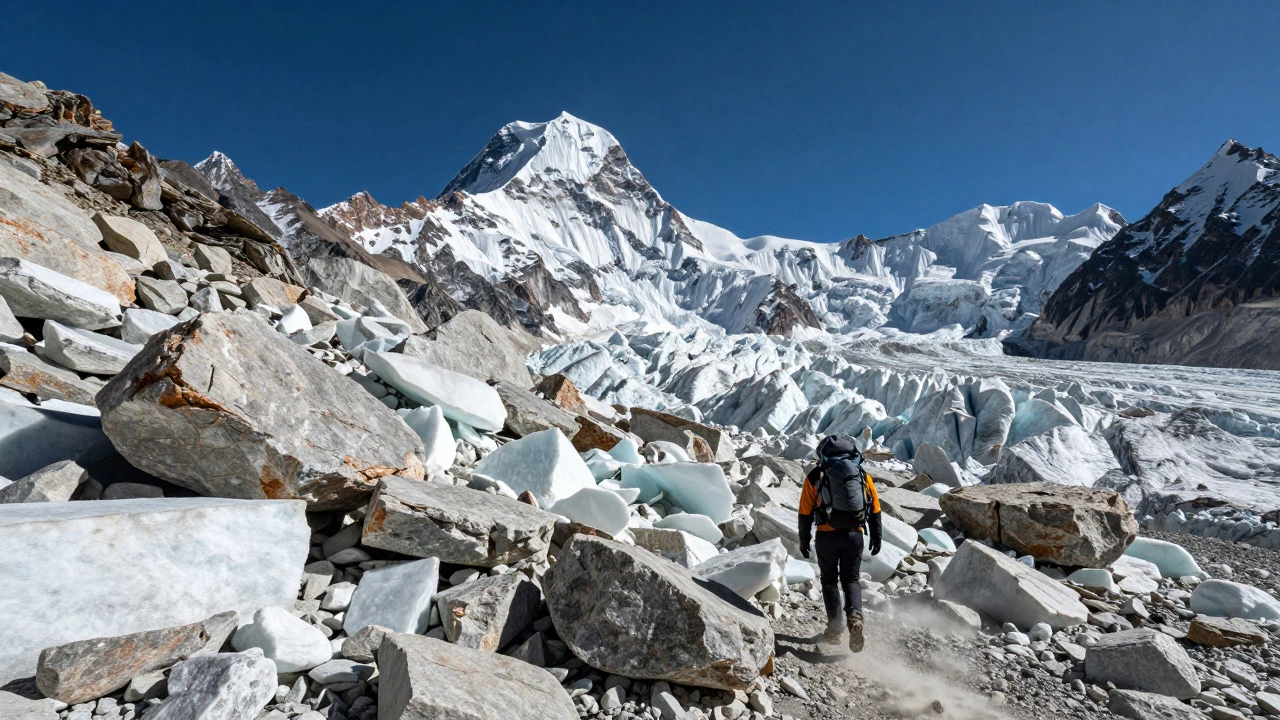
Why is it so hard? It’s the combination of three factors: distance, altitude, and isolation. You start in Askole, a village that feels remote enough, but then you leave civilization behind. For days, you walk through the Baltoro Glacier. This isn't a smooth path; it’s a river of ice and rock. You have to cross moraines-huge piles of boulders left by the glacier-that shift under your boots. One wrong step can mean a twisted ankle miles from help.
The altitude gain is relentless. You spend nights above 5,000 meters (16,400 feet) for weeks. Your body struggles to absorb oxygen. Sleep becomes impossible. You wake up coughing, dizzy, and hungry. Then, there is the heat. During the day, the sun beats down on the barren landscape, cooking you alive. At night, temperatures plummet below freezing. This thermal shock breaks many seasoned hikers.
- Duration: 12-14 days minimum.
- Max Altitude: 5,150 meters (16,900 feet) at Concordia.
- Key Challenge: Walking on unstable glacial moraine and extreme weather swings.
- Best Time: July to September (short window).
You also need permits. Since 2023, regulations in Gilgit-Baltistan have tightened. You need a protected area permit and often a military clearance if you stray near border zones. It’s bureaucratic hell before you even lift a foot.
The Silent Killer: Kangchenjunga Base Camp (Nepal)
While K2 is physically punishing, the Kangchenjunga Base Camp trek an isolated and high-altitude trek in eastern Nepal leading to the base of the world's third-highest mountain is mentally exhausting. Kangchenjunga stands at 8,586 meters, and its base camp sits at roughly 5,143 meters. Unlike Everest or Annapurna, this region sees fewer tourists. That means less infrastructure, fewer rescue options, and a raw, wild environment.
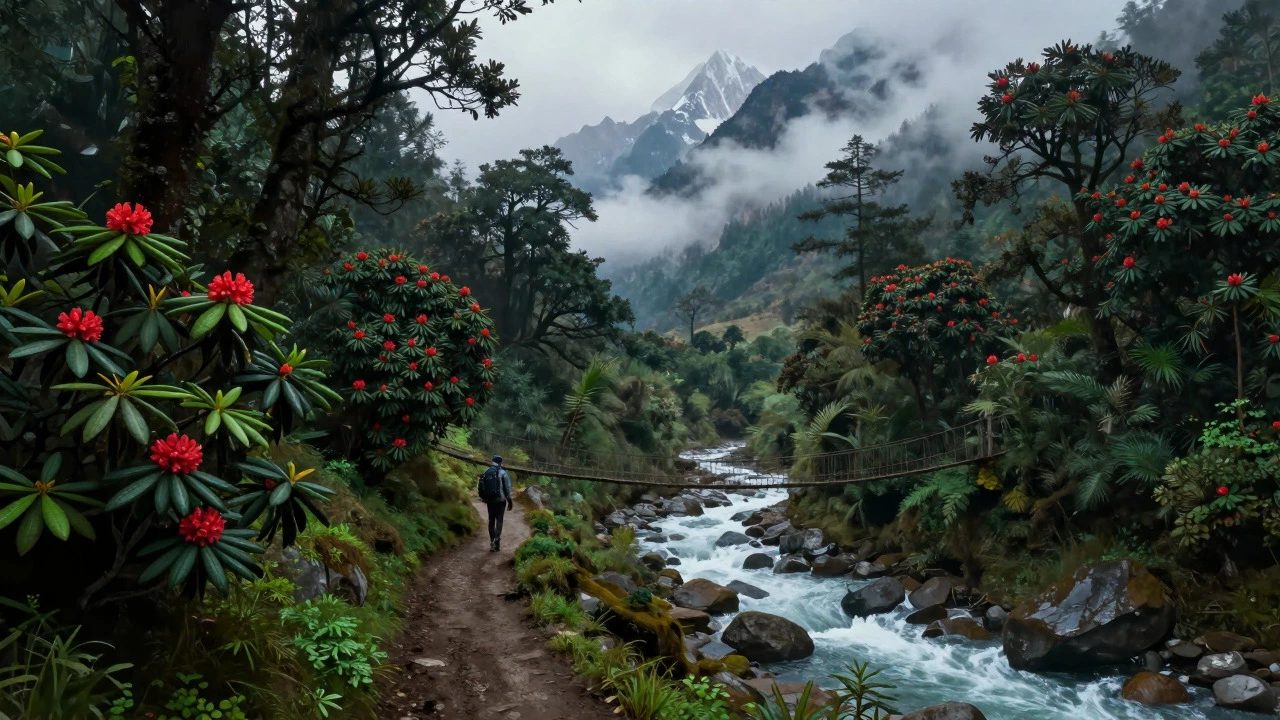
The trail starts in Taplejung, deep in the rainforests of eastern Nepal. You hike through rhododendron forests, crossing rivers on narrow suspension bridges. This part is beautiful but deceptive. The humidity is suffocating. Leeches are everywhere. By the time you reach the alpine zone, you’ve already spent days battling insects and mud.
Then comes the climb. The ascent to Pangpema and finally to Base Camp involves steep, rocky paths with loose scree. There are no tea houses here. You rely on camping expeditions or basic lodges that may not have heating or reliable food. The isolation is profound. If you get sick, there is no helicopter waiting in the next valley. You are on your own.
| Trek Name | Location | Max Altitude | Difficulty Factor | Infrastructure |
|---|---|---|---|---|
| K2 Base Camp | Pakistan | 5,150m | Extreme (Glacier walking) | Camping only |
| Kangchenjunga BC | Nepal | 5,143m | Very High (Isolation) | Basic Lodges/Camping |
| Annapurna Circuit (High Pass) | Nepal | 5,416m | High (Altitude sickness risk) | Tea Houses |
| Goecha La | India | 5,364m | High (Steep ascents) | Camping/Lodges |
The Indian Giant: Goecha La & Sikkim’s Hidden Gems
Since you mentioned trekking places in India, we must talk about Goecha La a challenging high-altitude pass in Sikkim, India, offering views of Kanchenjunga and requiring significant acclimatization. Located in Sikkim, this trek is one of the hardest in India because it combines steep gradients with high altitude. The pass itself is at 5,364 meters. To get there, you hike through dense forests, then ascend sharply into the alpine desert.
The challenge here is the vertical gain. In some sections, you lose hundreds of meters of elevation just to cross a stream, only to climb back up again. It’s repetitive torture. Plus, the weather in Sikkim is notoriously volatile. Landslides can block roads, cutting off your exit. You need to be flexible and prepared to wait days for a clear path.
Another contender in India is the Hampta Pass to Chandratal Lake a multi-day trek connecting Himachal Pradesh valleys, involving high passes and remote camping. While slightly lower in altitude, the remoteness and lack of mobile signal make it psychologically tough. You are truly alone in the mountains.
Why Do People Attempt These Treks?
It sounds masochistic. Why suffer? Because these treks strip away everything fake. No Wi-Fi, no distractions, no comfort. Just you, your breath, and the mountain. When you reach the top, the view is not just pretty; it’s transformative. You see the curvature of the earth. You feel small in a good way.
Also, there is the ego factor. Completing K2 Base Camp or Kangchenjunga BC puts you in a tiny club of humans. It’s a badge of honor. But don’t do it for the Instagram photo. Do it because you want to test your limits.
How to Prepare: The Non-Negotiables
You cannot wing these treks. Here is what you actually need:
- Cardio Endurance: Run or cycle for at least 3 months prior. You need to be able to carry a 15kg pack for 8 hours a day.
- Altitude Acclimatization: Spend time above 3,000 meters before attempting 5,000+. Learn the signs of Acute Mountain Sickness (AMS): headache, nausea, dizziness. If you ignore them, you die.
- Gear Quality: Cheap boots will blister you. Invest in waterproof, insulated hiking boots. Bring a four-season tent if camping. Temperatures drop to -15°C at night.
- Permits and Logistics: Book guides early. Local knowledge saves lives. They know where the safe campsites are and when the weather turns.
Don’t underestimate the mental game. You will want to quit every day. That’s normal. Push through. The mountain doesn’t care about your feelings.
Common Mistakes to Avoid
Many beginners fail because they rush. They try to cover too much distance each day. Slow down. Walk at a pace where you can hold a conversation. If you’re gasping, you’re going too fast. Also, hydration is critical. Drink 4 liters of water daily. Dehydration mimics altitude sickness.
Another mistake is ignoring local advice. If your guide says "stop," stop. They’ve seen people die from arrogance. Respect the mountain, and it will let you live.
Final Thoughts on the Ultimate Challenge
So, what is the most difficult trek in Asia? If you value physical brutality, it’s K2 Base Camp. If you fear isolation, it’s Kangchenjunga Base Camp. If you are in India, Goecha La offers a similar punch with stunning views. Each has its own flavor of pain.
Choose wisely. Train hard. And remember: the mountain is always right.
Is K2 Base Camp harder than Everest Base Camp?
Yes, significantly. Everest Base Camp (EBC) has established trails, tea houses, and frequent flights for evacuation. K2 Base Camp requires camping on unstable glaciers, has fewer rescue options, and involves more rugged terrain. EBC is crowded and relatively accessible; K2 is remote and technically demanding due to glacier travel.
What is the best time to trek to K2 Base Camp?
The ideal window is late July to mid-September. Before July, snow blocks the passes. After September, temperatures drop drastically, and storms become frequent. August offers the most stable weather, though it is also the busiest month.
Do I need technical climbing skills for these treks?
Not for the base camp treks themselves. K2 Base Camp and Kangchenjunga Base Camp are considered "non-technical" treks, meaning you don’t need ropes or ice axes. However, you do need excellent balance, stamina, and the ability to walk on uneven, slippery surfaces. Technical climbing is required if you attempt to summit the peaks.
How much does the K2 Base Camp trek cost?
A guided expedition typically costs between $2,500 and $4,500 USD, depending on group size and service level. This includes permits, camping gear, food, porters, and guides. Independent trekking is cheaper but riskier due to logistical complexities and permit requirements.
Is Kangchenjunga Base Camp safe for solo trekkers?
Solo trekking is possible but not recommended for beginners. The region is remote, and medical facilities are scarce. Hiring a local guide ensures safety, helps with navigation, and supports the local economy. Always inform someone of your itinerary before starting.