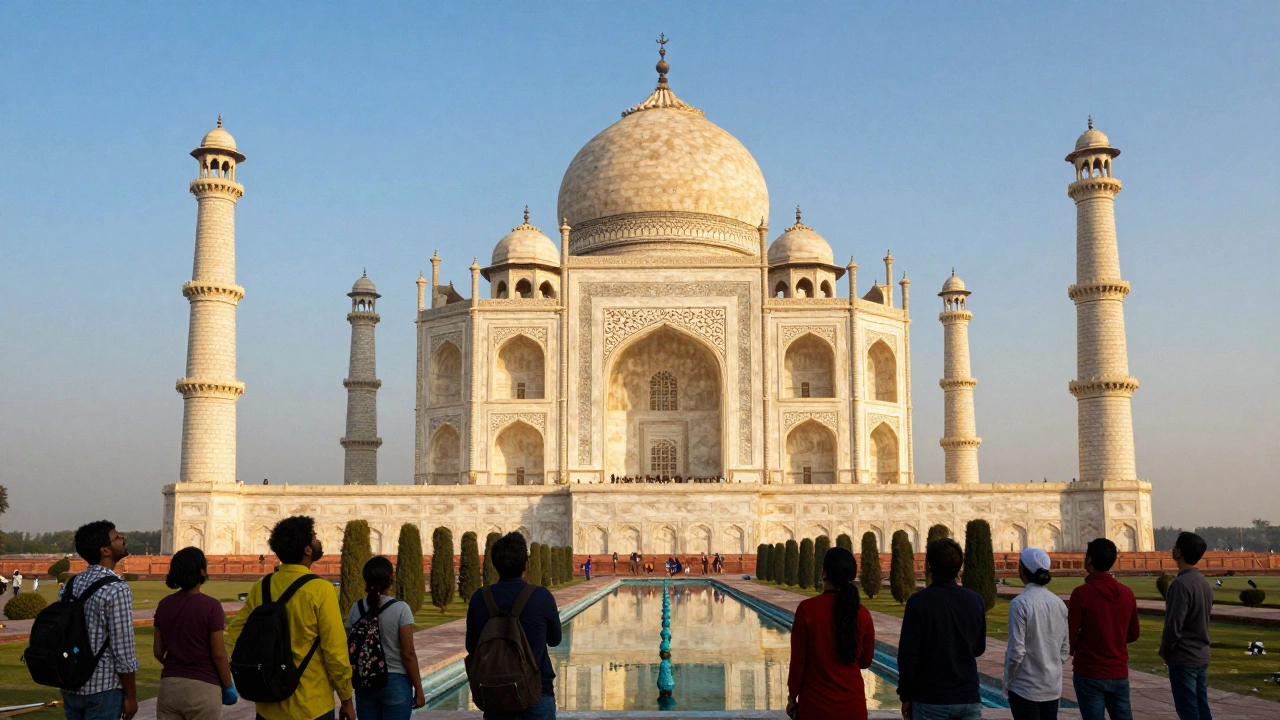
India Heritage Site Explorer
43
Total UNESCO Sites
3,600+
ASI Protected Monuments
50+
Tentative List Candidates
Site Categories
Compare the number of UNESCO World Heritage Sites across major Indian states.
You might have heard the number thrown around in travel brochures or casual conversations: "India has dozens of world-class monuments." But if you ask specifically how many heritage sites are officially recognized on the global stage, the answer is precise. As of 2026, India holds exactly 43 UNESCO World Heritage Sites.
This isn't just a random collection of old buildings. These 43 sites represent a staggering diversity of human achievement, spanning thousands of years and covering every corner of the subcontinent. From the snow-capped peaks of the Himalayas to the tropical backwaters of Kerala, these locations tell the story of civilizations that built empires, practiced ancient sciences, and created art that still defines culture today.
But here is where it gets tricky for travelers. While 43 is the official UNESCO count, India actually has hundreds more protected monuments under its own Archaeological Survey of India (ASI). So, when planning a trip, do you stick to the famous UNESCO list, or do you dig deeper into the national registry? Let's break down what these numbers mean for your next journey.
The Big Number: 43 UNESCO World Heritage Sites
UNESCO (United Nations Educational, Scientific and Cultural Organization) designates sites that hold "outstanding universal value" to humanity. For India, this list is split into three categories: cultural, natural, and mixed. Understanding this breakdown helps you decide what kind of history or nature you want to experience.
| Category | Count | Examples |
|---|---|---|
| Cultural | 38 | Taj Mahal, Hampi, Ajanta Caves |
| Natural | 4 | Kaziranga National Park, Western Ghats |
| Mixed (Cultural & Natural) | 1 | Khangchendzonga National Park |
The vast majority-38 sites-are cultural. This makes sense given India's long history of urbanization, religion, and architecture. The natural sites are equally impressive but fewer in number, focusing on biodiversity hotspots rather than man-made structures. The single mixed site, Khangchendzonga in Sikkim, was added relatively recently, highlighting the region's unique blend of sacred geography and ecological richness.
Why the Number Keeps Changing
If you look at older travel guides from five or ten years ago, you might see different numbers. That’s because the list is living. UNESCO reviews new nominations annually during its World Heritage Committee sessions. India actively submits new candidates, and sometimes existing sites get expanded or merged.
For instance, the Qutb Minar complex in Delhi wasn't always part of a larger serial nomination. Over time, the way we group sites has evolved. In recent years, there has been a push to nominate groups of smaller sites that share a common theme, such as the "Chhatrapati Shivaji Maharaj Terminus" which stands alone, versus the "Group of Monuments at Mahabalipuram" which includes several temples. Keeping track of these updates matters because a newly inscribed site often sees a surge in infrastructure development and tourist interest.
Beyond UNESCO: The ASI Registry
Here is the catch that most tourists miss. The 43 UNESCO sites are the tip of the iceberg. The Archaeological Survey of India (ASI), established in 1861, protects over 3,600 monuments across the country. These include forts, stepwells, caves, and ruins that haven't made the global cut but are historically significant.
Why does this distinction matter? Because some of the most authentic, less crowded experiences are found among these ASI-protected non-UNESCO sites. Take the Rani ki Vav stepwell in Gujarat. It is a UNESCO site, yes, but nearby, you’ll find other intricate stepwells managed by local bodies or the ASI that offer similar architectural beauty without the massive crowds. If your goal is deep cultural immersion, don’t limit yourself to the big 43.
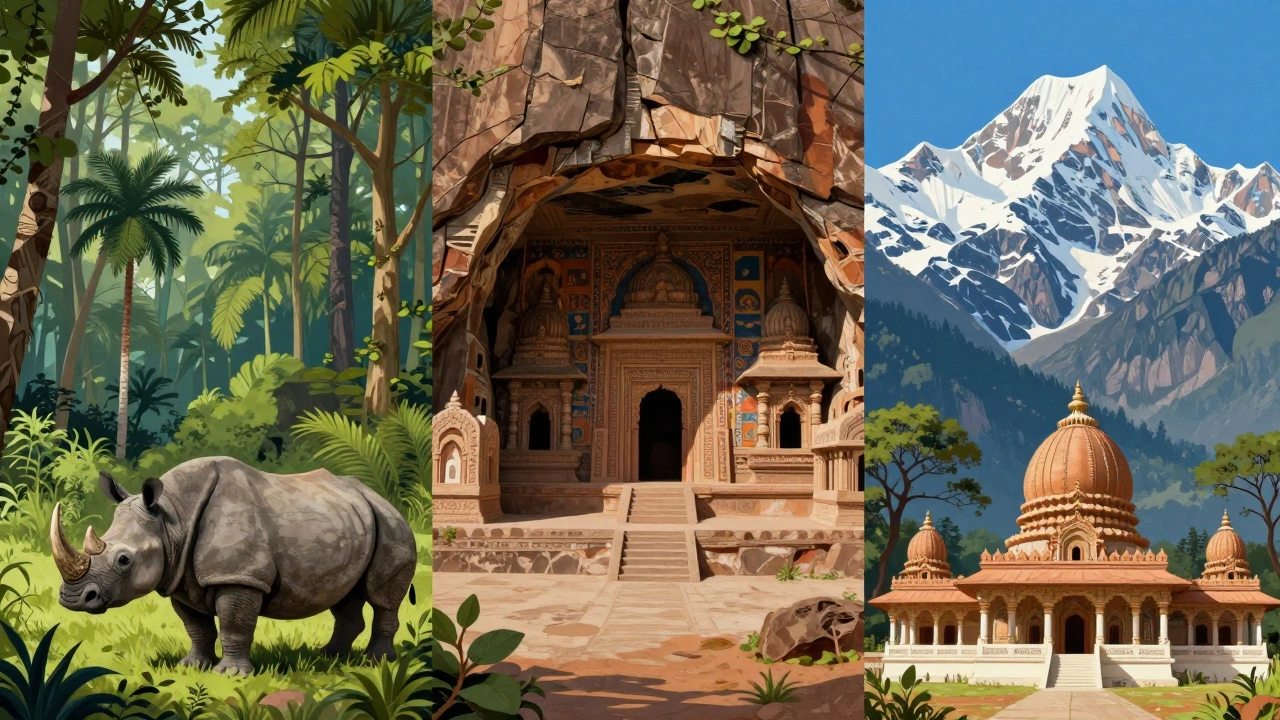
Regional Distribution: Where Should You Go?
India’s heritage sites are not evenly distributed. Some states are powerhouses of history, while others rely more on natural attractions. Knowing which regions hold the highest concentration of sites can help you plan an efficient itinerary.
- Maharashtra: With 9 sites, including the Ajanta and Ellora Caves, Maharashtra is a top destination for rock-cut architecture and Buddhist history.
- Tamil Nadu: Also boasting 9 sites, this southern state is home to the Great Living Chola Temples and the Group of Monuments at Mahabalipuram. It’s the heart of Dravidian architecture.
- Rajasthan: Known for its forts and palaces, Rajasthan has 7 sites, including the iconic Hill Forts and the City of Jaipur itself.
- Uttar Pradesh: Home to the Taj Mahal and the Sarnath Buddhist sites, UP holds 6 major entries, drawing millions of visitors annually.
- Karnataka: Famous for Hampi and Pattadakal, Karnataka offers 5 sites that showcase the transition from early Hindu temple styles to later Vijayanagara empire grandeur.
If you are short on time, focusing on one of these four states allows you to visit multiple UNESCO sites within a few days’ drive or flight. Conversely, states like Jammu and Kashmir or Meghalaya have fewer cultural sites but excel in natural heritage or tentative lists.
The Tentative List: What’s Coming Next?
UNESCO maintains a "Tentative List" for each country. These are sites that a nation intends to nominate in the future. For India, this list is long and ambitious, containing over 50 properties. While they don’t carry the same weight as inscribed sites yet, they are worth watching.
Some notable names on India’s tentative list include the Red Fort complex expansions, various colonial-era railway stations, and prehistoric rock shelters. Travelers interested in emerging destinations might consider visiting these areas now, before they become globally famous. Infrastructure tends to improve rapidly once a site moves from tentative to inscribed status, so getting there early means cheaper accommodations and quieter explorations.
Practical Tips for Visiting Heritage Sites
Knowing the number of sites is one thing; navigating them is another. Here are a few practical insights to make your trip smoother.
- Check Opening Hours: Many archaeological sites close on Fridays. Always verify local schedules before traveling, especially for remote locations like the Elephanta Caves or the Sun Temple at Konark.
- Photography Rules: Inside certain monuments, particularly caves like Ajanta, photography is strictly prohibited to protect fragile paintings. Tripods and flash are almost universally banned. Respect these rules to ensure preservation.
- Best Time to Visit: Most heritage sites are outdoors. Avoid the peak summer months (April-June) unless you’re prepared for extreme heat. Winter (October-February) offers pleasant weather for walking through large complexes like Fatehpur Sikri or Hampi.
- Hire Local Guides: At major sites, government-certified guides are available. They provide context that plaques cannot. For example, understanding the astronomical alignments of Jantar Mantar requires expert explanation.
Preservation Challenges
With great age comes great vulnerability. India’s heritage sites face constant threats from pollution, climate change, and overtourism. The Taj Mahal, for instance, has faced discoloration issues due to air quality in Agra. Conservation efforts are ongoing, involving advanced cleaning techniques and stricter emission controls in surrounding zones.
As a visitor, you play a role in preservation. Stick to marked paths, avoid touching ancient carvings, and dispose of waste properly. Your respect for these places ensures they remain intact for future generations. The cost of entry fees also contributes directly to maintenance funds, so paying the ticket is an act of support.
Is the Taj Mahal the only UNESCO site in India?
No, the Taj Mahal is just one of 43 UNESCO World Heritage Sites in India. While it is perhaps the most famous, others like the Ajanta Caves, Hampi, and the Red Fort are equally significant culturally and historically.
How many natural heritage sites does India have?
India has 4 natural World Heritage Sites: Kaziranga National Park, Keoladeo National Park, Nanda Devi and Valley of Flowers National Parks, and the Western Ghats. Additionally, Khangchendzonga National Park is classified as a mixed site.
What is the difference between ASI sites and UNESCO sites?
ASI sites are protected by the Indian government and number over 3,600. UNESCO sites are a subset of these (or other protected areas) that have been recognized globally for their outstanding universal value. All UNESCO sites in India are protected by the ASI, but not all ASI sites are UNESCO listed.
Which state has the most UNESCO heritage sites?
Maharashtra and Tamil Nadu are tied for the most UNESCO World Heritage Sites, with 9 each. Rajasthan follows closely with 7 sites.
Are there any new UNESCO sites added to India in 2025 or 2026?
As of 2026, no new sites were inscribed in the immediate preceding year, keeping the total at 43. However, India regularly submits new nominations, and the list is subject to change at annual UNESCO committee meetings.