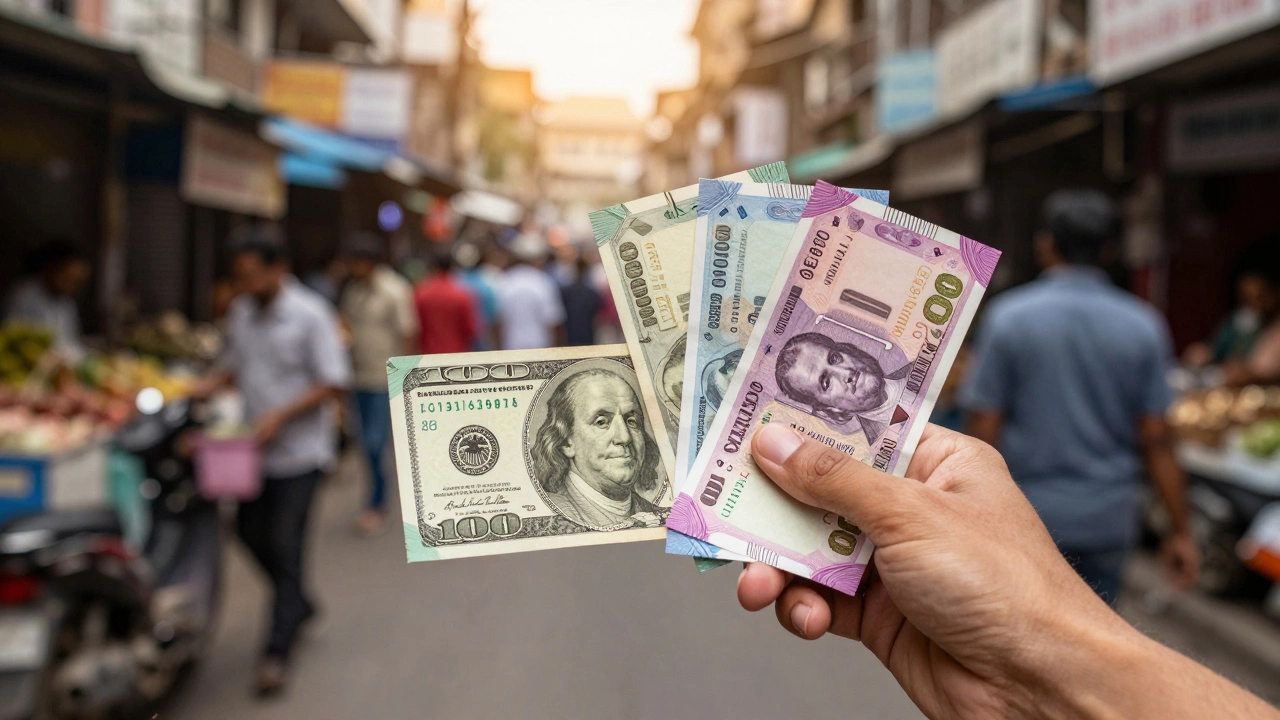
$100 USD India Budget & Exchange Calculator
Settings
TOTAL VALUE IN INR
Daily Budget: ₹1,000 / day
What Your Money Buys (Jaipur)
Accommodation (Mid-range/Private Room)
Price/NightClean stay outside city center or heritage boutique
₹1,200Food & Dining (3 Meals/Day)
Price/DayLocal thalis, chai, street food, occasional sit-down
₹600Local Transport (Auto/Metro)
Avg Daily SpendShort rides, metro tickets, local buses
₹300Attractions & Entry Fees
Per VisitTemples, forts, museums, guide services
₹500Ever wondered what your money can actually buy when you land in a new country? It’s not just about the math on a converter app. It’s about how many chai cups you can drink, how many nights you can stay in a decent hostel, or whether that $100 bill will stretch into a week of comfort or vanish in two days of sightseeing. For travelers heading to India from the United States, the $100 USD to INR conversion is more than a number-it’s your ticket to understanding the local economy.
As of mid-2026, the exchange rate hovers around 84-86 Indian Rupees (INR) for every US Dollar. That means your crisp hundred-dollar bill translates to roughly ₹8,400 to ₹8,600. But here’s the catch: rates fluctuate daily based on global markets, and where you exchange your cash matters just as much as the rate itself. If you swap money at an airport kiosk, you might get shortchanged by 5-10% compared to a local bank or authorized dealer. So before you pack your bags, let’s break down exactly what that $100 buys you on the ground.
The Real Value of $100 in India Today
Money feels different in India. In New York or London, $100 gets you a nice dinner for two or a few hours of entertainment. In Mumbai, Delhi, or Jaipur, it goes significantly further-but only if you know where to spend it. The key is understanding the difference between tourist traps and local pricing. Hotels near major landmarks often charge triple what they would in neighboring streets. Same with food. A thali (platter) at a fancy restaurant might cost ₹800 ($10), while the same meal at a local eatery runs ₹200 ($2.50).
Let’s put this into perspective. With ₹8,500 (your approximate $100), you could:
- Stay 7 nights in a clean, private room in a mid-range hotel outside city centers.
- Eat three meals a day at affordable local restaurants for 10 days.
- Take multiple auto-rickshaw rides across a metropolitan area like Bangalore or Chennai.
- Visit several heritage sites, including Taj Mahal entry fees and guide services.
This isn’t luxury travel, but it’s comfortable. You won’t be eating street food exclusively or sleeping on floors, but you’ll experience authentic India without burning through your budget. The trick is balancing convenience with cost-knowing when to splurge and when to save.
Where to Exchange Currency for the Best Rate
Exchanging money abroad is one of those things that seems simple until you lose ₹500 because you didn’t check the fine print. Here’s how to avoid common pitfalls:
- Avoid Airport Counters: They offer convenience, not value. Rates are typically 5-10% worse than city banks.
- Use Authorized Money Changers: Look for shops with RBI (Reserve Bank of India) licenses. These are widely available in cities like Delhi, Mumbai, and Kolkata.
- Compare Before Converting: Ask for the “buying rate” (what they pay you) and “selling rate” (what you pay them). Always negotiate slightly if possible.
- Carry Small Bills: Vendors prefer smaller denominations. Having ₹500 and ₹100 notes makes transactions smoother than carrying ₹2000 bills everywhere.
Pro tip: Don’t convert all your money upfront. Keep some USD for emergencies or places that accept international cards. Also, ATMs dispense INR directly, but watch out for hidden fees from both your home bank and the local ATM operator.
| Option | Typical Rate (per $1) | Fees | Best For |
|---|---|---|---|
| Airport Kiosk | ₹80-82 | High service fee | Emergency cash needs |
| Local Bank Branch | ₹84-85 | Minimal or none | Large conversions |
| Authorized Dealer | ₹83-84 | Low commission | Daily spending cash |
| ATM Withdrawal | Varies by card issuer | Foreign transaction + withdrawal fee | Small amounts as needed |
What Can $100 Buy You Across Different Cities?
India is vast, and prices vary wildly depending on location. Let’s compare how far ₹8,500 goes in four popular destinations:
Mumbai - The Financial Hub
In Mumbai, everything costs more. Rent, food, transport-you name it. Your $100 might cover 4-5 nights in a decent guesthouse, plus meals and local transit. Street food remains cheap, but sit-down dining adds up quickly. Expect to spend ₹300-500 per meal at mid-tier restaurants.
Jaipur - The Pink City
Jaipur offers better value. With ₹8,500, you can comfortably stay 6-7 nights in a heritage-style boutique hotel, enjoy royal-themed dinners, and take guided tours of Amber Fort and Hawa Mahal. Shopping for textiles and jewelry also becomes feasible within this budget.
Bangalore - Tech Meets Tradition
Bangalore strikes a balance. It’s modern yet retains cultural charm. Your $100 covers 5-6 nights in a centrally located apartment or hotel, along with coffee shop visits, bike rentals, and weekend trips to nearby hills like Nandi Hills.
Kerala Backwaters - Slow Living Paradise
If you’re looking for relaxation, Kerala delivers. Houseboat stays start at ₹2,500/night, so your $100 allows for 3 full days floating through serene waterways, complete with home-cooked meals and sunset views. Add in Ayurvedic treatments or spice garden tours, and you’ve got a memorable getaway.
Tips to Stretch Your Budget Further
Traveling smart doesn’t mean sacrificing enjoyment. Here are practical ways to make your $100 last longer:
- Book Accommodations Early: Last-minute bookings often come with premium pricing. Use platforms like Booking.com or Agoda to find deals.
- Choose Local Transport: Metro systems in Delhi, Mumbai, and Bangalore are efficient and inexpensive. Auto-rickshaws should be metered; always confirm the fare beforehand.
- Eat Like a Local: Skip imported brands and opt for regional cuisine. Thalis, dosas, and chole bhature are filling, flavorful, and affordable.
- Negotiate Prices Wisely: Bargaining works in markets and with taxi drivers, but not in fixed-price stores or government-run attractions.
- Free Attractions Exist: Many temples, parks, and public spaces don’t charge entry fees. Explore neighborhoods like Chandni Chowk in Delhi or Colaba in Mumbai for free walking tours.
Another overlooked strategy: leverage digital payments. Apps like Paytm and PhonePe dominate everyday transactions. Link your foreign card via UPI (Unified Payments Interface) if supported, or use prepaid travel cards loaded with INR to avoid repeated conversion hassles.
Common Mistakes Travelers Make With Currency
Even seasoned travelers fall into these traps:
- Overestimating Purchasing Power: Yes, India is cheaper, but not everything is dirt cheap. Electronics, branded clothing, and alcohol carry global price tags.
- Ignoring Hidden Fees: Credit card companies charge 1-3% foreign transaction fees. Some hotels add GST (Goods and Services Tax) separately, inflating final bills.
- Keeping Large Denominations: ₹2000 notes look impressive but cause friction. Shopkeepers may refuse change or claim they lack small bills.
- Not Tracking Spending: Without monitoring daily expenses, even ₹8,500 disappears fast. Set a limit-for example, ₹1,000/day-and stick to it.
A quick fix: download a budgeting app like Splitwise or Trail Wallet. Input your starting amount, log each expense, and adjust accordingly. Awareness prevents overspending.
Final Thoughts: Making Every Rupee Count
Your $100 isn’t just currency-it’s opportunity. Whether you’re chasing history in Varanasi, surfing waves in Goa, or exploring wildlife sanctuaries in Ranthambore, knowing how to manage your finances ensures you focus on experiences rather than stress. India rewards curiosity and adaptability. Spend wisely, engage locally, and remember: the best memories aren’t bought-they’re made.
How much is $100 USD in Indian Rupees today?
As of July 2026, $100 USD equals approximately ₹8,400 to ₹8,600 INR, depending on current exchange rates and where you convert your money.
Is it better to exchange money before arriving in India or upon arrival?
It’s usually better to exchange a small amount before arrival for immediate expenses, then convert the rest at authorized dealers or banks in India for better rates.
Can I use US dollars directly in India?
No, businesses in India do not accept US dollars for regular transactions. You must convert to Indian Rupees (INR) for purchases, accommodations, and services.
What’s the safest way to carry money while traveling in India?
Carry a mix of cash (small denominations), debit/credit cards, and consider using a prepaid travel card. Avoid flashing large sums and keep backups in separate locations.
Are there any restrictions on bringing foreign currency into India?
You can bring up to $5,000 in cash or $10,000 in traveler’s checks without declaration. Amounts exceeding these limits require reporting to customs authorities upon entry.