Char Dham Journey Planner
Your Itinerary Recommendation
Puri (East)
Dwarka (West)
Badrinath (North)
Rameswaram (South)
Logistics Advice
Select your trip details and click "Plan My Yatra" to see which temples are open and suitable for you.
India is home to over two million temples. You can’t visit them all. But if you want to understand the spiritual heart of the country, there is one specific circuit that stands above the rest. It’s not just about four random buildings; it’s about a journey that covers the entire subcontinent, from the snow-capped peaks of the Himalayas to the tropical shores of the Indian Ocean.
When people ask, "What are the 4 temples in India?" they are almost always referring to the Char Dham (Four Abodes). This ancient pilgrimage route connects four sacred sites dedicated to different aspects of Lord Vishnu. Completing this circuit is considered highly auspicious by Hindus and is believed to cleanse the soul of past sins.
This isn't a quick weekend trip. The geography alone makes it challenging. You will trek through high-altitude passes, navigate dense forests, and travel along coastal highways. Let’s break down exactly where these temples are, why they matter, and how you can actually plan this massive journey.
The Concept Behind the Char Dham
To truly appreciate the Char Dham is a major Hindu pilgrimage circuit consisting of four sacred shrines located at the four corners of India, you need to understand its origins. According to legend, the great sage Adi Shankaracharya revived this circuit in the 8th century. He established four monasteries (mathas) across India to spread his philosophy of Advaita Vedanta (non-dualism).
The logic is geographical as well as spiritual. By visiting these four sites, a pilgrim symbolically circumambulates the entire landmass of India. Each temple represents a cardinal direction:
- East: Puri (Odisha)
- West: Dwarka (Gujarat)
- North: Badrinath (Uttarakhand)
- South: Rameswaram (Tamil Nadu)
Tradition dictates that you should visit them in a clockwise order, starting from the East. However, due to weather conditions-specifically the harsh winters in the north-many modern travelers adjust their itinerary based on the season.
1. Puri Jagannath Temple (East)
| Attribute | Details |
|---|---|
| Location | Puri, Odisha |
| Deity | Lord Jagannath (Vishnu avatar) |
| Architecture | Kalinga style, black stone |
| Best Time to Visit | October to March |
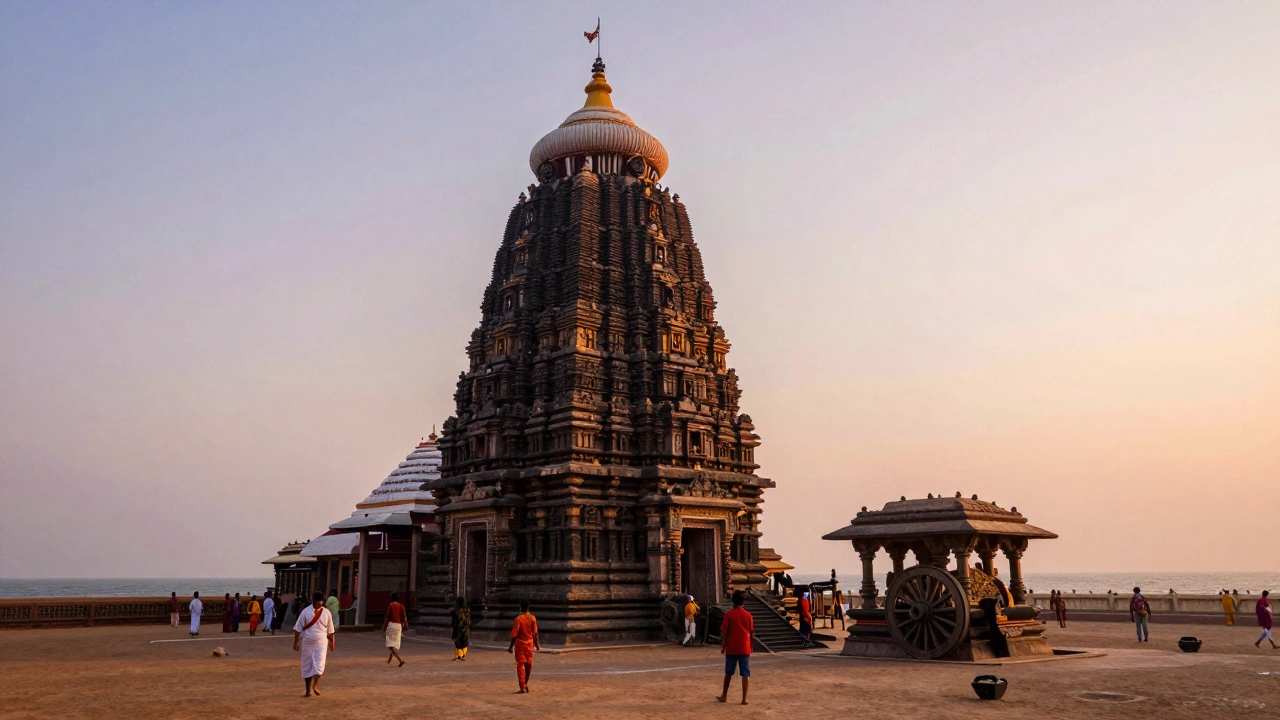
Your journey begins in the east at the Jagannath Temple in Puri, Odisha. This temple sits right on the Bay of Bengal. Unlike many other Hindu temples that feature intricate carvings of deities, the idols here are unique. They are made of wood and have large, round eyes. The main deity, Jagannath, is accompanied by his brother Balabhadra and sister Subhadra.
The most famous event here is the Rath Yatra (Chariot Festival), usually held in June or July. During this festival, the deities are taken out of the temple on massive wooden chariots. If you aren't visiting during the festival, the temple remains incredibly busy year-round. The architecture follows the Kalinga style, characterized by a towering spire called the Vimana. Note that non-Hindus are generally not allowed inside the main sanctum, but the outer courtyard offers plenty to see and experience.
2. Dwarkadhish Temple (West)
Next, you head west to Gujarat. The Dwarkadhish Temple is a historic shrine dedicated to Lord Krishna, located on the western coast of India stands tall on the banks of the Gomti River. According to the Mahabharata, this was the capital of King Krishna’s kingdom. Legend says that Krishna ruled from here before leaving the earthly realm.
The current structure dates back to the 16th century, built by the Solanki dynasty, though it has been renovated several times since. The temple rises 77 meters high with eight stories. The lower floors house various shrines, while the top floor contains the main idol of Krishna holding his flute. The view from the temple complex overlooks the Arabian Sea, creating a serene atmosphere that contrasts sharply with the bustling streets below.
One interesting detail for visitors: the temple complex includes several smaller shrines and a museum that houses artifacts related to Krishna’s life. It’s a place of deep devotion, especially for those who follow the Vaishnavite tradition.
3. Badrinath Temple (North)
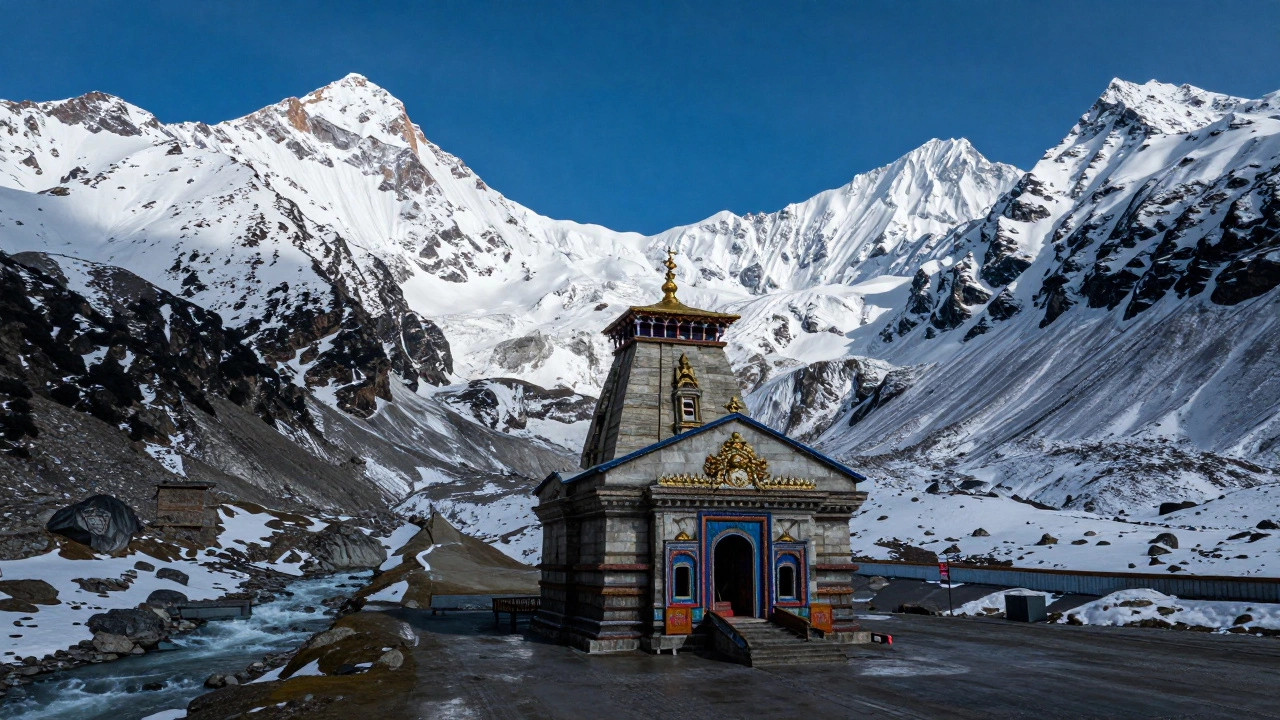
Now things get physically demanding. The northern dham is Badrinath Temple in Uttarakhand, nestled in the Garhwal Himalayas at an altitude of over 3,000 meters. This is part of the more famous "Chota Char Dham" (Mini Four Temples) circuit within Uttarakhand itself, but it serves as the northern anchor for the grand Char Dham.
The temple is dedicated to Vishnu in his form as Badrinarayan. It sits between the Nar and Narayan mountains. The idol is carved from black stone and is covered in gold jewelry during the summer months. The climate here is extreme. Winters are brutal, with heavy snowfall closing the temple gates for six months (usually November to April). The temple reopens in spring, marked by a grand ceremony called Akhand Chalisa.
Getting here requires a long drive from Haridwar or Dehradun, often involving rough roads and steep gradients. Altitude sickness is a real risk, so acclimatization is crucial. The surrounding landscape is breathtaking, with alpine meadows and glacial rivers, but respect the environment and the local customs.
4. Ramanathaswamy Temple (South)
Finally, you descend to the southern tip of India. The Ramanathaswamy Temple in Rameswaram, Tamil Nadu is dedicated to Lord Shiva. Wait, Shiva? Yes. While the other three temples are primarily Vaishnavite (Vishnu-focused), this one is Shaivite. This reflects the syncretic nature of Indian spirituality, where boundaries between sects often blur in practice.
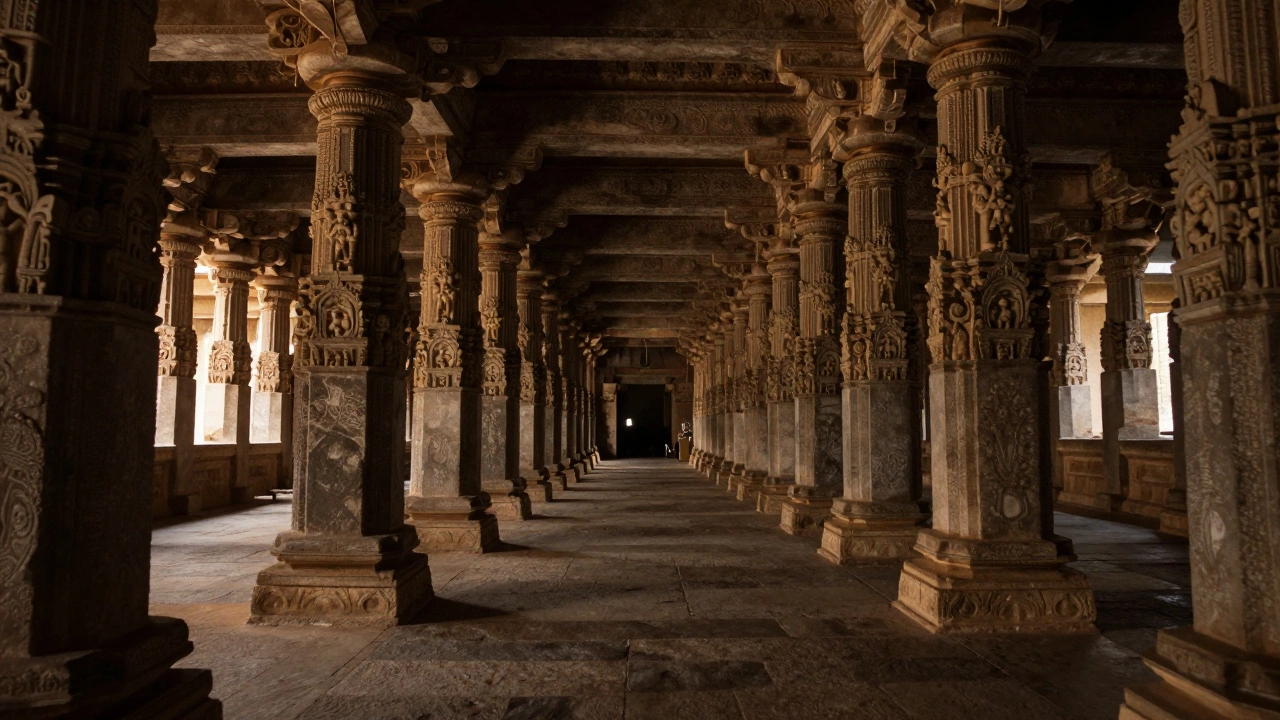
This temple holds a special place in the Ramayana. After defeating Ravana, Lord Rama performed penance here to atone for the sin of killing a Brahmin (Ravana was a scholar). The temple features the longest corridor of any Hindu temple in the world, stretching over 400 meters. It is supported by thousands of pillars, each intricately carved.
A key ritual here involves bathing in the Agni Theertham, a natural sea spring. Pilgrims believe this water has purifying powers. The island of Rameswaram is connected to mainland India by the Pamban Bridge, which was once the longest bridge in British India. The heat in Tamil Nadu can be intense, so timing your visit carefully is essential.
Planning Your Char Dham Journey
Visiting all four temples is a logistical challenge. Here is how to approach it practically.
Timing Is Everything
You cannot visit all four temples in a single short trip unless you are prepared for grueling travel schedules. The best window is between October and February. During these months, the weather in the North (Badrinath) is too cold for the temple to be open, but wait-the temple closes in winter. So, the ideal time is actually late spring to early autumn (April to October), but even then, Badrinath can be risky due to monsoon landslides.
Most serious pilgrims split the journey:
- Spring/Summer (April-June): Visit Badrinath and Kedarnath (if adding the mini circuit) first, before the monsoons hit.
- Autumn/Winter (October-February): Visit Puri, Dwarka, and Rameswaram when the weather is pleasant and dry.
Transportation Options
Flying is the fastest way to cover distances. You can fly into Bhubaneswar (for Puri), Ahmedabad or Porbandar (for Dwarka), Dehradun (for Badrinath), and Madurai or Trichy (for Rameswaram). From these airports, you’ll need local transport. In the north, shared jeeps are common for the final stretch to Badrinath. In the south and west, trains and buses are reliable and affordable.
Accommodation and Budget
Prices vary wildly. In Puri and Dwarka, you can find budget guesthouses for under $20 a night. In Badrinath, prices skyrocket during peak season, with basic rooms costing upwards of $50-$100. Book well in advance. For Rameswaram, mid-range hotels near the temple offer good value. Always carry cash, as ATMs can be scarce in remote areas like Badrinath.
Common Misconceptions About the Four Temples
There is often confusion between the Char Dham and the Chota Char Dham. The latter refers only to four temples in Uttarakhand: Badrinath, Kedarnath, Gangotri, and Yamunotri. While Badrinath is part of both circuits, Kedarnath, Gangotri, and Yamunotri are not part of the grand national Char Dham. Make sure you know which circuit you are planning for.
Another myth is that you must complete the circuit in one go. There is no rule stating this. Many devotees spend years visiting each site. The spiritual benefit comes from the intention and devotion, not the speed of completion.
Why This Journey Matters Today
In a fast-paced world, the Char Dham pilgrimage offers a chance to slow down. It forces you to engage with diverse cultures, languages, and landscapes. You’ll hear Sanskrit chants in the north, Gujarati prayers in the west, Odia devotional songs in the east, and Tamil bhajans in the south. It’s a microcosm of India’s unity in diversity.
Whether you are a devout Hindu, a history buff, or an adventure traveler seeking meaningful experiences, this circuit provides depth that typical tourist spots lack. Just remember to pack light, stay hydrated, and keep an open mind.
What is the difference between Char Dham and Chota Char Dham?
Char Dham refers to the four major temples across India (Puri, Dwarka, Badrinath, Rameswaram). Chota Char Dham refers specifically to four temples in Uttarakhand (Badrinath, Kedarnath, Gangotri, Yamunotri). Only Badrinath is common to both circuits.
Can foreigners visit the Char Dham temples?
Yes, foreigners can visit the premises of all four temples. However, entry into the inner sanctum (garbhagriha) is restricted to Hindus only at Puri Jagannath Temple and some other sites. Always check local rules as they can change.
How long does it take to complete the Char Dham Yatra?
If you rush, you could do it in 10-14 days using flights between cities. However, a comfortable pace allowing for sightseeing and travel delays would take 3-4 weeks. Many people split the trip over multiple years due to seasonal closures.
Is Badrinath safe for elderly travelers?
Badrinath is at high altitude (3,300m) and involves rough travel. It may not be suitable for those with heart or respiratory conditions. Consult a doctor before attempting the journey. Helicopter services are available but expensive and subject to weather.
Do I need a visa to visit these temples?
Indian citizens do not need visas. Foreign nationals require an appropriate Indian visa (e-tourist visa is common for many countries). Ensure your passport is valid for at least six months beyond your date of entry.