Indian Faith & Travel Guide
Select a religion or community below to discover its significance in India, key regions, and essential travel tips.
Overview
Key Regions & Sites
Travel Etiquette
Festivals & Timing
Select a faith above to begin your cultural exploration.
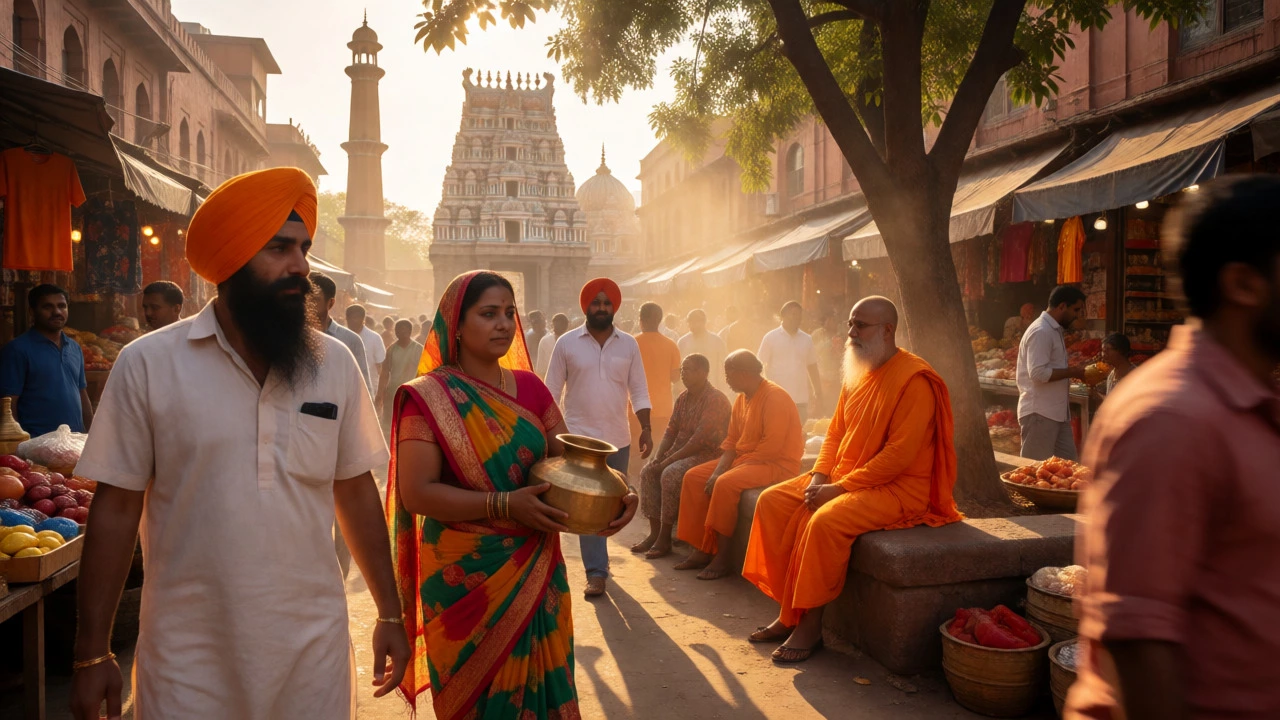
You land in Delhi or Mumbai, step out of the airport, and immediately hit a wall of sensory overload. It’s not just the heat or the traffic; it’s the sound. The call to prayer from a nearby mosque blends with the ringing bells of a Hindu temple down the street. You see men with turbans walking past women in colorful saris, while monks in saffron robes meditate on a park bench. If you’re planning a trip to India, understanding its religious landscape isn’t just academic-it’s essential for navigating the country respectfully and meaningfully.
The question "What religion is in India?" doesn’t have a single answer. Unlike many European countries that are predominantly Christian or Middle Eastern nations that are overwhelmingly Muslim, India is a mosaic. It is the birthplace of four major world religions and home to significant populations of others. For a traveler, this diversity means that every state, and sometimes every city, offers a different cultural vibe driven by faith. Let’s break down who believes what, where they are, and how it shapes your travel experience.
Hinduism: The Majority Faith and Cultural Backbone
Hinduism is the dominant religion in India, practiced by approximately 79.8% of the population according to the 2011 Census (with estimates remaining stable through 2026). Also known as Sanatana Dharma, or "Eternal Order," it is often described not just as a religion but as a way of life. When you walk through Varanasi or Madurai, you aren’t just seeing temples; you are witnessing a civilization that has evolved over 4,000 years.
For travelers, Hinduism explains much of the daily rhythm. The concept of purity and pollution influences everything from food preparation to entering homes. You’ll notice people washing their feet before entering shrines or avoiding leather items in holy places. But here’s the thing: Hinduism is incredibly diverse. There is no single pope or central authority. Practices vary wildly between the Shaivites in the south who worship Shiva and the Vaishnavites in the north who focus on Vishnu and his avatars like Rama and Krishna.
If you visit the Golden Temple in Amritsar, you might think everyone there is Sikh, but the surrounding markets are filled with Hindu traders celebrating Diwali. Understanding this fluidity helps you avoid awkward moments. For instance, removing your shoes before entering any religious site-whether it’s a mosque, gurdwara, or mandir-is a universal sign of respect in India, rooted heavily in Hindu hygiene traditions.
Islam: The Second Largest Community
Islam is the second-largest religion in India, comprising about 14.2% of the population. This makes India home to one of the largest Muslim populations in the world, surpassing even Indonesia in absolute numbers depending on the year’s estimates. Islamic influence is most visible in the architecture and cuisine of northern and western India.
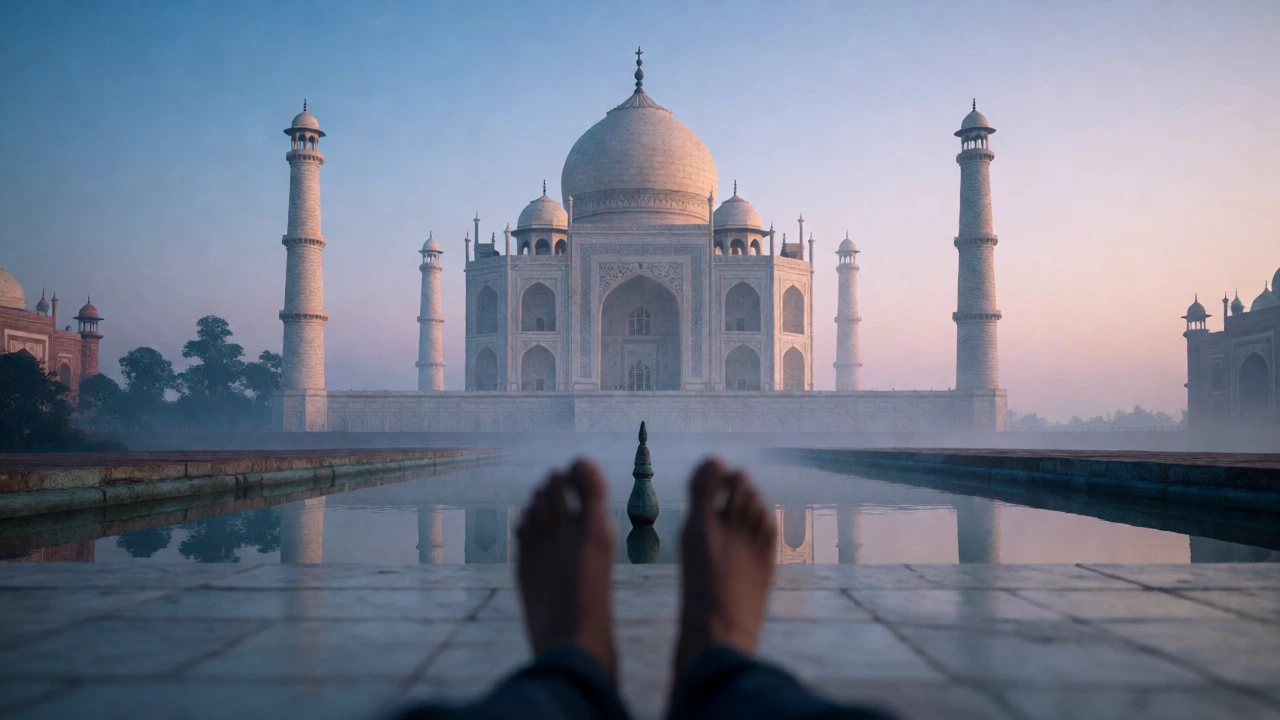
When you travel to cities like Hyderabad, Lucknow, or Old Delhi, the shift in atmosphere is palpable. The Mughal Empire left behind architectural marvels like the Taj Mahal and the Red Fort, which are essentially monuments to Islamic art and power. For a tourist, this history is fascinating because it shows how Islam blended with local Indian cultures rather than replacing them entirely. This syncretism created unique traditions, such as the Qawwali music tradition or the rich biryani dishes that differ significantly from those found in the Middle East.
Travelers should note that Ramadan affects business hours in Muslim-majority neighborhoods. Shops may open late in the afternoon after breaking fast. In contrast, Eid-ul-Fitr brings vibrant street celebrations, especially in places like Malabar Hill in Mumbai or the old quarters of Kolkata. Respecting these times shows cultural intelligence and often earns you warm hospitality.
Sikhism, Christianity, Buddhism, and Jainism
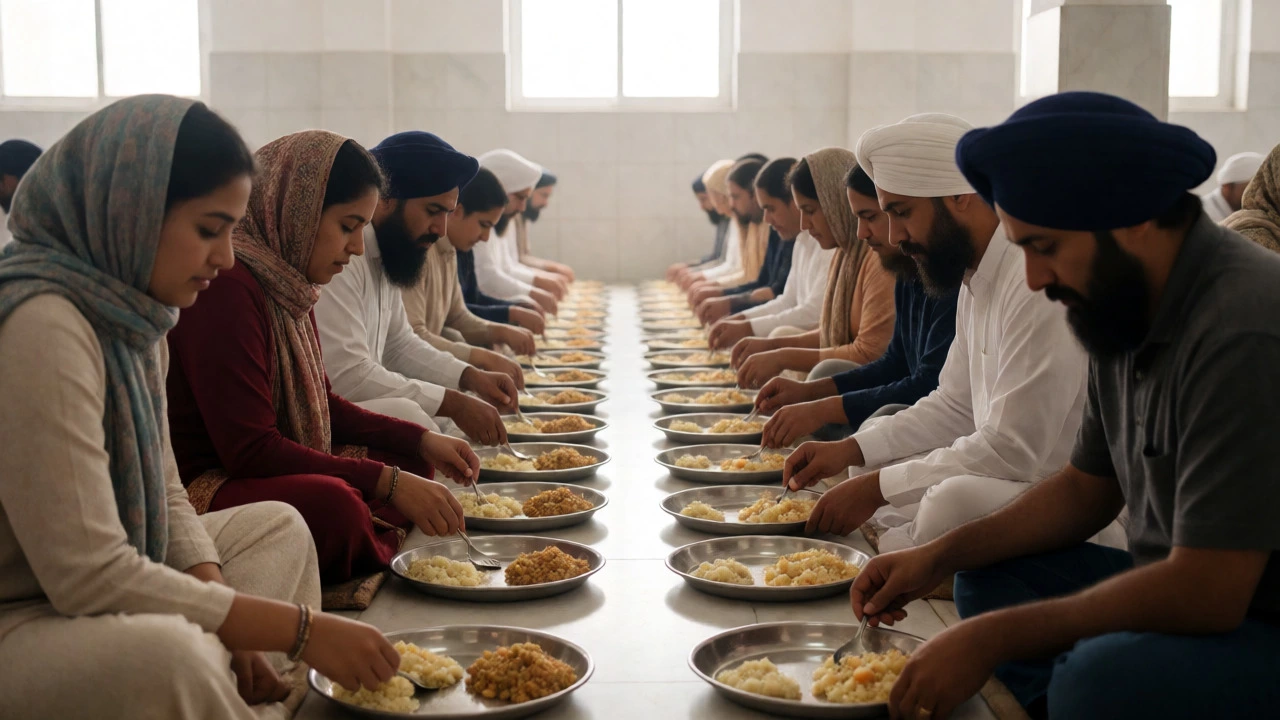
Beyond the two giants, India hosts several other significant faiths that offer distinct travel experiences. Sikhism is a monotheistic religion founded in the Punjab region in the 15th century, practiced by roughly 1.7% of Indians. Sikhs are instantly recognizable by their turbans and beards. Their place of worship, the Gurdwara, is famous for its Langar-a free community kitchen serving meals to anyone regardless of caste, creed, or religion. Visiting a Gurdwara is a must-do cultural activity; you cover your head, sit on the floor, and eat delicious vegetarian food prepared by volunteers.
Christianity accounts for about 2.3% of the population, concentrated heavily in Kerala, Goa, and the Northeastern states. In Goa, Portuguese colonial history left a legacy of beautiful baroque churches and a relaxed Catholic culture that contrasts sharply with the rest of India. In Kerala, Syrian Christians claim descent from converts made by St. Thomas the Apostle in the first century AD. Christmas in Goa is a massive event, blending tropical festivities with solemn religious processions.
Buddhism originated in India but declined locally until the 20th century, now representing around 0.7% of the population, largely due to Neo-Buddhist movements led by B.R. Ambedkar. However, the spiritual tourism around Buddhist sites is huge. Bodh Gaya, where Buddha attained enlightenment, attracts pilgrims from across Asia. Similarly, Dharamshala is the seat of the Tibetan government-in-exile and the Dalai Lama, making it a hub for Tibetan Buddhism.
Jainism is an ancient religion emphasizing non-violence (ahimsa), followed by about 0.4% of Indians, primarily merchants in Gujarat and Rajasthan. Jains are strict vegetarians, often excluding root vegetables. Their temples, like the Dilwara Temples in Mount Abu, are architectural masterpieces carved from white marble. If you’re interested in extreme asceticism and intricate art, Jain sites are unparalleled.
Zoroastrianism and Judaism: Small but Significant Communities
While small in number, some communities have had outsized impacts on Indian culture. The Parsis, followers of Zoroastrianism, fled Persia centuries ago and settled in Gujarat and Mumbai, where they became influential industrialists and philanthropists. You can visit the Towers of Silence in Mumbai, where Zoroastrians traditionally expose the dead to vultures, though this practice is fading. Their contribution to Indian industry and charity is immense.
Similarly, the Bene Israel Jews in Mumbai and Cochini Jews in Kerala represent ancient Jewish communities that integrated seamlessly into Indian society. While their numbers are tiny today, their historical presence adds another layer to India’s pluralistic identity.
How Religion Shapes Travel Logistics
Understanding these demographics helps you plan better trips. Here is a quick comparison of key regions and their dominant religious influences:
| Region/City | Dominant Religion | Key Cultural Feature | Travel Tip |
|---|---|---|---|
| Varanasi/Uttar Pradesh | Hinduism | Ganga Aarti rituals | Cover shoulders/knees at ghats |
| Lucknow/Hyderabad | Islam | Mughal Architecture & Cuisine | Respect Ramadan timings |
| Punjab | Sikhism | Langar (Community Kitchen) | Must cover head in Gurdwaras |
| Kerala/Goa | Christianity | Church Festivals | Visit during Christmas/Easter |
| Bihar/Maharashtra | Buddhism/Jainism | Stupas & Marble Temples | Dress modestly at monasteries |
Notice how the dress code changes based on location. In Hindu temples, shorts are often frowned upon. In mosques, women usually need to cover their heads. In Gurdwaras, everyone covers their heads. Knowing this saves you from being turned away at the door.
Also, consider the calendar. India celebrates festivals from all these religions. Diwali (Hindu), Eid (Muslim), Guru Nanak Jayanti (Sikh), Christmas (Christian), and Mahavir Jayanti (Jain) are public holidays. During these times, transport gets crowded, shops close, but the cultural immersion is worth it. If you want to see India at its most vibrant, time your trip for one of these major festivals.
Common Misconceptions About Indian Religion
One big mistake tourists make is assuming all Indians are Hindu. While 80% are, the 20% minority represents hundreds of millions of people-more than the entire population of Brazil. Another misconception is that Hinduism involves cow worship. Actually, cows are revered as symbols of motherhood and non-violence, but they aren’t worshipped as gods in the same way Lakshmi or Ganesha are.
Furthermore, don’t confuse caste with religion. Caste is a social hierarchy that exists within Hinduism, Islam, Christianity, and Sikhism in India, though it’s most rigid among Hindus. As a traveler, you won’t interact with caste dynamics deeply unless you stay with local families, but awareness helps you understand social interactions.
Finally, remember that secularism is part of the Indian constitution. This doesn’t mean separation of church and state like in France, but rather equal respect for all religions by the state. This allows for a complex, sometimes chaotic, but generally peaceful coexistence of diverse faiths.
Is India a Hindu country?
Legally, India is a secular republic with no state religion. Culturally and demographically, it is predominantly Hindu, with nearly 80% of the population identifying as Hindu. However, it has the third-largest Muslim population in the world and significant Christian, Sikh, Buddhist, and Jain communities.
Do I need to cover my head in Indian temples?
It depends on the type of temple. In Sikh Gurdwaras, covering your head is mandatory for both men and women. In most Hindu temples, head covering is not required, but dressing modestly (covering shoulders and knees) is expected. In mosques, women are typically required to cover their heads.
Which religion is growing fastest in India?
According to recent census data and demographic studies, Muslims have shown a slightly higher growth rate compared to Hindus, largely due to younger age structures and higher fertility rates in certain regions. However, the overall religious composition remains relatively stable, with Hindus maintaining their majority share.
Can tourists enter all religious sites in India?
Most religious sites are open to tourists, but some inner sanctums in Hindu temples are restricted to devotees only. Additionally, photography is often prohibited inside temples and mosques. Always check specific rules at the entrance or ask locals politely before taking photos or entering restricted areas.
Why do Indians remove their shoes before entering homes and temples?
This practice stems from concepts of purity and cleanliness prevalent in Hindu, Muslim, Sikh, and Buddhist traditions. Shoes are considered carriers of dirt and negative energy from the outside world. Removing them shows respect for the sacred space and maintains hygiene, especially since people often sit on the floor for prayer or dining.