Luxury Train Matcher
Answer a few questions to see which service aligns best with your travel style.
Imagine stepping onto a train that feels more like a boutique hotel than public transport. You have two main contenders in the US for this experience: Acela, the veteran of the Northeast Corridor, and Brightline, the flashy newcomer reshaping Florida’s rails. Both promise speed, comfort, and a break from airport chaos. But they are fundamentally different beasts. One is a legacy service with decades of refinement; the other is a modern startup focused on seamless digital integration and new infrastructure.
If you’re trying to decide which ticket to buy, you need to look past the marketing gloss. Are you traveling between New York and Washington? Or are you hopping from Miami to Orlando? The answer depends entirely on your route, your tolerance for old-school bureaucracy versus new-age app dependency, and what you value in luxury.
The Core Difference: Legacy Power vs. Modern Agility
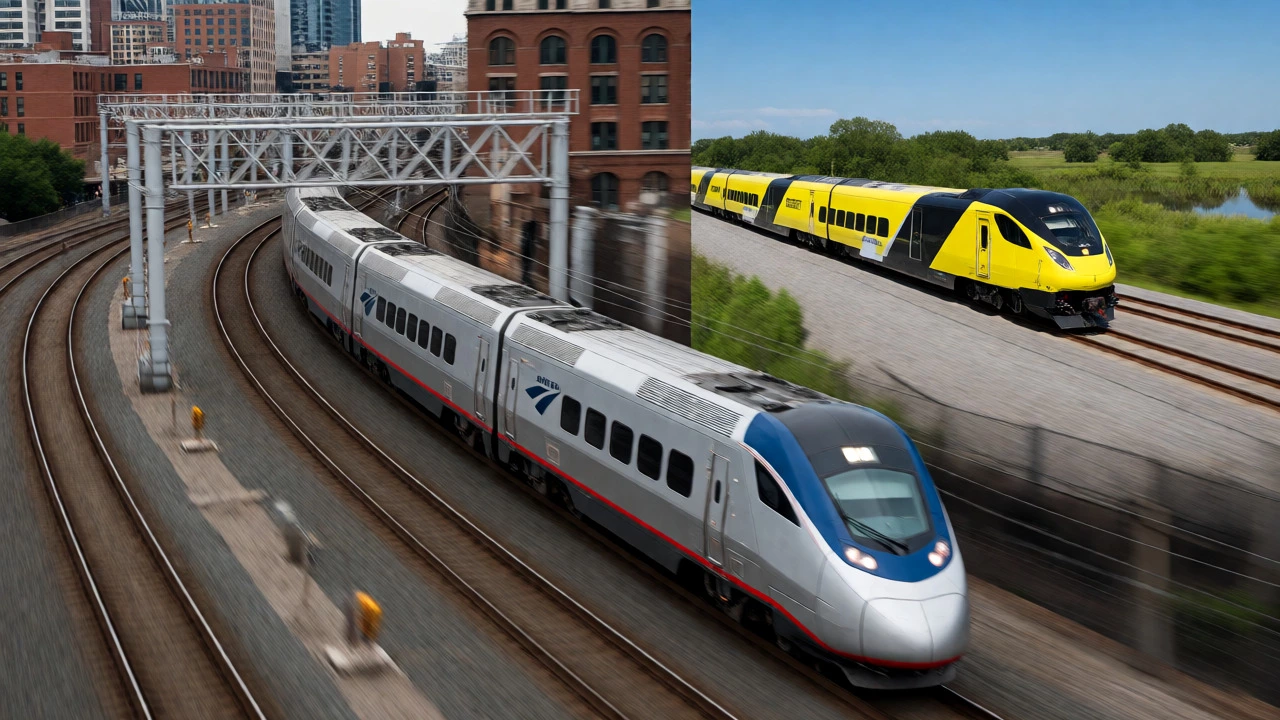
Acela is operated by Amtrak, the national passenger railroad service. It runs on the Northeast Corridor (NEC), connecting Boston, New York City, Philadelphia, Baltimore, and Washington, D.C. This is one of the busiest rail lines in the Western Hemisphere. Acela has been around since 2000. It knows its passengers. It knows the quirks of aging tracks and shared freight corridors.
Brightline, launched in 2018, operates exclusively in Florida. It connects Miami, Fort Lauderdale, West Palm Beach, and now extends to Orlando and Tampa (via connections). Unlike Acela, Brightline owns its dedicated right-of-way in many sections. This allows for higher speeds and fewer delays caused by freight trains. Brightline is private equity-backed, focusing heavily on technology and customer experience as a competitive edge against driving or flying.
The fundamental difference isn’t just geography. Acela is part of a massive, complex federal system. Brightline is a streamlined, tech-first operation. When you book Acela, you’re booking into a network that handles millions of commuters. When you book Brightline, you’re buying into a curated lifestyle brand that happens to move people fast.
Speed and Schedule Reliability
Let’s talk numbers. Acela tops out at 150 mph (241 km/h) on certain stretches, but averages much lower due to curve limitations and traffic density. A trip from New York to Washington takes about 3 hours. That’s fast compared to driving, but slower than the theoretical maximum. Delays happen. Track maintenance, weather, and signal issues can push arrival times back by 15-30 minutes regularly.
Brightline also hits 125 mph (201 km/h) currently, with plans for higher speeds. Its key advantage is reliability. Because it controls its own tracks in critical segments, it avoids the congestion that plagues the NEC. A Miami to Orlando trip takes roughly 3.5 hours. While not significantly faster than driving without traffic, the predictability is superior. You know exactly when you’ll arrive because the variables are controlled.
| Feature | Acela | Brightline |
|---|---|---|
| Max Speed | 150 mph | 125 mph (current) |
| Primary Route | Northeast Corridor (Boston-DC) | South Florida (Miami-Tampa) |
| Track Ownership | Mixed (Shared/Freight priority) | Dedicated Right-of-Way (mostly) |
| On-Time Performance | Variable (affected by external factors) | High (controlled environment) |
Cabin Experience: Old Money vs. New Tech
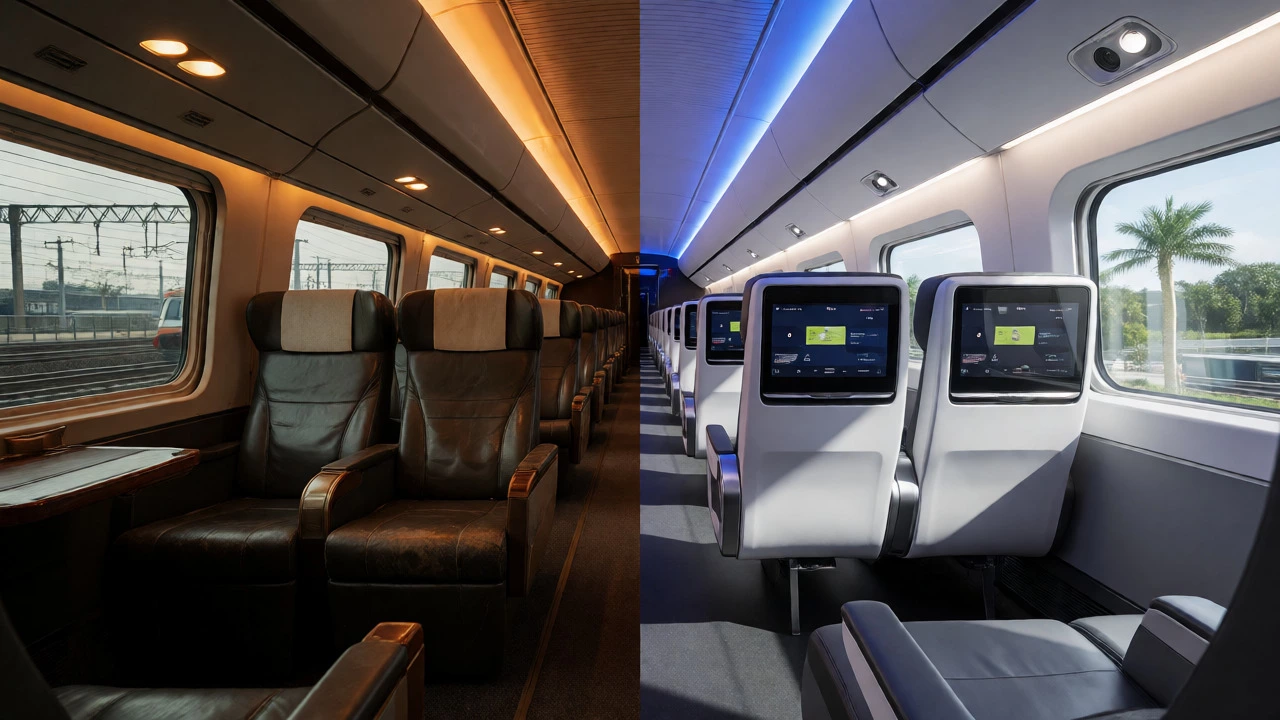
Step inside an Acela Business Class car. You get leather seats, extra legroom, and power outlets. It’s comfortable, clean, and functional. But it feels familiar. Maybe too familiar. The layout hasn’t changed drastically in years. Wi-Fi is available but can be spotty in tunnels or rural areas. There’s no seatback screens-just a small tray table and a view of the passing landscape.
Brightline’s Smart Class (their equivalent of business) feels like an airplane cabin designed by Apple. Seats recline further, often with massage functions. Each seat has a large touchscreen entertainment system. The lighting is adjustable via an app. You control your environment. The Wi-Fi is robust, backed by satellite and terrestrial networks, ensuring you can stream video even in remote Florida swamps.
In First Class, the gap widens. Acela First offers wider seats, complimentary food and drink, and access to exclusive lounges. It’s classy, quiet, and professional. Brightline Select Class goes further. You get a dedicated attendant, premium meals served on real plates, and lounge access that includes spa services in some stations. It’s less about transportation and more about hospitality.
Booking and Customer Service
This is where the generational divide shows most clearly. Booking Acela can feel like fighting a bureaucratic machine. The website is functional but dated. Changes to tickets often require calling customer service, which involves hold music and scripted responses. If your train is delayed, you might get an email, but proactive communication is inconsistent.
Brightline’s app is its superpower. You check in, choose seats, order food, and track your train all from your phone. Changes are instant. If there’s a delay, push notifications alert you immediately. Support is chat-based and responsive. For travelers who hate friction, Brightline wins easily. However, if you prefer talking to a human agent, Acela still offers traditional phone support, though wait times can be long.
Food and Beverage Options
Acela’s dining experience varies by class. In Coach, you buy snacks and drinks from a café car. Prices are high, quality is average. In Business, you get a complimentary non-alcoholic beverage and snack. In First, you receive a full meal service with alcohol options. The menu rotates seasonally, featuring regional specialties like Chesapeake crab cakes or New England clam chowder. It’s decent, but not memorable.
Brightline treats food as a core product. Even in Smart Class, you can order gourmet meals delivered to your seat. The menu features locally sourced ingredients from Florida chefs. Think stone-ground grits with shrimp, craft beers from local breweries, and artisanal desserts. In Select Class, the dining is comparable to a mid-range restaurant. You can pre-order meals before boarding, ensuring freshness and availability.
Lounge Access and Station Experience
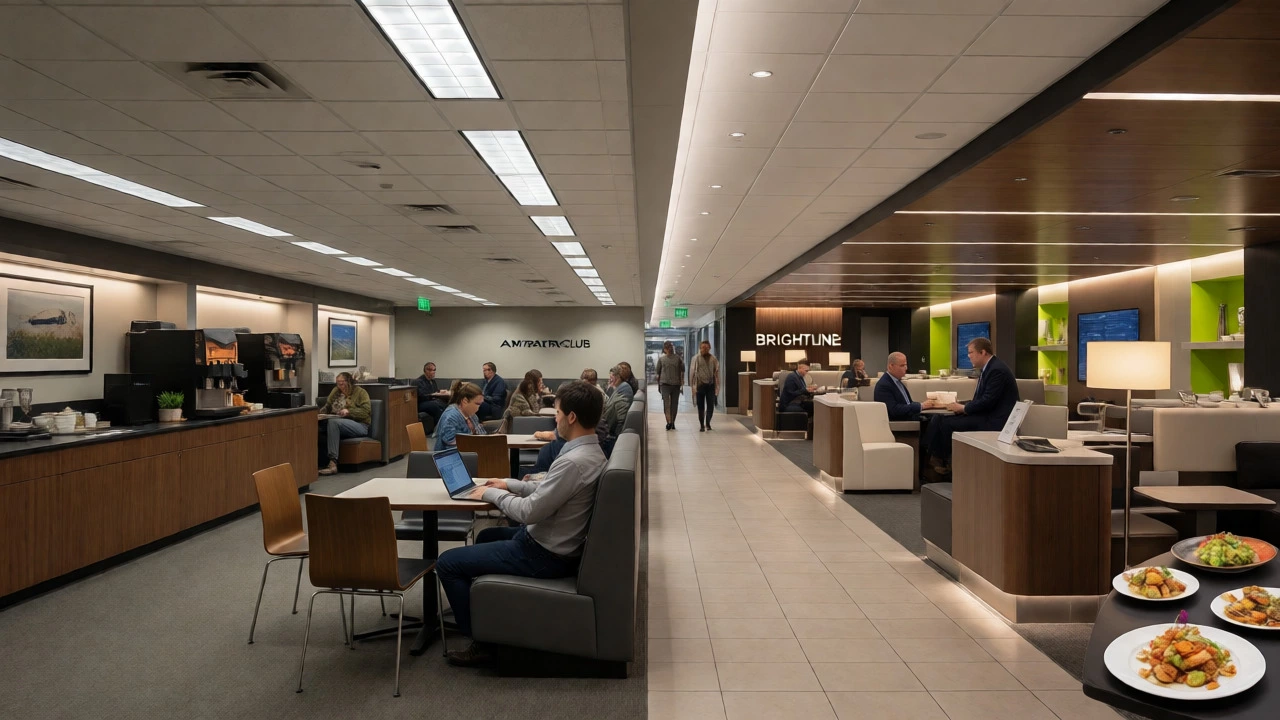
Acela passengers in First Class access Amtrak Club lounges. These are basic waiting areas with coffee, tea, light snacks, and workspaces. They’re clean but utilitarian. No showers, no spas, no fancy perks. Just a place to sit away from the crowd.
Brightline stations are destinations themselves. The MiamiCentral station, for example, features retail shops, restaurants, and art installations. Passengers in Select Class enter through a separate entrance and access a lounge with concierge service, complimentary refreshments, and sometimes wellness amenities like meditation rooms. The entire journey starts and ends in a premium environment, reducing the stress of transit hubs.
Pricing Strategy: Who Pays More?
Both services use dynamic pricing. Prices fluctuate based on demand, time of day, and how early you book. Generally, Acela is slightly cheaper for short hops within the Northeast, especially if booked weeks in advance. A Business Class ticket from NYC to Philly might cost $70-$100.
Brightline tends to be pricier, particularly for longer routes like Miami to Orlando. Smart Class tickets often range from $90 to $150. Select Class can exceed $200. However, Brightline frequently runs promotions for residents and families. Acela discounts are rarer, mostly limited to senior citizens, students, or military personnel.
Consider the total cost. Driving between cities adds gas, tolls, and parking fees. Flying adds baggage fees, security wait times, and ground transport costs. Trains include luggage allowance (two bags typically) and drop you downtown, saving time and money on taxis.
Which One Should You Choose?
Choose Acela if:
- You are traveling in the Northeast US (Boston-NYC-DC).
- You value frequency of departures (multiple trains per hour).
- You prefer established loyalty programs (Amtrak Guest Rewards).
- You don’t mind occasional delays as part of the adventure.
- You want a quieter, more subdued atmosphere for working.
Choose Brightline if:
- You are traveling in South Florida.
- You prioritize technological convenience and app-based management.
- You want a high-end hospitality experience with better food.
- You appreciate modern design and new facilities.
- You are willing to pay a premium for reliability and comfort.
Frequently Asked Questions
Can I use my Amtrak rewards on Brightline?
No. Brightline is a separate company from Amtrak. They do not share loyalty programs. You cannot earn or redeem Amtrak points on Brightline trips, nor vice versa. Each has its own membership scheme.
Is Acela actually high-speed rail?
Technically, yes, but with caveats. It reaches speeds up to 150 mph, qualifying it as high-speed by US standards. However, true high-speed rail (like Japan's Shinkansen or Europe's TGV) sustains higher speeds over longer distances. Acela spends much of its time accelerating and decelerating due to curves and shared tracks.
Does Brightline go to New York?
Not yet. Brightline currently operates only in Florida. Plans exist to expand northward along the East Coast, potentially reaching Charlotte, Atlanta, and eventually New York, but construction timelines vary. As of 2026, you must transfer to Amtrak or drive to connect to the Northeast Corridor.
Which train has better Wi-Fi?
Brightline generally offers more consistent and faster Wi-Fi. Their infrastructure is newer and designed with connectivity as a priority. Acela’s Wi-Fi works well in urban areas but can drop out in rural parts of Pennsylvania and Maryland. If you need reliable internet for video calls, Brightline is the safer bet.
Are pets allowed on both trains?
Yes, both allow small dogs and cats in carriers for a fee. Policies are similar: pets must stay in carriers under the seat. However, Brightline’s pet policy is integrated into their app for easy booking, while Acela requires adding pets during the reservation process, which can sometimes glitch online.
Final Thoughts: Matching Service to Journey
Don’t think of these trains as direct competitors. They serve different markets. Acela is the pragmatic choice for business travelers navigating the dense Northeast corridor. It’s efficient, frequent, and deeply embedded in the region’s transit culture. Brightline is the experiential choice for leisure travelers in Florida who want their vacation to start the moment they step on board.
If you’re planning a multi-city tour, you might ride both. Take Acela from DC to NYC for meetings, then fly down to Miami and hop on Brightline for a weekend getaway. Notice the shift in vibe. One feels like commuting in style; the other feels like arriving at a resort. Both offer a compelling alternative to the stress of airports, provided you pick the right tool for the job.