Temple Age Comparison Tool
Compare ancient temple sites with Göbekli Tepe, the oldest known temple in the world built around 9600 BCE. See how different sites stack up in history.
Göbekli Tepe predates India's earliest known religious sites by thousands of years. It was built by hunter-gatherers long before agriculture or cities existed.
When you think of ancient temples, you probably picture stone carvings in Varanasi, golden spires in Tamil Nadu, or the marble domes of Khajuraho. But the oldest temple in the world isn’t in India at all. It’s buried under a hill in southeastern Turkey, and it rewrote everything we thought we knew about human history.
The Real Oldest Temple: Göbekli Tepe
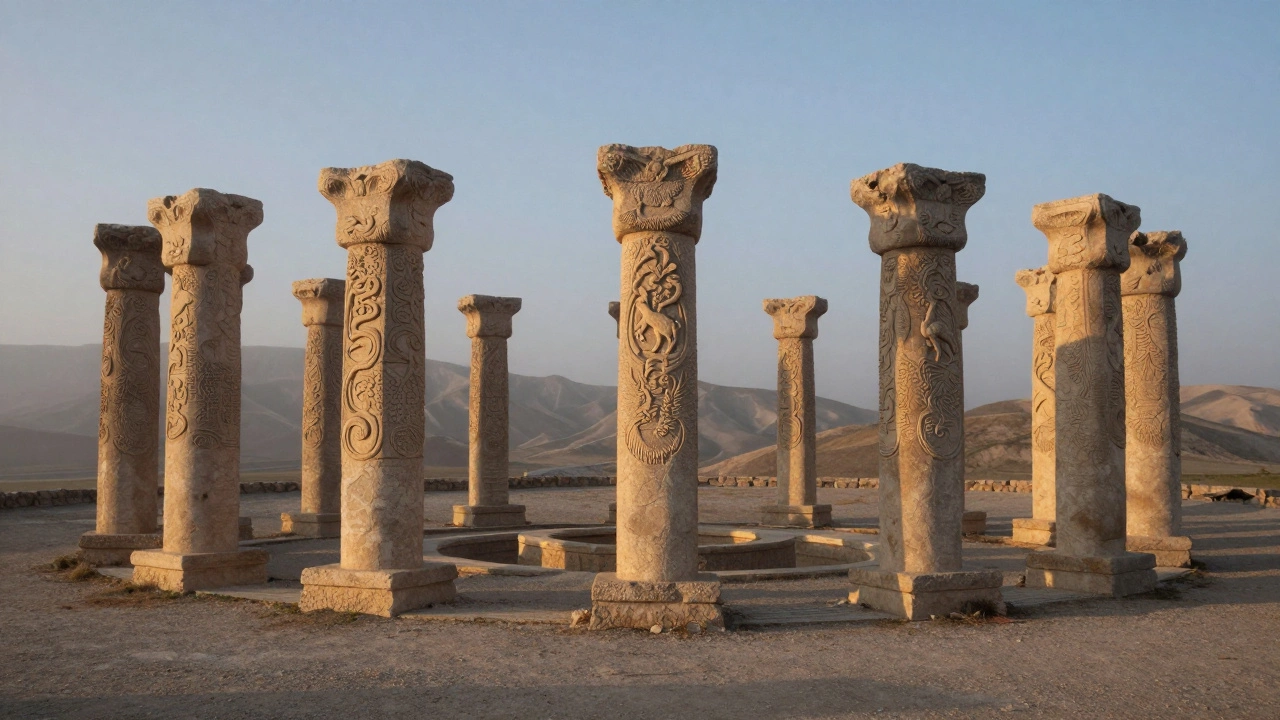
Göbekli Tepe, meaning "Potbelly Hill" in Turkish, was built around 9600 BCE-more than 6,000 years before Stonehenge and 7,000 years before the pyramids of Giza. This isn’t just an old structure. It’s the oldest known human-made religious site on Earth. Before Göbekli Tepe, experts believed that agriculture came first, then permanent settlements, and only after that did people build temples. But here’s the twist: Göbekli Tepe was built by hunter-gatherers. No farming. No villages. Just people gathering in the wild to worship.
The site has over 200 massive T-shaped stone pillars, some standing nearly 6 meters tall and weighing up to 10 tons. They’re carved with detailed reliefs of foxes, snakes, scorpions, and birds-animals that likely held spiritual meaning. These aren’t decorations. They’re sacred symbols. And they were arranged in circular enclosures, suggesting rituals, chants, or ceremonies held under open skies.
What’s even stranger? The site was deliberately buried around 8000 BCE. No one knows why. Maybe it was a ritual act. Maybe the people moved on. But the fact that they went to the effort to cover it up tells us this wasn’t just a meeting place-it was sacred ground.
Why This Changes Everything About Temple Tours in India
If you’re planning temple tours in India, you’re walking through a landscape rich with millennia of devotion. But Göbekli Tepe reminds us that the urge to build sacred space didn’t start with kings, empires, or written texts. It started with people who had no writing, no metal tools, and no cities-yet still felt the need to connect with something beyond themselves.
Indian temples like the Kailasa Temple in Ellora or the Brihadeeswarar Temple in Thanjavur are marvels of engineering and art. But they’re the end of a long line. Göbekli Tepe is the beginning. It shows that religion, ritual, and communal worship came before civilization as we define it. That means the spiritual impulse behind Indian temple architecture-connecting the earthly with the divine-is older than agriculture, older than writing, older than the Indus Valley Civilization.
When you stand in front of the lingam in a Shiva temple in Madurai, you’re not just seeing a symbol. You’re standing where humanity’s oldest spiritual traditions still echo. Göbekli Tepe doesn’t diminish India’s temples-it deepens them. It says: this isn’t just culture. It’s continuity.
What Makes a Temple? Beyond Architecture
Many people think of temples as buildings with idols, priests, and rituals. But Göbekli Tepe had no idols. No altars. No statues. Just stone pillars arranged in circles. So what made it a temple? The intention. The effort. The collective belief that this place was special.
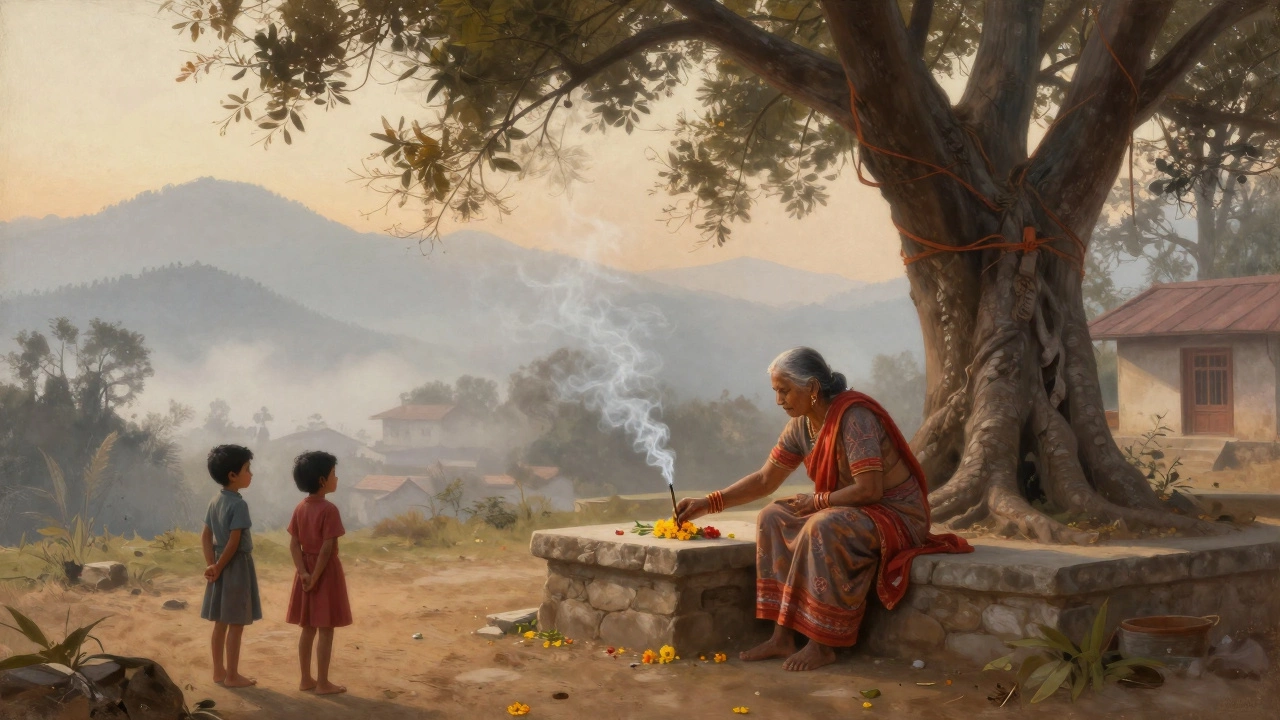
That’s the same energy you find in the hilltop shrines of Uttarakhand, where villagers carry offerings up steep paths to simple stone platforms. Or in the forest groves of Kerala, where trees are worshipped as living deities. These aren’t grand temples. But they’re just as ancient in spirit.
Indian temple tours often focus on monumental sites. But the soul of temple culture lies in these smaller, quieter places too. The oldest temples aren’t always the biggest. They’re the ones where people still gather, still pray, still feel something.
How Göbekli Tepe Compares to Ancient Indian Sites
Let’s put this in perspective. Here’s how Göbekli Tepe stacks up against early Indian religious sites:
| Site | Location | Age (approx.) | Builders | Key Features |
|---|---|---|---|---|
| Göbekli Tepe | Turkey | 9600 BCE | Hunter-gatherers | Massive carved pillars, circular enclosures, no domestic remains |
| Mehrgarh Shrines | Pakistan (near Indus Valley) | 7000 BCE | Early farmers | Small ritual pits, terracotta figurines, animal bones |
| Lothal Dockyard (possible ritual area) | Gujarat, India | 2400 BCE | Indus Valley Civilization | Water tanks, possible purification spaces |
| Harappa Ritual Platform | Punjab, Pakistan | 2600 BCE | Indus Valley Civilization | Large brick platform, no clear temple structure |
| Brihadeeswarar Temple | Tamil Nadu, India | 1010 CE | Chola Dynasty | Granite tower, intricate carvings, active worship |
Notice something? India’s earliest temple-like structures appear over 7,000 years after Göbekli Tepe. The Indus Valley people had ritual spaces, but nothing that matches the scale or symbolism of Göbekli Tepe. The first true Hindu-style temples-stone structures with deities, sanctums, and spires-didn’t emerge until around 500 BCE. That’s still 9,000 years after the first temple was built in Turkey.
Why This Matters for Your Next Temple Tour
Planning a temple tour in India? You’re not just visiting buildings. You’re tracing a thread that stretches back longer than any civilization. Göbekli Tepe teaches us that temples aren’t about grandeur. They’re about meaning.
When you visit the Sree Padmanabhaswamy Temple in Kerala, you’re not just seeing gold and jewels. You’re stepping into a tradition that’s been alive since before recorded history. The rituals, the chants, the offerings-these aren’t customs that started with kings. They’re echoes of something older.
So when you’re on your temple tour, look beyond the architecture. Notice the quiet moments: an elderly woman placing a flower at a roadside shrine, a child lighting a diya in a village temple, the smell of incense rising before sunrise. That’s the same impulse that moved people 11,600 years ago to carve stone pillars in the wild and gather under the stars.
The oldest temple isn’t in India. But the spirit behind every temple-from Turkey to Tamil Nadu-is the same. We build sacred spaces because we need to feel connected. To each other. To the earth. To something bigger than ourselves.
What You Can Learn from Göbekli Tepe on Your Temple Tour
Here’s what to keep in mind when you visit Indian temples:
- Temples aren’t just for worship-they’re for community. Göbekli Tepe was built by hundreds of people working together. Indian temple festivals like Kumbh Mela or Pongal are modern versions of that same gathering.
- Symbolism matters more than size. A simple stone in a forest can be more sacred than a marble palace. Look for the small shrines, the hidden altars, the trees tied with threads.
- Religion predates civilization. The people who built Göbekli Tepe didn’t have cities, but they had belief. So do the villagers who still carry offerings on foot to hilltop shrines in Himachal.
- Temples evolve, but the heart stays the same. From carved pillars to towering gopurams, the goal hasn’t changed: to create a space where the human and the divine meet.
Don’t just check off temples on your list. Feel them. Listen. Watch how people move through them. That’s where the real history lives.
Frequently Asked Questions
Is Göbekli Tepe older than any temple in India?
Yes. Göbekli Tepe was built around 9600 BCE. The earliest known temple-like structures in India, like those in Mehrgarh, date to around 7000 BCE. The first true Hindu-style temples with deities and spires didn’t appear until about 500 BCE-over 9,000 years later.
Can I visit Göbekli Tepe on a temple tour of India?
Not directly. Göbekli Tepe is in modern-day Turkey, about 3,000 kilometers from India. But many temple tour operators now offer extended cultural itineraries that include both India and Turkey for travelers interested in ancient religious history. It’s not a standard stop, but it’s becoming a growing interest among serious cultural tourists.
Why don’t we hear more about Göbekli Tepe in Indian temple tours?
Most temple tours focus on India’s own rich heritage. Göbekli Tepe is often seen as a separate topic in archaeology. But that’s changing. As more travelers seek deeper context, guides are starting to connect global ancient sites to Indian traditions-showing that the human need for sacred space is universal.
Are there any Indian sites that come close to Göbekli Tepe in age?
No Indian site matches Göbekli Tepe’s age. The earliest possible ritual structures in India, like those at Mehrgarh (7000 BCE), are still 2,600 years younger. The Indus Valley sites (2600 BCE) show signs of ritual activity, like water tanks and platforms, but nothing with the scale or symbolic complexity of Göbekli Tepe’s carved pillars.
Does Göbekli Tepe mean Indian temples are less significant?
Absolutely not. Göbekli Tepe shows how ancient the human impulse to build sacred space is. Indian temples are not copies-they’re continuations. They carry forward a tradition that began long before cities, before writing, before even farming. Their beauty and complexity are the result of thousands of years of evolution, not the start of it.
What to Do Next
If you’re planning a temple tour in India, don’t just pick the most famous ones. Look for the quiet corners. Visit a village shrine in Odisha where elders still perform fire rituals. Walk through the ancient steps of the Saptakoteshwar Temple in Goa, where the original stone still stands. Sit quietly at dawn in the Srisailam Mallikarjuna Temple and listen to the chants.
These moments connect you to something older than any textbook. Older than any empire. Older than Göbekli Tepe itself, in spirit.
The oldest temple isn’t a place. It’s the feeling you get when you realize: we’ve been doing this for 11,600 years. And we’re still here.