Heritage Type Quiz
Test Your Knowledge
Identify the heritage type of these famous Indian sites based on the article content.
Question 1
The Group of Monuments at Hampi was the capital of the Vijayanagara Empire for 200 years. Its temples, markets, and royal baths represent:
Question 2
The Sundarbans, where the Ganges meets the Bay of Bengal, is home to the last surviving population of Royal Bengal tigers that live in saltwater mangroves:
Question 3
The Valley of Flowers in Uttarakhand is a high-altitude meadow with rare alpine flowers, tied to Hindu mythology about Lakshmana finding a life-saving herb:
Question 4
The Jaipur City, known as the "Pink City," was one of the first planned cities in India, laid out in 1727 using grid patterns and Vastu Shastra principles:
Question 5
The Western Ghats, a mountain range older than the Himalayas with over 5,000 flowering plants, is recognized as a biodiversity hotspot:
India isn’t just a country-it’s a living archive. Every street corner, temple, forest, and festival holds a story older than most nations. But when people talk about India’s heritage, they often think only of forts and palaces. The truth is far richer. India’s heritage is divided into three clear, official types: cultural, natural, and mixed. These aren’t just labels. They shape how sites are protected, who visits them, and why they matter to the world.
Cultural Heritage: Where History Comes Alive
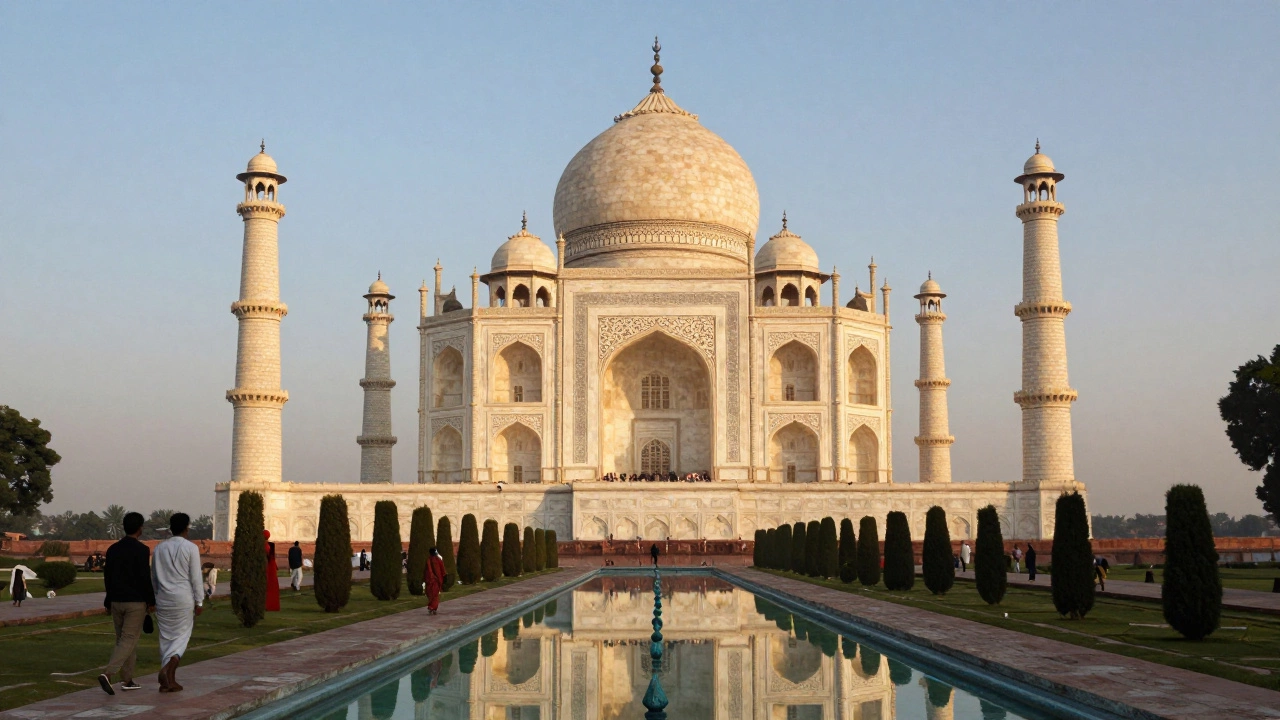
Cultural heritage in India means human-made places shaped by centuries of art, religion, trade, and power. Think of the Taj Mahal, the Red Fort, or the rock-cut caves of Ajanta. These aren’t just pretty buildings. They’re records of how people lived, worshipped, and ruled. The UNESCO World Heritage list calls this category "cultural sites," and India has over 40 of them.
Take the Group of Monuments at Hampi. It was once the capital of the Vijayanagara Empire, a kingdom that ruled southern India for 200 years. Its temples, markets, and royal baths still stand-carved from granite, painted with forgotten pigments, and aligned with celestial events. This isn’t just architecture. It’s urban planning from the 14th century, still readable today.
Another example: the Jaipur City, known as the "Pink City." It was one of the first planned cities in India, laid out in 1727 using grid patterns and Vastu Shastra principles. The city’s walls, bazaars, and observatory (Jantar Mantar) were designed to blend science, astrology, and daily life. These places don’t just attract tourists-they help historians decode ancient societies.
Natural Heritage: Landscapes That Define a Nation
Not all heritage is built by hands. Some is shaped by wind, water, and time. India’s natural heritage includes forests, wetlands, mountains, and wildlife sanctuaries that hold global ecological value. These sites are protected not for their temples, but for their biodiversity.
The Sundarbans, where the Ganges meets the Bay of Bengal, is home to the last surviving population of Royal Bengal tigers that live in saltwater mangroves. It’s the world’s largest such ecosystem. No other place on Earth has tigers that swim through tidal creeks and hunt in brackish water. This isn’t just a park-it’s a survival story.
Then there’s the Western Ghats, a mountain range running parallel to India’s west coast. It’s older than the Himalayas and has more plant species than any other region of its size. Over 5,000 flowering plants grow here, 2,000 of which are found nowhere else. Scientists call it a biodiversity hotspot. UNESCO recognized it in 2012 because it’s a living laboratory of evolution.
Even smaller sites matter. The Keoladeo National Park in Rajasthan was once a royal duck-hunting reserve. Now it’s a critical stopover for 230+ species of migratory birds, including the endangered Siberian crane. The change from hunting ground to sanctuary shows how heritage can evolve-from privilege to protection.

Mixed Heritage: When Nature and Culture Are One
Some places refuse to be boxed into one category. They’re both sacred and wild, built and natural. These are India’s mixed heritage sites-and they’re some of the most powerful.
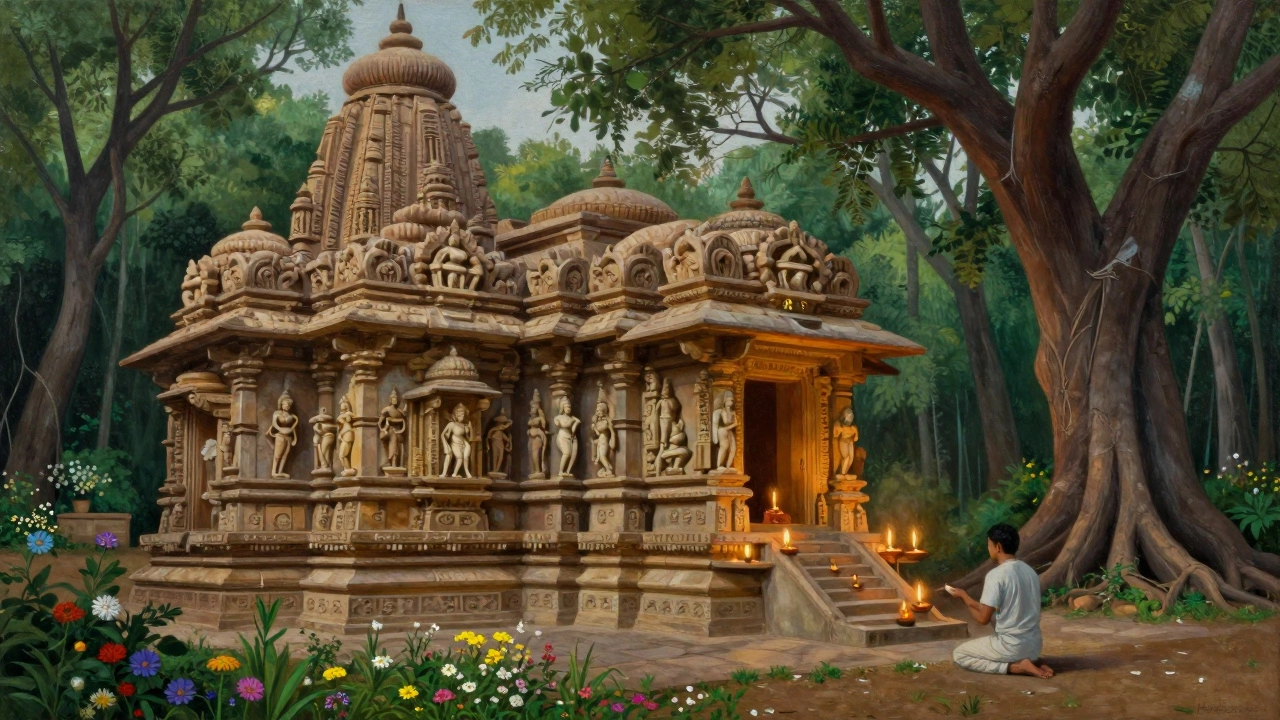
Khajuraho’s temples are famous for their erotic sculptures, but they’re also surrounded by dense forests that have been untouched for centuries. Locals still perform rituals under ancient trees that predate the temples. The site isn’t just about art; it’s about how spirituality grew from the land itself.
The Valley of Flowers in Uttarakhand is another example. It’s a high-altitude meadow bursting with rare alpine flowers. But it’s also tied to Hindu mythology. Legend says this is where Lakshmana, from the Ramayana, found the life-saving herb. Pilgrims walk these paths, not just for the blooms, but to follow a spiritual trail.
Mount Kailash, though not officially listed by UNESCO, is the ultimate mixed heritage site for millions. Hindus believe it’s the home of Shiva. Buddhists see it as the axis of the universe. Jains say it’s where their first teacher attained enlightenment. And the surrounding landscape-glaciers, rivers, and barren peaks-is untouched by modern development. No roads, no hotels, no cables. Just prayer, pilgrimage, and silence.
Why These Three Types Matter
Understanding these categories isn’t just for academics. It affects how you experience India. If you visit the Qutub Minar, you’re seeing cultural heritage. If you trek to the Nanda Devi Biosphere Reserve, you’re walking through natural heritage. And if you go to the Amarnath Cave, where an ice lingam forms every summer, you’re stepping into mixed heritage.
Each type needs different care. Cultural sites need restoration, security, and visitor management. Natural sites need pollution control, wildlife corridors, and climate adaptation. Mixed sites need both-and respect for living traditions.
India’s heritage isn’t frozen in time. It’s dynamic. The temples of Konark still draw pilgrims. The mangroves of Sundarbans still protect coastal villages from cyclones. The forests of Satpura still hold ancient medicinal plants used by tribal healers.
What You Can Do
When you visit, ask: Is this place protected because of its history? Its ecology? Or both? Support local guides who know the stories behind the stones. Avoid buying artifacts sold as "antiques." Don’t litter near sacred groves. Don’t climb on rock carvings. These aren’t just rules-they’re ways to honor what’s been preserved for thousands of years.
India’s heritage isn’t about how old something is. It’s about how deeply it still matters.
Are all heritage sites in India listed by UNESCO?
No. India has 43 sites on the UNESCO World Heritage List, but there are hundreds more recognized by the Archaeological Survey of India (ASI) and state governments. Many smaller temples, stepwells, and forest areas are protected at the national or local level but aren’t on the global list. UNESCO recognition brings international attention, but local protection often matters more for daily preservation.
Can natural heritage sites be visited like tourist attractions?
Yes, but with limits. Places like the Sundarbans or Valley of Flowers have strict visitor caps to protect fragile ecosystems. Entry permits are required, and guided tours are mandatory. Unlike cultural sites where you can wander freely, natural heritage often restricts access to prevent soil erosion, wildlife disturbance, or pollution. This isn’t about keeping people out-it’s about keeping the place alive.
Why are mixed heritage sites harder to protect?
Because they sit at the intersection of two worlds. A mixed site like Khajuraho needs conservation of stone carvings (cultural) AND protection of surrounding forests (natural). It also has to respect ongoing religious practices. This means coordinating between archaeologists, ecologists, priests, and local communities. Conflicts arise-like when tourism increases, or when rituals require burning offerings near ancient trees. Managing these tensions takes more than laws; it needs deep cultural understanding.
Is there a difference between heritage and tourism?
Absolutely. Heritage is about preservation, identity, and continuity. Tourism is about visits, spending, and experiences. A temple might be a heritage site because it’s been worshipped in for 1,200 years. But if 10,000 tourists flood in daily, buying souvenirs and leaving plastic, the site becomes a commodity-not a sacred space. True heritage preservation means putting meaning ahead of foot traffic.
How do I know if a site is officially protected?
Check for official signage. Sites protected by UNESCO have a blue and white logo. Sites under India’s Archaeological Survey of India (ASI) have green plaques with the ASI emblem. State-protected sites often have local government signs. If there’s no sign, it’s likely not officially listed. But that doesn’t mean it’s unimportant-many sacred groves or village wells have deep heritage value even without formal status.