Adventure Trip Cost Calculator
Adventure Trip Cost Calculator
Estimate costs for your adventure trip to Manali or Rishikesh based on activity type, duration, and season.
When people ask what the adventure capital of India is, they’re not just looking for a name on a map. They want to know where the mountains scream, the rivers roar, and the air feels alive with adrenaline. The answer isn’t hidden in brochures or tourist traps. It’s carved into the cliffs of Himachal Pradesh, whispered in the rapids of the Ganges, and echoed in the footsteps of thousands who’ve laced up their boots and left the ordinary behind.
Manali: Where the Peaks Don’t Ask for Permission
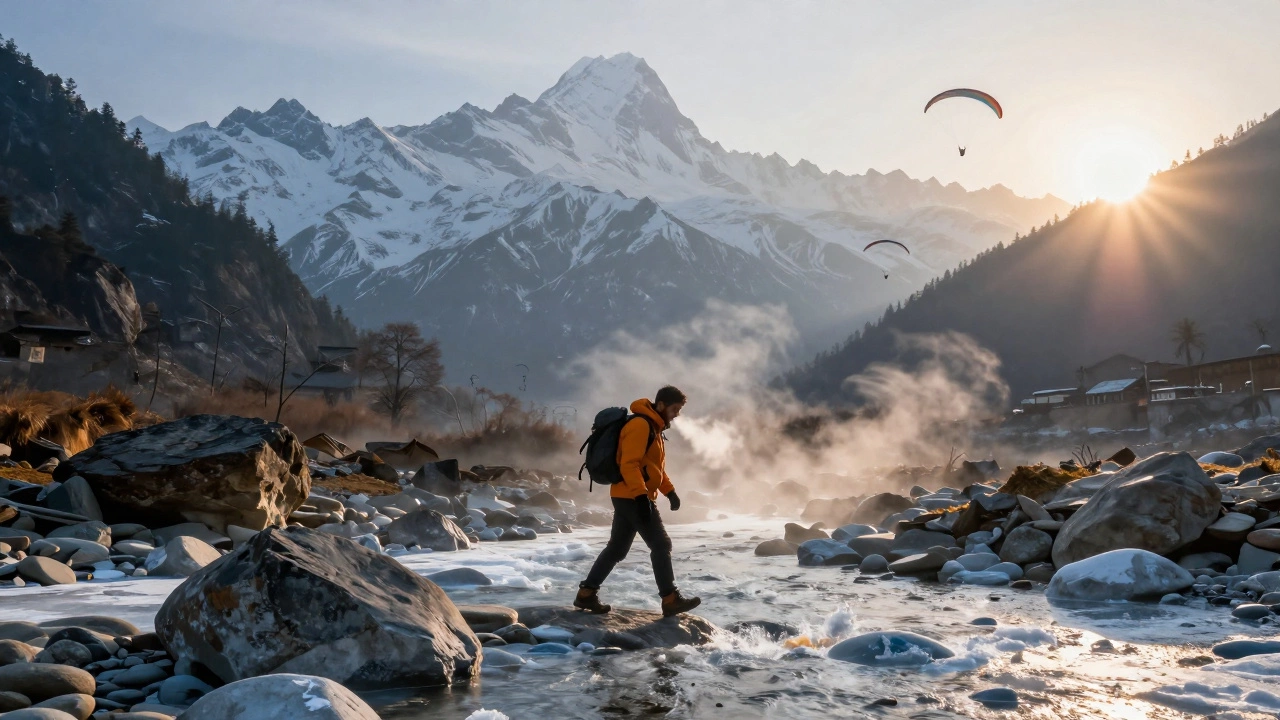
Manali doesn’t just welcome adventurers-it demands they show up ready. Nestled in the Beas River valley at 2,050 meters, this town is the launchpad for some of India’s most intense treks. The Hampta Pass trek, for example, takes you from lush green valleys into barren, moon-like landscapes in just four days. You’ll cross high-altitude ridges, sleep under star-filled skies, and cross rivers where the water is so cold it stings your skin. This isn’t a hike. It’s a transformation.
Winter turns Manali into a snowboarder’s dream. Solang Valley offers slopes that rival those in the Alps, with cable cars that lift you up and let you carve down without ever leaving Indian soil. Paragliding from the cliffs above Manali gives you 15 minutes of silence above the valley, followed by a heart-pounding landing. More than 200,000 people paraglide here every year, making it one of the busiest spots in Asia for the sport.
Rishikesh: The River That Tests Your Soul
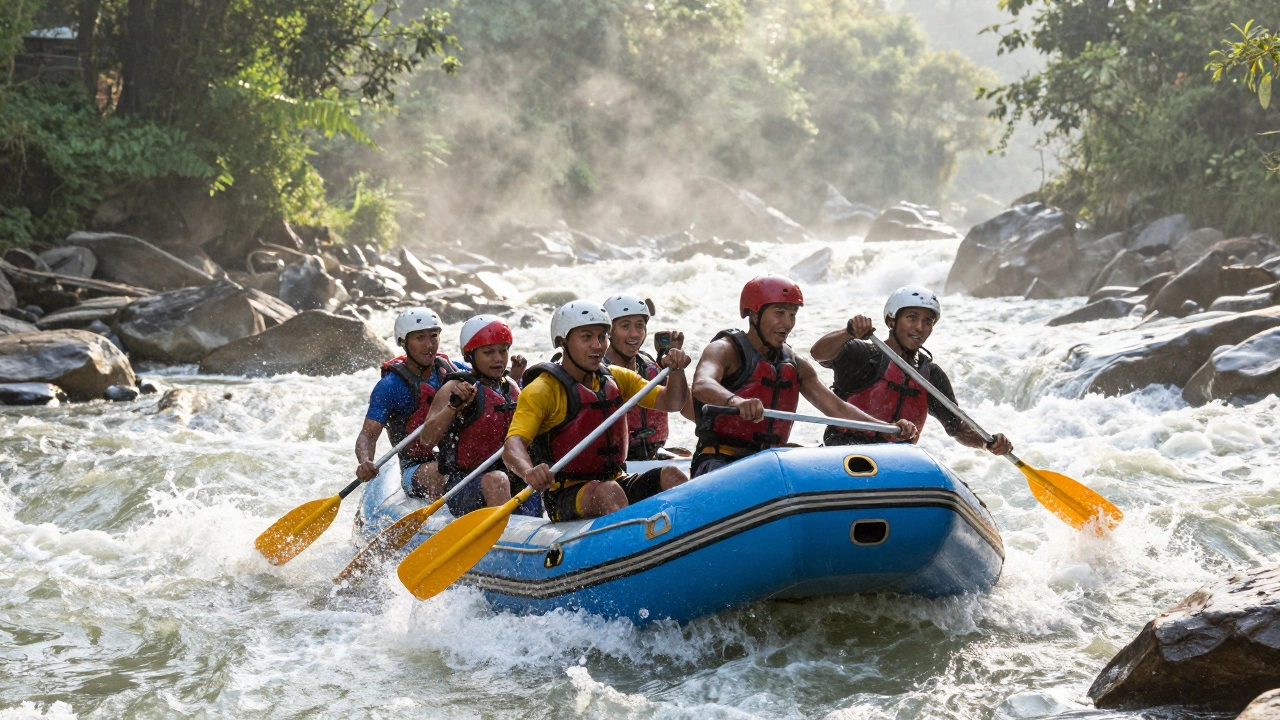
Just a few hours from Delhi, Rishikesh is where yoga meets whitewater. The Ganges here isn’t sacred in a quiet, temple way-it’s wild. Class III and IV rapids like the Chocolate Falls and Roller Coaster turn rafting into a full-body workout. You’ll paddle through churning water, dodge boulders the size of cars, and get thrown into the river when your raft flips (and it will). Over 100,000 rafters hit these waters annually, and nearly half return for a second, third, or tenth time.
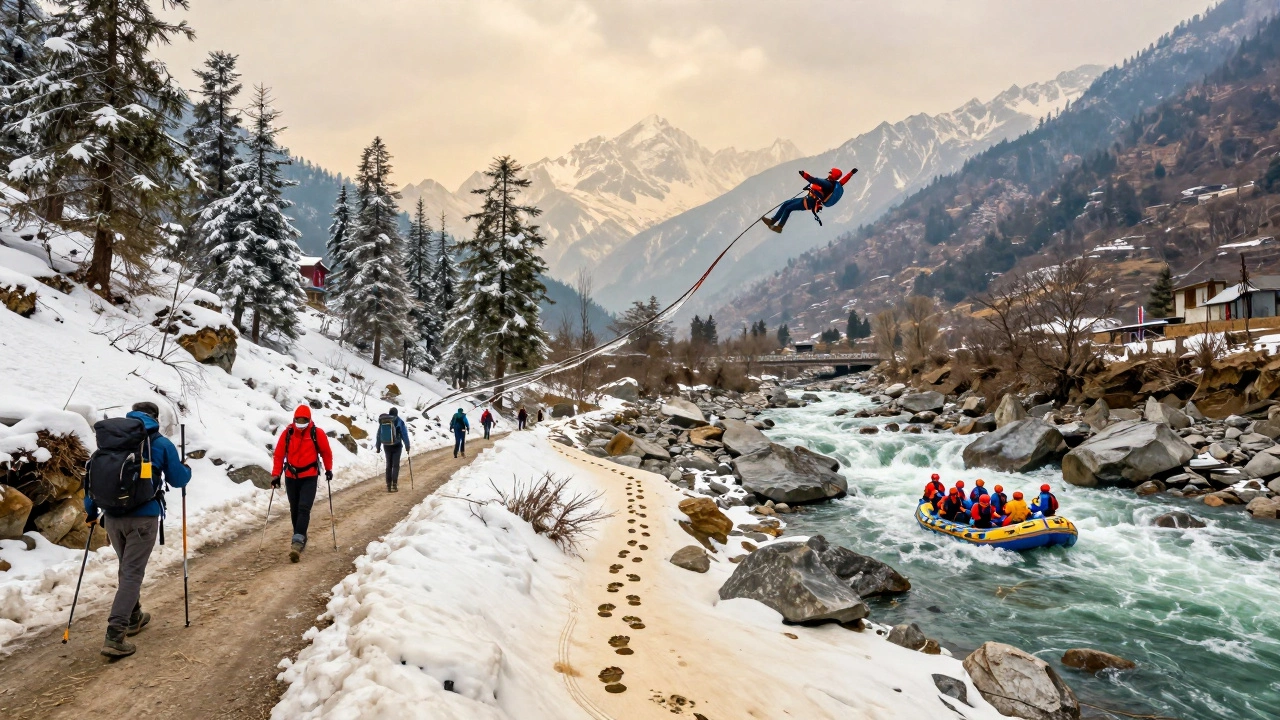
But Rishikesh isn’t just about water. The Neer Garh Waterfall trek is a 12-kilometer climb through dense forest, ending with a 60-meter freefall you can jump off (if you’re brave enough). Bungee jumping from a 83-meter platform over the Ganges? That’s here too. It’s not a gimmick. It’s a rite of passage.
Why Manali and Rishikesh Together Define India’s Adventure Heart
Some say the adventure capital is just one place. But India’s soul for adventure doesn’t live in one valley-it lives in the contrast. Manali gives you altitude, ice, and endless trails. Rishikesh gives you speed, water, and raw power. Together, they cover the full spectrum of what adventure means: pushing your body, facing fear, and finding calm in chaos.
Compare this to other places often mentioned. Leh-Ladakh is stunning, yes, but it’s more about endurance than thrill. Uttarakhand’s Valley of Flowers is beautiful, but it’s a walk, not a challenge. Nepal has Everest, but India’s adventure scene is more accessible, more varied, and less crowded.
What Makes This the Real Capital?
It’s not about popularity. It’s about infrastructure, safety, and variety. Manali has certified guides, emergency helicopters, and gear rental shops on every corner. Rishikesh has licensed rafting operators, first-aid stations along the riverbanks, and training centers for rock climbing and rappelling. You don’t need to be an expert to start here. Beginners are welcomed with guided tours, safety briefings, and gear that actually works.
The local communities depend on adventure tourism. In Manali, you’ll find homestays run by ex-army guides who’ve summited peaks in the Himalayas. In Rishikesh, rafting companies are owned by families who’ve been on the river for three generations. This isn’t corporate tourism. It’s rooted.
When to Go
Manali is best from April to June and September to November. Winter brings snow sports, but some trails close. Rishikesh is ideal from October to March. The monsoon (July-September) turns the Ganges into a dangerous torrent-avoid it. If you want the full experience, plan a 10-day trip: 5 days in Manali for trekking and flying, then 5 days in Rishikesh for water and jumps.
What You’ll Need
- Waterproof hiking boots (not just any boots-ones with ankle support)
- Layered clothing (temperatures swing from 30°C to 5°C in one day)
- Personal first-aid kit (blister pads, painkillers, antiseptic wipes)
- Power bank (cell service is spotty)
- Travel insurance that covers high-altitude trekking and whitewater rafting
Myth vs. Reality
Myth: You need to be super fit to do this. Reality: You need to be willing to try. Many 60-year-olds have completed the Hampta Pass. Many teenagers have rafted the Ganges for the first time.
Myth: It’s too expensive. Reality: A full-day rafting trip costs ₹1,500. A 4-day trek with meals and gear is ₹6,000. A paragliding flight? ₹3,000. That’s less than a weekend hotel in Delhi.
Myth: It’s dangerous. Reality: Accidents are rare. Over 98% of guided treks and rafting trips end without incident. The real risk? Not trying.
What Comes Next?
Once you’ve done Manali and Rishikesh, you’ll understand why India’s adventure scene is growing faster than any other in South Asia. Next? Try the Roopkund trek in Uttarakhand-the lake of skeletons. Or the Valley of Flowers, if you want beauty over adrenaline. Or go to Spiti for solitude on the roof of the world.
But start here. Because if you want to know what the adventure capital of India is, you don’t need to look farther than the place where the mountains meet the river, and the people who live there say: ‘Come, and find out what you’re made of.’
Is Manali really the adventure capital of India?
Yes, Manali is widely recognized as the adventure capital of India, especially for trekking, paragliding, and snow sports. Alongside Rishikesh, it forms the core of India’s adventure tourism scene. Manali offers diverse, well-supported activities with professional infrastructure, making it accessible to both beginners and experts. While other regions like Ladakh or Uttarakhand have strong adventure offerings, Manali’s combination of altitude, accessibility, and variety gives it the edge.
Can beginners do trekking in Manali?
Absolutely. Manali has treks designed for all levels. The Solang Valley to Bijli Mahadev trail is a 3-hour easy hike with stunning views and no technical climbing. The Beas Kund trek is another beginner-friendly route that takes you to a glacial lake at 3,900 meters. Guides are available to help with pacing, gear, and safety. You don’t need prior experience-just good shoes and a willingness to walk.
Is Rishikesh safe for rafting?
Yes, rafting in Rishikesh is very safe when done with licensed operators. All companies are regulated by the Uttarakhand government and must follow strict safety protocols. Helmets, life jackets, and trained guides are mandatory. The most popular stretches (Kutri to Muni Ki Reti) have Class III-IV rapids, which are challenging but manageable with proper instruction. Fatalities are extremely rare-less than 0.1% of trips result in serious injury.
What’s the best time of year to visit for adventure?
For Manali, the best months are April to June (spring) and September to November (autumn). These windows offer clear skies, moderate temperatures, and open trails. Winter (December-February) is ideal for snow sports like skiing and snowboarding. For Rishikesh, October to March is ideal. Avoid July to September-the monsoon makes the Ganges dangerous for rafting and blocks many trails.
Do I need a permit for trekking in Manali or Rishikesh?
Most popular treks in Manali (like Hampta Pass or Beas Kund) don’t require permits for Indian citizens. Foreign tourists need an Inner Line Permit (ILP) for certain high-altitude areas near the border. Rishikesh doesn’t require permits for rafting or waterfall treks. Always check with your operator-they’ll handle the paperwork if needed. Don’t assume you need a permit; most don’t.
Start planning. Pack light. Bring curiosity. And remember-the adventure capital isn’t a place you find. It’s a place you become.