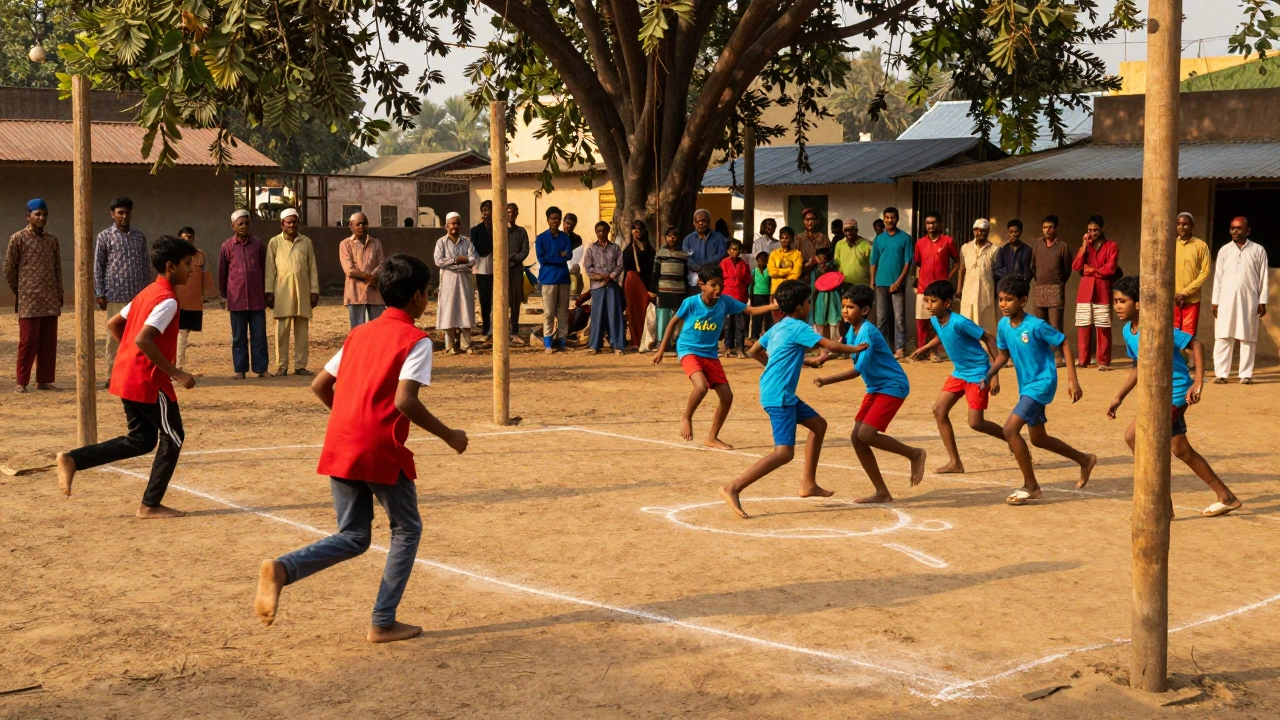
Traditional Indian Sports: Ancient Games Still Played Today
When you think of sports in India, you might picture cricket or football—but traditional Indian sports, indigenous physical disciplines rooted in centuries of culture, fitness, and ritual. Also known as folk games of India, these activities aren’t just relics—they’re living traditions that still thrive in villages, akharas, and state festivals. Unlike modern sports imported from abroad, these games were built for strength, strategy, and community. They didn’t need stadiums or TV deals. They needed open fields, bare feet, and a group of people ready to play.
Take kabaddi, a contact team sport where players hold their breath and raid the opponent’s side to score points. Also known as chadu chadu in some regions, it’s now a pro league phenomenon—but its roots are in rural Maharashtra and Tamil Nadu, where boys trained for it since childhood. Then there’s kalaripayattu, an ancient martial art from Kerala that blends strikes, kicks, weapons, and healing techniques. Also known as the mother of all martial arts, it’s still taught in traditional schools called kalari, where students learn not just fighting, but discipline, breath control, and Ayurvedic massage. And let’s not forget mallakhamb, a gymnastic sport where athletes perform gravity-defying poses on a wooden pole or rope. Also known as pole wrestling, it was developed by wrestlers to build core strength—and today, kids in Madhya Pradesh still train on it before sunrise. Even gilli-danda, a simple game played with two sticks that’s like a rural version of baseball. Also known as chitti danda, it’s the reason so many Indian cricketers grew up with sharp reflexes and hand-eye coordination.
These aren’t just games. They’re systems of physical culture that shaped how generations built strength, endurance, and mental focus. You’ll find them in temple courtyards, village fairs, and even national competitions. They don’t need sponsorship—they need space, time, and someone willing to teach them. And in a world obsessed with gyms and gadgets, these sports remind us that fitness doesn’t always need equipment. Just a patch of earth, a stick, and the will to try.
Below, you’ll find real stories from people who still play, teach, and fight to keep these traditions alive—from the dusty akharas of Haryana to the bamboo poles of rural Odisha. No fluff. No hype. Just the raw, unfiltered truth about what happens when ancient India still moves.
Kho kho is the only modern team sport invented entirely in India, with roots in village games from the 1800s. It requires no equipment, is played nationwide, and remains a symbol of indigenous Indian physical culture.