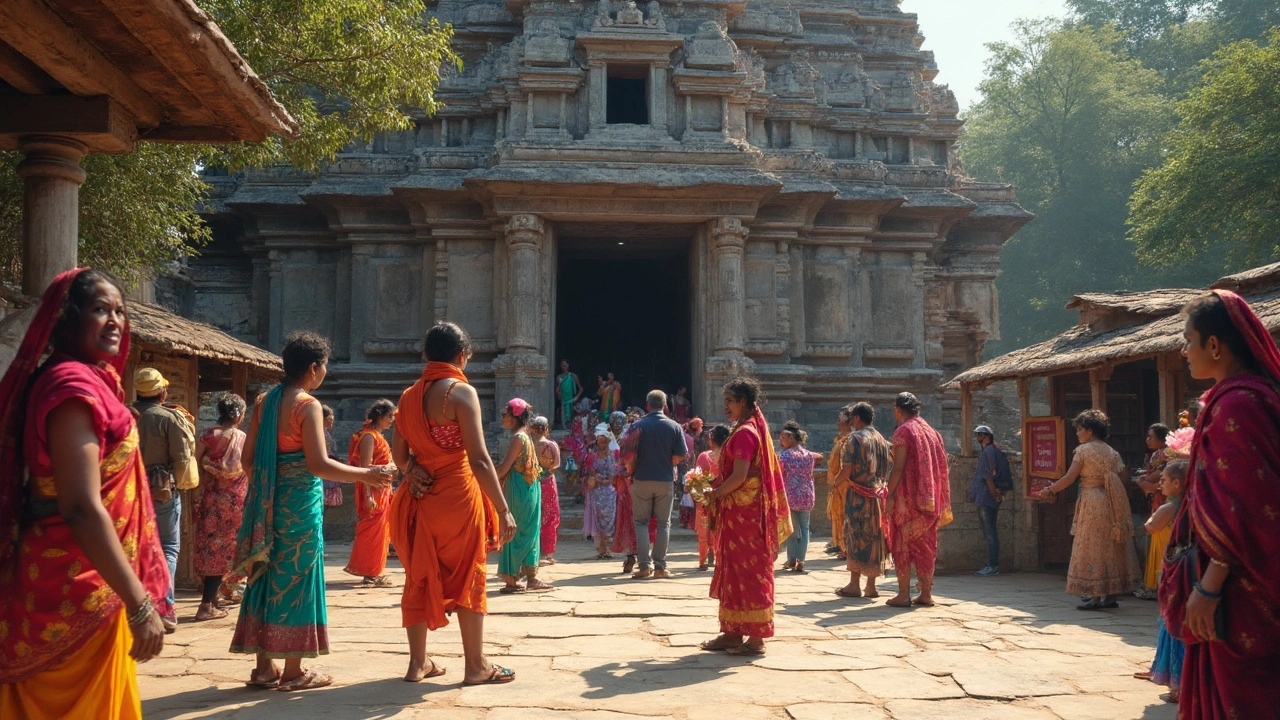
Temple Rules in India: What You Must Know Before You Visit
When you step into an Indian temple, a sacred space where faith, tradition, and daily life intersect. Also known as mandir, it’s not just a building—it’s a living part of India’s spiritual fabric. Skipping the basic temple rules can accidentally offend, disrupt rituals, or even get you turned away. This isn’t about strictness—it’s about respect. People pray here. Families gather here. Rituals happen every hour. You’re a guest, not a tourist taking photos for the gram.
Every temple has its own rhythm, but the core temple etiquette, the unwritten code of conduct for visitors. Also known as temple customs, it’s rooted in purity, humility, and awareness is nearly universal. Footwear comes off—always. No leather belts, wallets, or bags inside. Many temples ban phones or cameras, especially in inner sanctums. Women often cover their heads, and men are expected to wear shirts. Shorts and tank tops? Usually a hard no. The temple dressing guide, how to dress appropriately for sacred spaces. Also known as temple attire, it’s not about modesty for modesty’s sake—it’s about signaling you understand the space you’re entering is simple: cover shoulders, cover knees, keep it clean. No flashy jewelry. No loud talking. No pointing feet at idols. These aren’t random rules—they’re signals of reverence.
Some temples require you to bathe before entering. Others ask you to walk clockwise around the main shrine. Some don’t let non-Hindus past the first courtyard. These aren’t exclusions—they’re boundaries. They protect the sanctity of rituals that have run uninterrupted for centuries. You don’t need to believe in the gods to honor the space they’re honored in. The temple entry rules, the specific conditions for entering sacred spaces. Also known as temple access guidelines, they vary by region, sect, and even individual temple can be confusing, but they’re rarely arbitrary. A temple in Tamil Nadu might let you carry water inside. One in Uttarakhand might not let you enter after sunset. That’s why local guides and signs matter. Don’t guess. Ask. Watch others. Follow quietly.
You’ll find dozens of posts below that break down exactly what to expect in different parts of India—from the crowded shrines of Varanasi to the quiet forest temples of Kerala. Some explain why women are barred from certain hill temples during menstruation. Others show you how to properly offer flowers or light incense. You’ll learn which temples allow photography and which don’t, why some require a donation to enter, and how to tell if a priest is offering a blessing or just asking you to move along. These aren’t just tips—they’re keys to unlocking deeper, more meaningful visits. Skip the rules, and you might miss the soul of the place. Follow them, and you’ll walk out not just with photos, but with understanding.
Planning to visit temples in India? This guide breaks down what not to do in temples, helping travelers avoid common mistakes and respect local customs. Get tips on dress code, behavior, and local etiquette. Stay informed and blend in with ease—no awkward moments or offended locals. Perfect for first-timers and seasoned travelers alike.