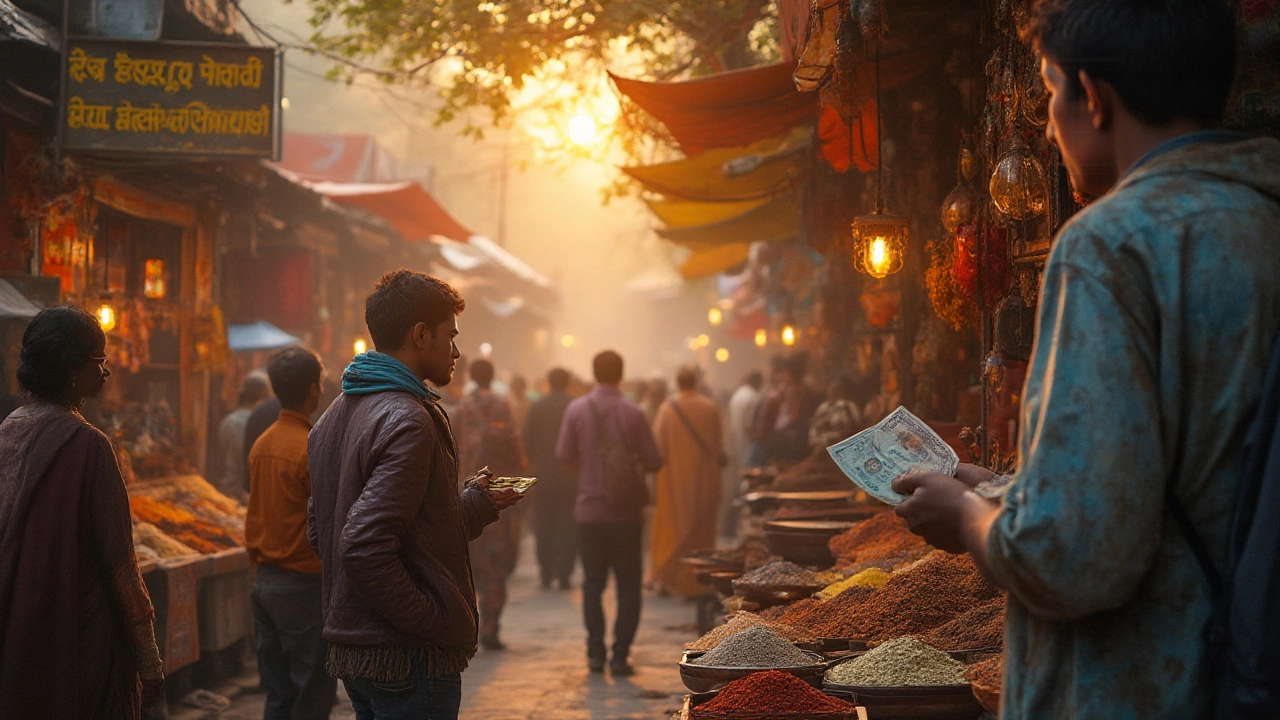
Money Exchange in India: What Travelers Need to Know
When you're traveling in India, money exchange, the process of converting your home currency into Indian rupees. Also known as foreign exchange, it's one of the first things you'll deal with after landing—whether you're at the airport, a busy street in Delhi, or a quiet beach in Goa. Getting this right saves you money, avoids scams, and keeps your trip running smoothly.
You don’t need to carry large amounts of cash. Most places in India accept cards, but small vendors, temples, rickshaws, and rural areas still run on cash. That’s where Indian rupee, the official currency of India, used in all daily transactions. Also known as INR, it's the only legal tender you’ll need for buses, snacks, and temple donations. Avoid exchanging money at hotel front desks—they give terrible rates. Airport kiosks are convenient but expensive. The best deals come from authorized foreign exchange, licensed services that convert currencies legally and transparently. Also known as currency exchange counters, they’re found in city centers, near major train stations, and in shopping malls. Look for the RBI logo or a sign that says "Authorized Money Changer." Always check the rate before you hand over your cash. A good rate today is around ₹83 to the US dollar, but it changes daily.
ATMs are everywhere and usually the safest way to get rupees. Use machines inside banks or in well-lit, busy areas. Your home bank might charge a fee, but it’s often cheaper than exchange counters. Some travelers carry dollars or euros as backup—they’re widely accepted at authorized exchange points. But never exchange on the street. No matter how friendly someone looks, unlicensed vendors are almost always scams. And never, ever give your passport as collateral. That’s a red flag.
Small denominations matter. Keep ₹10, ₹20, and ₹50 notes for buses, chai, and tipping. Big notes like ₹2000 can be hard to break in small towns. If you get stuck with a damaged note, head to a bank—they’ll replace it for free. And if you have leftover rupees at the end of your trip, you can exchange them back at the airport, but you’ll lose a chunk. Better to spend it on spices, tea, or a last-minute souvenir.
What you’ll find in the posts below are real, practical stories from travelers who’ve been there. From how to avoid the worst exchange traps in Mumbai to why carrying a mix of cash and cards works best in North India, these aren’t theory—they’re lessons learned on the ground. Whether you’re planning your first trip or your tenth, this isn’t just about money. It’s about moving through India without stress, without surprises, and without getting cheated.
Discover the real value of $1 USD in India as of mid-2025, with practical tips for exchanging money, navigating the best rates, and smarter spending while traveling.