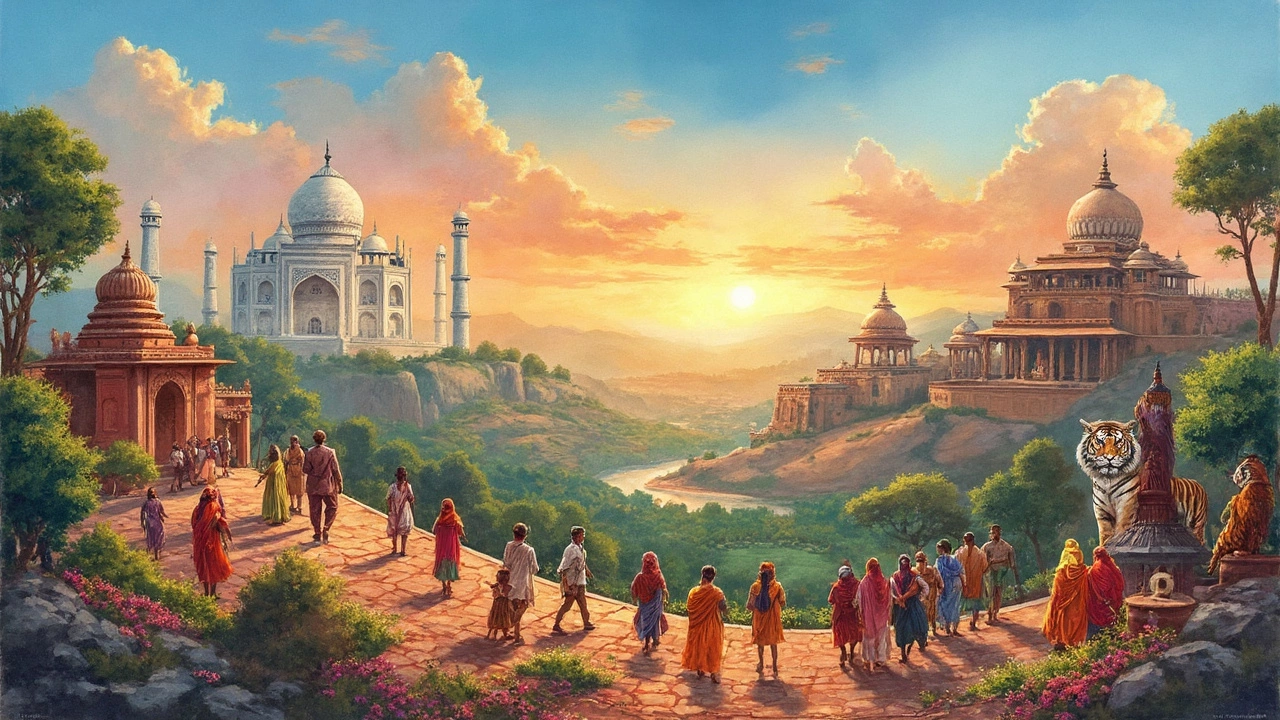
Indian Landmarks: Must-See Sites, Heritage Gems, and Natural Wonders
When you think of Indian landmarks, distinctive cultural, historical, or natural sites that define India’s identity and attract millions of visitors each year. Also known as India’s top tourist attractions, these places aren’t just photo backdrops—they’re living pieces of history, faith, and geography that shape how people experience the country. From the white marble grandeur of the Taj Mahal, a 17th-century Mughal mausoleum in Agra and India’s most visited site, recognized by UNESCO as a World Heritage Site to the hidden stepwells of Gujarat, these landmarks tell stories older than modern nations. India has 43 UNESCO World Heritage Sites as of 2025, more than any country in South Asia, covering everything from sacred forests to desert forts and ancient cities.
But not all landmarks are ancient. Some are defined by geography. Take Nagpur, the city officially recognized as the geographical center of India, marked by the Zero Mile Stone. It’s not just a point on a map—it’s a symbol of connection between North and South, East and West. Travelers who skip Nagpur miss a real crossroads of Indian culture, where tribal traditions meet urban energy and adventure sports like rock climbing and river rafting thrive. Meanwhile, the UNESCO World Heritage Sites India, a curated list of places deemed to have outstanding universal value include not just monuments but ecosystems like the Sundarbans mangroves and the Western Ghats, proving that India’s heritage isn’t just built—it’s grown.
What ties these places together? They’re all visited by people who want more than a checklist. They want meaning. Whether you’re standing under the arches of the Qutub Minar, walking the steps of Rani ki Vav, or watching the sun rise over the Himalayas on the Great Himalayan Trail, you’re not just seeing a landmark—you’re stepping into a story. These sites demand respect: dress codes at temples, quiet zones near ancient ruins, and local guides who know the hidden rituals. The best visits aren’t the ones with the most photos—they’re the ones where you leave with a deeper understanding of why these places still matter.
Below, you’ll find real, practical guides on how to visit these places without the crowds, the scams, or the confusion. Learn why the Taj Mahal is still #1, how Nagpur earned its title as the Heart of India, and which heritage sites are quietly being rediscovered by travelers who know where to look. No fluff. Just what you need to plan smarter, travel safer, and experience India’s landmarks the way they were meant to be seen.
India's 42 UNESCO World Heritage Sites are a mix of ancient temples, forts, wild sanctuaries, and even modern architecture. These sites stretch from timeless deserts to misty Himalayan valleys. This article breaks down where you can find each site, what makes them unique, and shares a few insider tips for anyone thinking of visiting. Get the low-down on hidden gems and famous wonders—no fluff, just helpful info. You'll know exactly what to expect, whether you're planning a trip or just want to boost your quiz game.