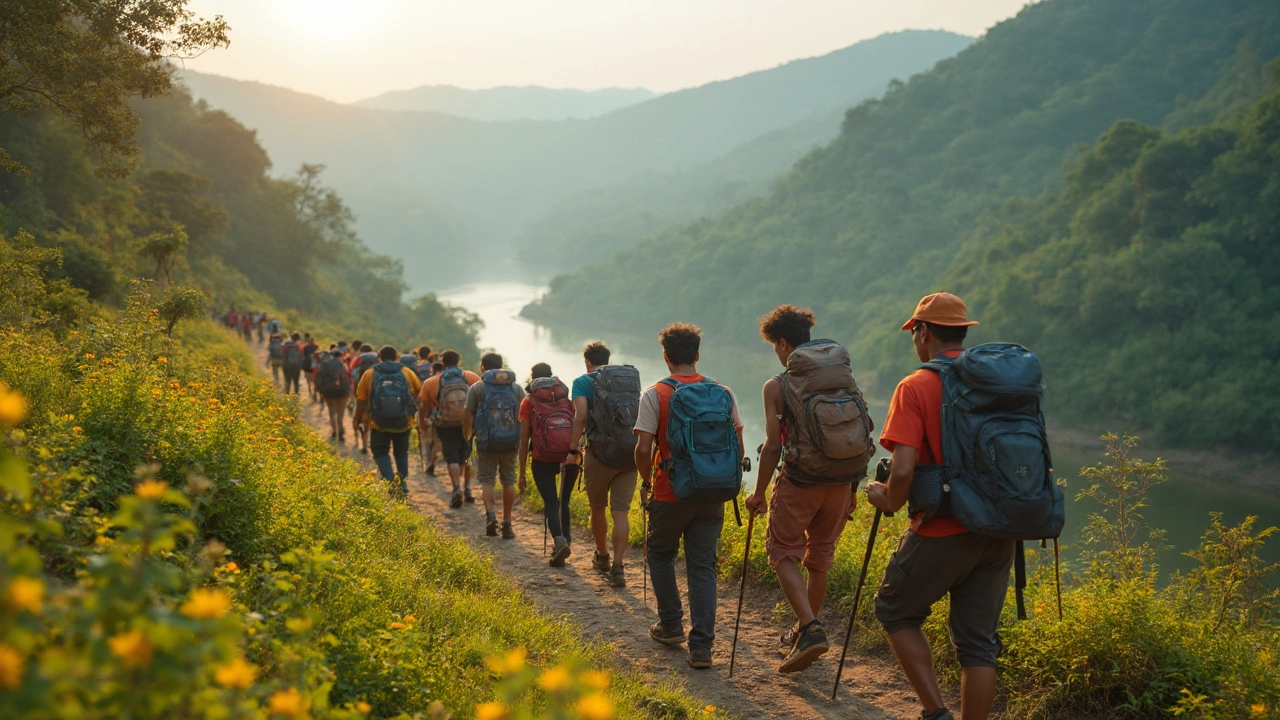
Hiking Distance: How Far to Walk in India’s Wild Trails
When you think about hiking distance, the total length you walk on a trail, often measured in kilometers or miles. Also known as trekking distance, it’s not just a number—it’s the difference between a morning stroll and a life-changing journey. In India, hiking distance isn’t just about fitness. It’s about terrain, altitude, weather, and how much you’re willing to carry on your back. A 5 km walk in the Western Ghats feels totally different from the same distance in the Himalayas, where thin air and steep climbs turn every step into a test.
Most people assume longer is better, but that’s not always true. The Great Himalayan Trail, India’s longest continuous walking route, stretching over 4,500 kilometers across five states isn’t for everyone—and it shouldn’t be your first goal. Many travelers start with shorter hikes like Kedarkantha (12–15 km round trip) or Nag Tibba (8–10 km) to learn how their body handles elevation and pack weight. These trails teach you what real hiking distance means: it’s not how far you go, but how well you manage fatigue, hydration, and recovery. And if you’ve ever gotten lost on a trail because you didn’t know how long it was supposed to take? You know why this matters.
India’s trails vary wildly. In the south, a 10 km hike through Bandipur might take 4 hours on flat ground under thick canopy. In Ladakh, 10 km could mean climbing 800 meters in altitude with 40% less oxygen—taking 8 hours or more. That’s why planning hiking distance isn’t just about maps. It’s about matching your experience level, gear, and even your acclimatization schedule. A beginner might think 20 km sounds doable. But if you haven’t trained at altitude, that 20 km could end in a helicopter rescue. The longest walking trail in India, the Great Himalayan Trail, requires months of preparation, permits, and logistical support—not just good shoes.
And then there’s safety. Many posts here warn that trekking without knowing your hiking distance can be deadly. You don’t need a guide for every walk, but if you’re aiming for trails like Roopkund or Markha Valley, you need to understand how far you’re committing to—and how long it’ll take. A 15 km hike might sound easy until you’re at 4,000 meters, shivering, with no cell signal and 3 hours of daylight left. That’s why the best hikers don’t just track distance—they track time, elevation gain, and rest points.
What you’ll find below are real stories from people who’ve walked these trails—not the Instagram highlights, but the muddy boots, the wrong turns, the moments they questioned why they started. Some hiked 5 km and saw their first snow leopard. Others spent weeks on the Great Himalayan Trail and came back changed. Whether you’re planning your first forest walk or dreaming of crossing India on foot, the posts here give you the truth about hiking distance—no fluff, no hype, just what you need to know before you step out the door.
Ever wondered how far you can go in a two-hour hike? This article breaks down the distance you might cover, depending on your pace and the terrain. Learn how to plan your hikes better, especially if you're trekking through India's diverse landscapes. We'll share tips to make the most out of your trek, whether you're a beginner or a seasoned hiker. Get ready to discover trail adventures that suit your style.