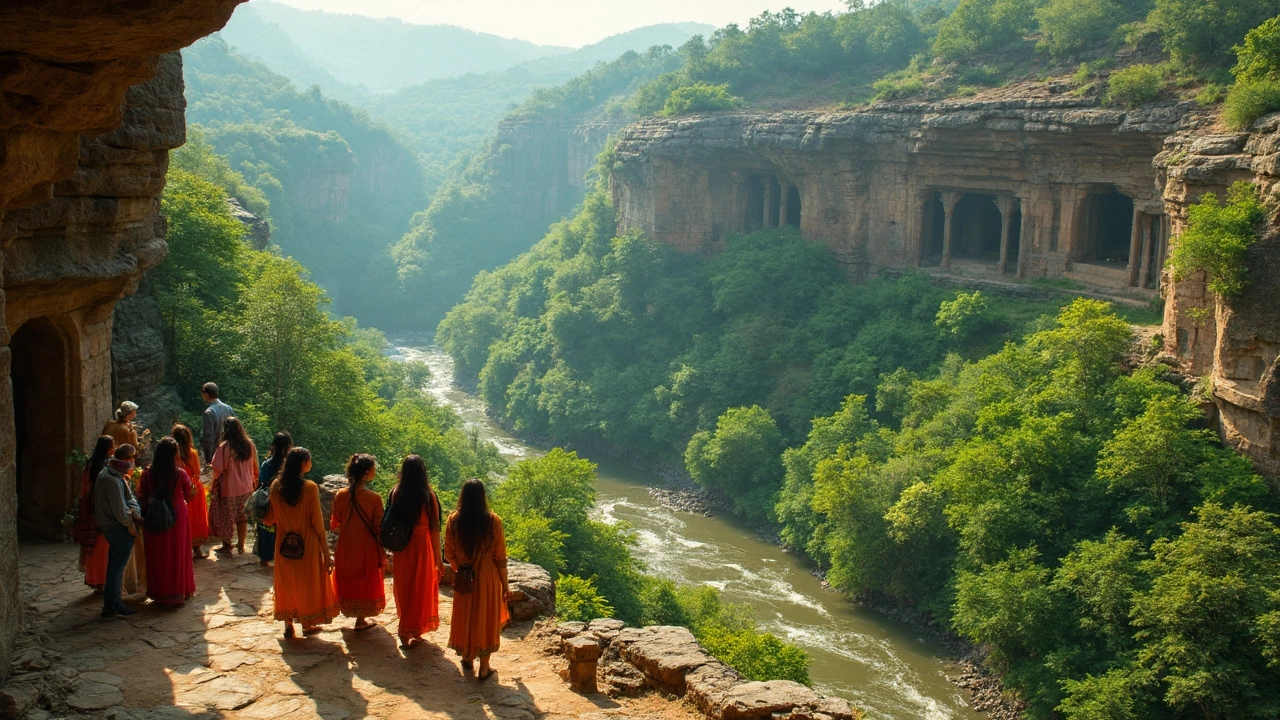
Ajanta Caves: Ancient Rock-Hewn Temples and India's Hidden Heritage
When you think of India’s ancient wonders, the Taj Mahal often comes to mind—but Ajanta Caves, a series of 30 rock-cut Buddhist cave monuments in Maharashtra, dating back to the 2nd century BCE. Also known as Ajanta Ellora caves, they’re one of the most intact examples of early Indian painting and sculpture still standing today. Unlike temples built from stone blocks, these were carved straight out of a horseshoe-shaped cliff, a feat that took centuries and thousands of skilled hands. The murals inside? They’re not just art—they’re living stories of the Buddha’s life, royal courts, and everyday people from 2,000 years ago, painted with natural pigments that still glow in the dim light.
The Ajanta Caves are part of a much bigger picture: UNESCO World Heritage Sites India, a list of 43 culturally and naturally significant locations recognized globally for their outstanding value. They sit alongside the Taj Mahal, Khajuraho temples, and the stepwells of Gujarat—not as isolated relics, but as pieces of a continuous story about how ancient India expressed spirituality, science, and beauty. What makes Ajanta unique is its focus on Buddhist teachings during a time when India was a crossroads of trade, religion, and philosophy. The caves weren’t just places of worship—they were monastic universities, where monks studied, meditated, and taught using vivid wall paintings as visual sermons.
And here’s something most travelers don’t realize: rock-cut architecture, the technique of carving entire structures into solid rock, wasn’t just used at Ajanta. You’ll find it in Ellora, Badami, and even in parts of Tamil Nadu. But Ajanta stands out because of its scale, preservation, and the emotional depth of its artwork. These aren’t dry historical ruins—they’re places where you can still feel the silence of monks, the brushstrokes of forgotten artists, and the weight of centuries. Many visitors come for the caves but leave with a deeper understanding of how art and faith shaped ancient Indian society.
If you’ve read about India’s top heritage sites or wondered why some places feel more alive than others, Ajanta is the answer. It’s not just a tourist spot—it’s a time capsule. And in the posts below, you’ll find guides on how to visit responsibly, how it compares to other UNESCO sites like Ellora and Sanchi, and what you need to know before you go—because seeing these caves isn’t just about checking a box. It’s about connecting with something far older than most of us can imagine.
Uncover the story of India's very first UNESCO World Heritage Site, the Ajanta Caves. Discover fascinating facts, tips, and travel insights about Indian heritage.