Goa Geography & Culture Quiz
Loading question...
Quiz Complete!
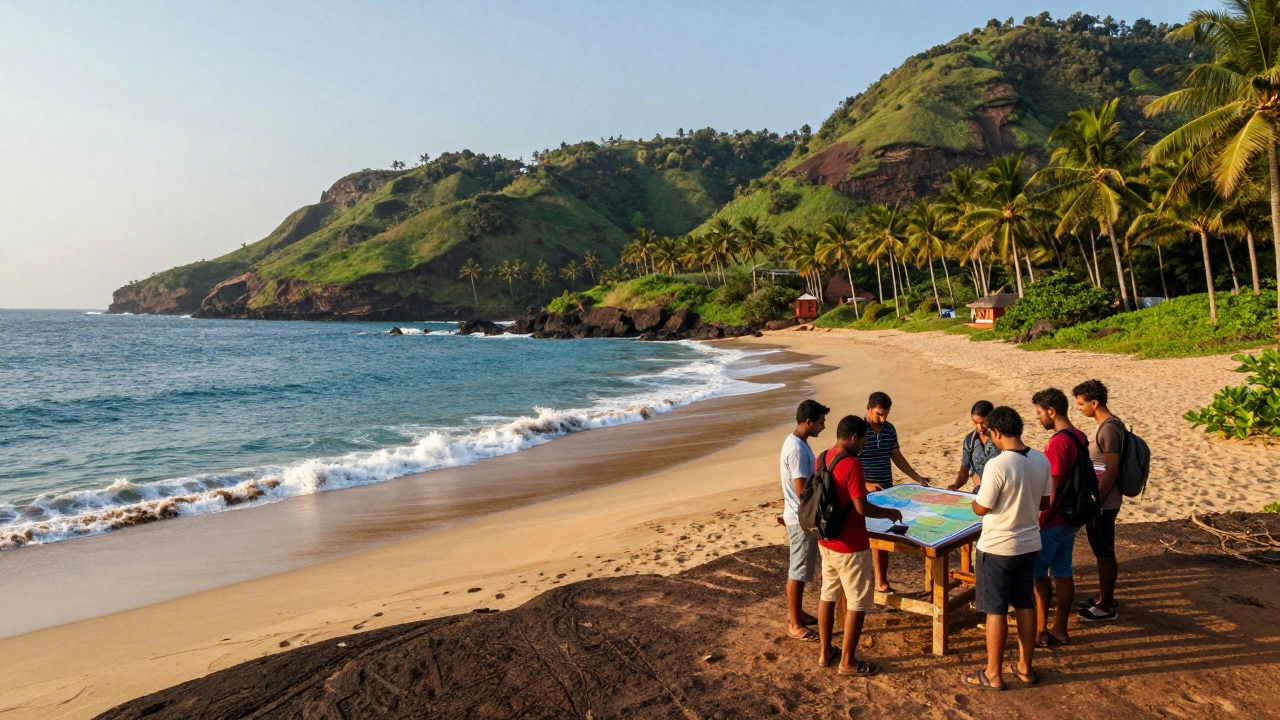
Picture this: You’re standing on a sun-drenched beach in Goa, India's smallest state by area but one of its most visited tourist destinations. To your left, the Arabian Sea crashes against golden sands. To your right, lush green laterite hills rise up. You look at a map, then you look at the people around you-some speaking Konkani, others Malayalam or Hindi. A friend asks, "So, is this North India or South India?" It’s a question that trips up almost every first-time visitor. The answer isn’t a simple yes or no. It’s a messy, beautiful blend of both worlds.
If you need a straight geographic answer, Goa is technically part of Western India, The region comprising states along the western coast of the Indian subcontinent. However, culturally and historically, it leans heavily toward the South while maintaining strong ties with the North. Understanding this duality changes how you experience the state. It stops being just a party destination and starts making sense as a unique cultural crossroads.
The Geographic Reality: Where Exactly Is Goa?
Let’s clear up the confusion with hard facts. India is often divided into five major geographical zones: North, South, East, West, and Central. Goa sits firmly in the West Zone, One of the five administrative regions of India defined by the Government of India. Specifically, it lies on the Konkan Coast, A narrow strip of land between the Western Ghats mountains and the Arabian Sea.
To understand why people get confused, look at the neighbors. To the north of Goa is Maharashtra, An Indian state known for Mumbai, the financial capital of India. Maharashtra is generally considered part of Western India, though its northern parts border the Deccan Plateau. To the south of Goa are Karnataka, An Indian state in the southern part of the country known for Bangalore, the IT hub. Karnataka is unequivocally South India. This sandwiching effect makes Goa feel like a bridge rather than a distinct endpoint.
Geographically, the Tropic of Cancer, An imaginary line of latitude located at approximately 23.5 degrees north of the Equator. passes through central India, roughly dividing the country into tropical (South) and subtropical (North) zones. Goa sits well below this line, at approximately 15 degrees North latitude. This places it firmly in the tropical zone, sharing similar weather patterns, vegetation, and day-length variations with Kerala, Tamil Nadu, and Andhra Pradesh, rather than Delhi, Punjab, or Uttar Pradesh.
The Historical Divide: Portuguese Influence vs. British Rule
Geography sets the stage, but history writes the script. For over 450 years, from 1510 to 1961, Goa was a colony of Portugal, A European country that colonized Goa until 1961. Meanwhile, the rest of India was largely under British Raj, The period of direct British rule over the Indian subcontinent from 1858 to 1947. This separation created a cultural island that didn't fully align with either the North or the South during the colonial era.
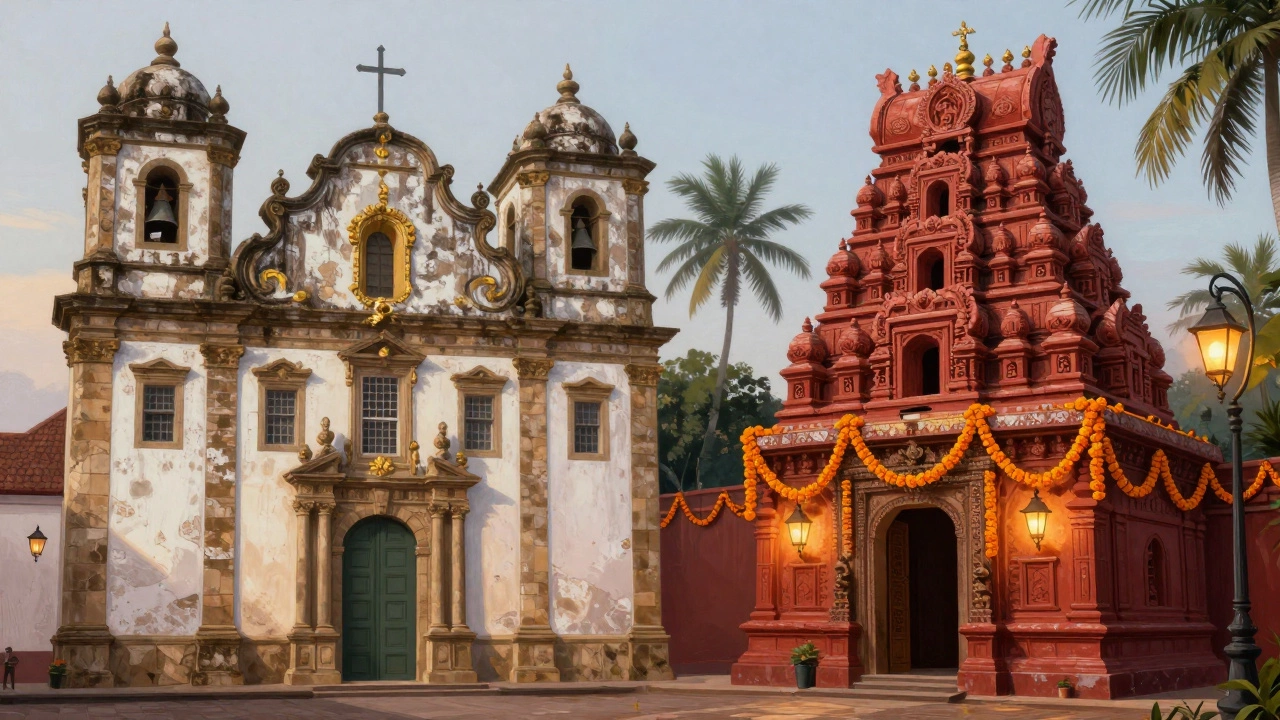
When India gained independence in 1947, Goa remained under Portuguese control until it was liberated in 1961. During those intervening years, while the rest of India was forging a national identity, Goa was developing a unique Lusophone (Portuguese-speaking) culture. This explains why you see Roman Catholic churches alongside Hindu temples, and why Christmas and Easter are celebrated with as much fervor as Diwali and Ganesh Chaturthi.
This historical isolation means Goa doesn't fit neatly into the "North vs. South" binary that defines much of Indian discourse. It has its own timeline, its own legal codes (until recently), and its own architectural style that blends Baroque elements with traditional Konkan design.
Cultural Cues: Why It Feels Like the South
If you walk through the streets of Panaji or Margao, several cultural markers will make you think, "This feels like South India." Here’s why:
- Language: The official language of Goa is Konkani, An Indo-Aryan language spoken primarily in the Konkan region of India. While Konkani is linguistically related to Marathi (spoken in Maharashtra to the north), it shares many structural similarities with other Dravidian-influenced languages in the region due to centuries of contact. More importantly, Konkani is written in multiple scripts, including Devanagari (used in North/West India) and Roman (due to Portuguese influence). However, the daily lingua franca often includes heavy borrowing from Kannada and Malayalam, especially in southern districts.
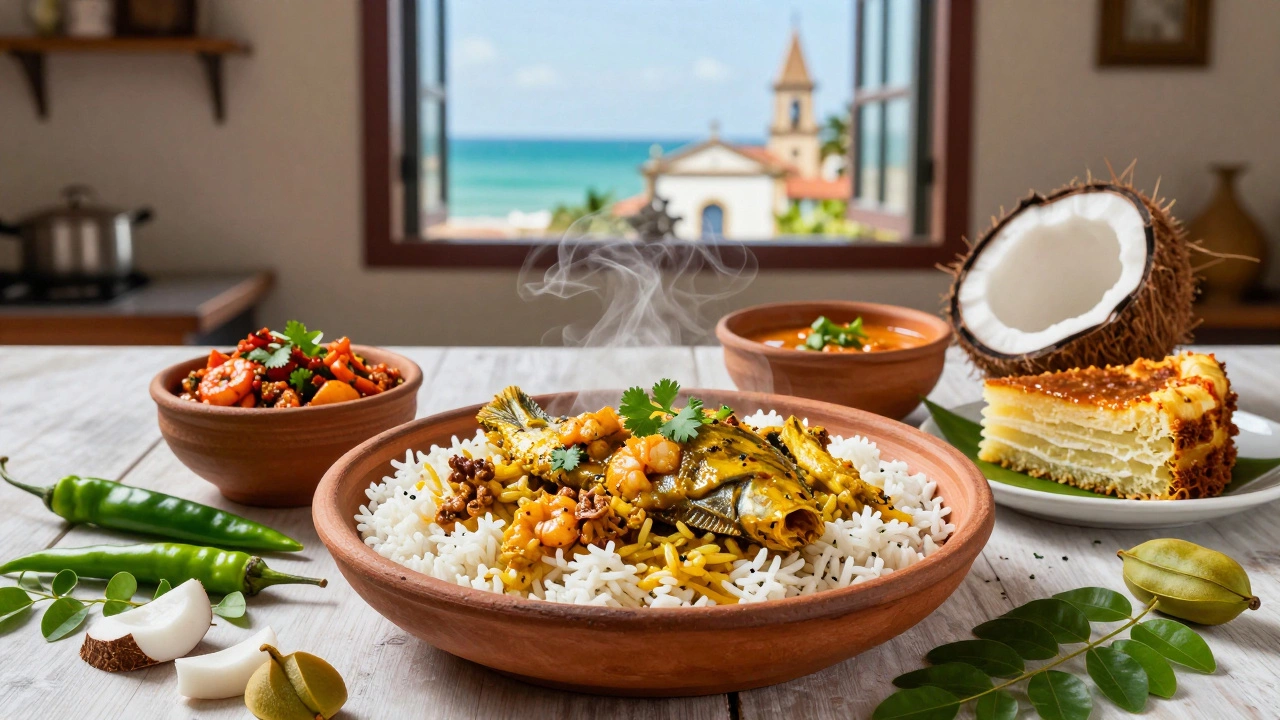
- Cuisine: Goan food is spicy, tangy, and coconut-heavy. Think Fish Curry Rice, A staple dish in Goa made with local fish, kokum, tamarind, and coconut milk. This is distinctly Southern. In North India, curries tend to be creamier, using dairy like yogurt and ghee, and relying on wheat-based breads like naan and roti. In Goa, rice is the primary carbohydrate, served with generous amounts of coconut milk and spices like curry leaves and mustard seeds-ingredients ubiquitous in Kerala and Karnataka.
- Attire: Traditional women’s wear in Goa includes the Pavada, A traditional skirt worn by women in Goa and parts of Maharashtra. This is very similar to the saree drapes seen in South India, particularly the half-saree style common among younger girls. Men often wear lungis (cotton sarongs) in casual settings, which is a standard garment across the South and Southeast Asia, but less common in Northern urban centers.
The Northern Connections: What Links Goa to the North?
Despite the Southern vibes, there are undeniable threads connecting Goa to the North and West. These connections are often overlooked but are crucial for understanding the state's full identity.
First, consider the Hindu Population, The majority religious group in Goa, following traditions similar to those in North and West India. About 66% of Goans are Hindu. Their festivals, rituals, and temple architecture follow the broader Indian tradition. The famous Shri Mangueshi Temple, One of the most revered Hindu temples in Goa, dedicated to Goddess Mangala Devi. follows the same pan-Indian Vedic rituals you’d find in Varanasi or Mathura. The priestly class, the deities worshipped, and the festival calendar (like Holi and Raksha Bandhan) are identical to those in the North.
Second, tourism has blurred the lines. Since the 1970s, Goa has been the premier beach destination for Indians from all over the country. But the influx of tourists from Delhi NCR, The National Capital Region of India, including Delhi and surrounding cities., Mumbai, and Kolkata has introduced Northern culinary preferences. You’ll find excellent butter chicken and paneer tikka masala restaurants in every Goan town, catering to visitors who miss home flavors. This commercial adaptation makes the state feel more cosmopolitan and less strictly "Southern."">
Third, the musical landscape. While folk music like Fugdi, A traditional folk dance form performed by women in Goa during festivals. is unique to the region, the popular music scene is dominated by Bollywood hits and Punjabi pop, reflecting the tastes of the massive Northern tourist demographic.
Comparison Table: Goa vs. North vs. South
| Feature | North India | South India | Goa |
|---|---|---|---|
| Climate | Subtropical (Hot summers, cold winters) | Tropical (Humid, monsoon-heavy) | Tropical (Similar to South) |
| Primary Staple Food | Wheat (Roti, Naan) | Rice | Rice & Fish |
| Colonial History | British | British | Portuguese |
| Religious Demographics | Hindu majority, significant Muslim/Sikh populations | Hindu majority, significant Christian/Muslim populations | Hindu majority, significant Christian population (Lusophone heritage) |
| Language Family | Indo-Aryan (Hindi, Punjabi, etc.) | Dravidian (Tamil, Telugu, Kannada, Malayalam) | Indo-Aryan (Konkani) with Dravidian influences |
| Traditional Dress | Saree (NORTH STYLE), Kurta-Pajama | Saree (SOUTH STYLE), Mundu/Dhoti | Pavada, Lungi, Casual Western Wear |
Why Does This Distinction Matter to Travelers?
You might wonder, "Does it really matter if I call Goa North or South?" Yes, because it shapes your expectations. If you approach Goa expecting the rugged mountain forts and desert landscapes of Rajasthan (North), you’ll be disappointed. If you expect the backwaters and temple towns of Kerala (South), you’ll miss the vibrant nightlife and Portuguese architecture that define Goa.
Understanding Goa as a hybrid helps you plan better. For example, knowing that the cuisine is coconut-heavy and spicy prepares you for meals that might differ from the creamy gravies of Delhi. Recognizing the Portuguese influence encourages you to visit the Basilica of Bom Jesus, A UNESCO World Heritage Site in Goa housing the remains of St. Francis Xavier. in Old Goa, which wouldn't exist in a purely Hindu or purely British-colonial context.
It also affects your travel timing. The climate is tropical year-round, meaning high humidity even in winter. Unlike North India, where December can be freezing, Goa stays warm (around 25-30°C). This makes it a perfect winter escape for Northerners seeking warmth, reinforcing its role as a seasonal refuge for the entire country.
Conclusion: Goa Is Its Own Entity
So, is Goa North or South India? The most accurate answer is that it is neither. It is Western India, The geographic region including Goa, Maharashtra, Gujarat, and parts of Madhya Pradesh. with a soul that belongs to the tropics. It shares the heat, the rain, and the rice-eating habits of the South, but it carries the historical baggage and some cultural overlaps of the West and North.
Instead of forcing it into a binary box, embrace its uniqueness. Goa is a microcosm of India’s diversity-a place where Portuguese saints sit beside Hindu gods, where Konkani mingles with Hindi and English, and where the sea dictates the rhythm of life. Whether you come from Delhi, Bangalore, or Wellington, you’ll find that Goa doesn’t ask you to categorize it. It just asks you to enjoy it.
Is Goa considered part of South India for tourism purposes?
Not officially. Tourism boards classify Goa under Western India. However, many travelers group it with South India due to its tropical climate, proximity to Karnataka and Kerala, and similar cuisine. If you are planning a trip, it makes sense to combine Goa with South Indian destinations like Mangalore or Kochi for a seamless cultural transition.
What language do people speak in Goa?
The official language is Konkani. However, Marathi, Hindi, English, and Kannada are widely spoken. Due to its history as a Portuguese colony, many older residents still speak Kristang (Goan Creole Portuguese). English is the primary language of business and tourism, so you won’t face communication barriers.
Why does Goa have so many churches?
Goa was ruled by Portugal for 450 years. During this time, Christianity spread significantly, and many temples were converted or destroyed. Today, about 25% of the population is Christian. The churches, such as Se Cathedral and Basilica of Bom Jesus, are remnants of this colonial era and are now UNESCO World Heritage Sites.
Is the food in Goa vegetarian-friendly?
Yes, but with caveats. Traditional Goan cuisine is heavily seafood-based. However, due to the large Hindu population and tourist influx, there are plenty of vegetarian options. Look for dishes like Prawn Balchão alternatives made with vegetables, or traditional sweets like Bebinca. Many restaurants cater specifically to vegetarian tourists from North India.
What is the best time to visit Goa?
The best time is from November to February. The weather is cool and dry, perfect for beach activities. March to May is hot and humid. June to September is the monsoon season, which brings heavy rains but lush greenery and lower prices. Avoid the peak holiday weeks of New Year and Christmas if you dislike crowds.