
When you think of temples in India, you don’t just picture stone and spires-you think of chants at dawn, incense in the air, and crowds moving in slow, steady waves around a sacred idol. But if you’re planning a temple tour and want to know which city has the most temples, the answer isn’t as simple as picking the biggest name. It’s not just about scale-it’s about density, history, and daily life woven into worship.
Varanasi: The City Where Every Alley Has a God
Varanasi doesn’t just have temples-it breathes them. Along the ghats of the Ganges, you’ll find over 2,000 temples scattered across its narrow lanes. Some are grand, like the Kashi Vishwanath Temple, drawing millions each year. Others are tiny shrines tucked between homes, with no sign, just a small lingam and a flickering lamp. Locals don’t count them. They just know: if you turn left at the spice shop, you’ll hit a Shiva shrine. Turn right past the tea stall, and there’s a Devi temple. The city doesn’t advertise its temples. They’re part of the pavement.
What makes Varanasi stand out isn’t just the number-it’s how deeply temples are embedded in daily routines. A woman might stop to offer flowers on her way to the market. A boy might pause to ring a bell before heading to school. Even the riverfront’s cremation ghats are tied to temple rituals. This isn’t tourism. It’s living religion.
Bhubaneswar: The Temple City of Odisha
If Varanasi is about immersion, Bhubaneswar is about concentration. Known as the Temple City of India, it packs over 700 temples into a compact area smaller than Manhattan. Most were built between the 7th and 12th centuries by the Eastern Ganga dynasty. The Lingaraja Temple alone draws 10,000 visitors daily, but walk just a few blocks and you’ll find the Mukteshvara Temple with its carved torana arch, or the Rajarani Temple with its sensual sculptures and no deity inside-built for its architecture alone.
Unlike Varanasi, Bhubaneswar’s temples are clustered in a planned grid. You can walk from one to the next in under 30 minutes. Many are still active, with daily rituals unchanged for centuries. The city doesn’t need to market itself as a temple destination. Pilgrims come because the energy here feels different-older, quieter, more intimate. And if you visit during Shivaratri, the entire city glows with oil lamps, and every temple becomes a stage for devotion.
Tirupati: The Temple That Feeds Millions
When it comes to sheer volume of visitors, Tirupati wins. The Tirumala Venkateswara Temple is the most visited religious site in the world, with over 50 million pilgrims annually. But the temple itself is just one. The town of Tirupati, at its base, has over 150 active temples, many dedicated to forms of Vishnu and his consort. The Annapurna Temple feeds 50,000 people daily. The Govindaraja Temple hosts daily processions. The Padmavathi Temple, just five kilometers away, draws its own throngs.
What Tirupati lacks in architectural diversity, it makes up for in scale and devotion. The temple complex isn’t just a building-it’s a city within a city, with hospitals, schools, and kitchens running nonstop. Pilgrims don’t just visit. They stay. Some sleep on temple floors. Others wait days just to get a glimpse of the deity. The number of temples here isn’t the point. The point is the machine of faith that keeps them all turning.
Madurai: Where Temples Rule the City’s Heart
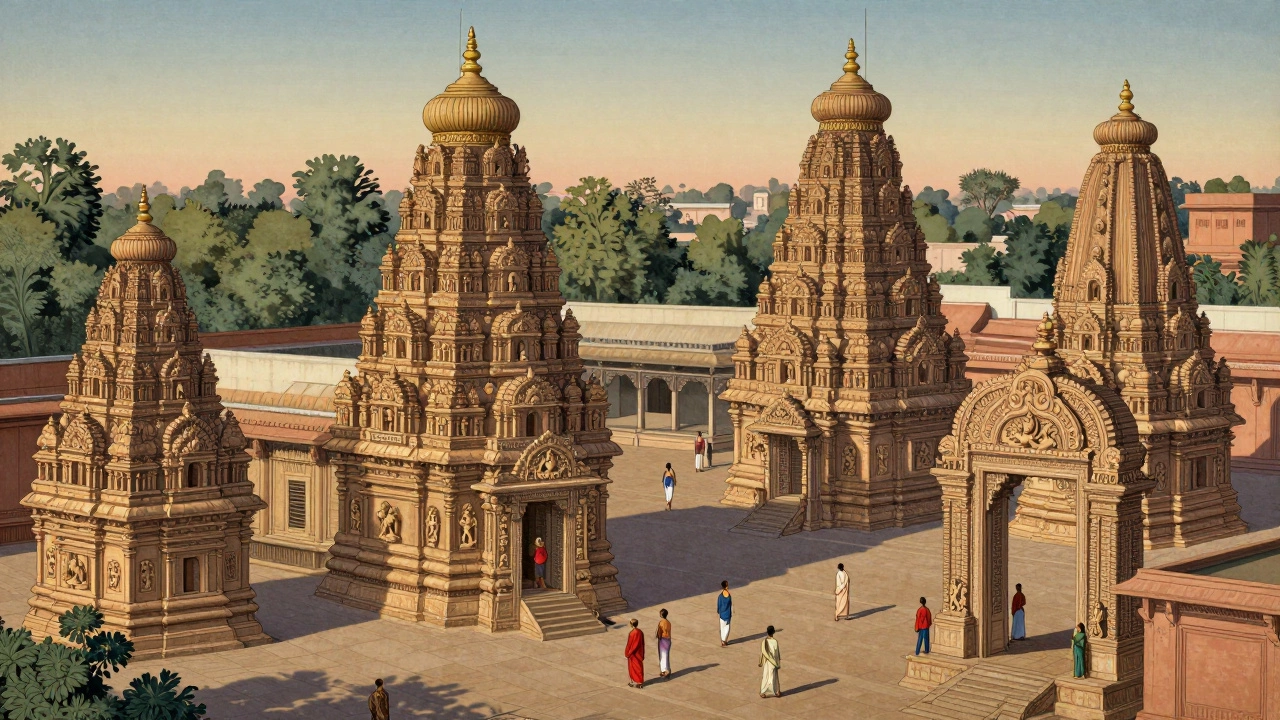
Madurai’s Meenakshi Amman Temple is the crown jewel-a 14-tiered gopuram covered in 33,000 colorful sculptures. But the temple isn’t the only one. The city has over 200 temples, many clustered around the main complex. The Koodal Azhagar Temple, built by the Pandyan kings, stands just half a kilometer away. The Alagar Koyil temple is a short drive into the hills. Even small neighborhood shrines, like the one dedicated to the goddess of rain, are maintained by local families.
Madurai doesn’t feel like a tourist spot. It feels like a temple that grew a city around it. The streets follow the temple’s cardinal directions. The market opens at sunrise to serve temple offerings. Even the city’s name-Madurai-comes from the Tamil word for nectar, said to have dripped from the gods’ lips during the temple’s consecration. If you want to see how a temple shapes a city’s rhythm, Madurai shows you how it’s done.
Khajuraho: Fewer Temples, More Impact
Khajuraho doesn’t come close to Varanasi or Bhubaneswar in number. It has only 25 surviving temples. But what it lacks in quantity, it makes up for in artistry. Built by the Chandela dynasty between 950 and 1050 AD, each temple is a masterpiece of stone carving. The Kandariya Mahadeva Temple alone has over 800 sculptures-gods, dancers, animals, and yes, the famous erotic figures that draw global attention.
These aren’t just places of worship. They’re open-air museums. The temples here were designed as cosmic diagrams, aligned with celestial patterns. Pilgrims still come to pray, but scholars and artists come to study. The number of temples here isn’t high, but their cultural weight is immense. If you’re looking for temples as art, Khajuraho is unmatched.
Why the Number Isn’t Everything
Counting temples sounds simple, but it’s messy. Do you count family shrines? Ruins? Temples that haven’t been active since the 1800s? Some cities claim thousands by including every small stone altar. Others count only major, functioning sites. That’s why rankings vary.
Varanasi leads in total count-over 2,000-because its temples are woven into daily life. Bhubaneswar leads in architectural density-700+ in a small area, mostly intact. Tirupati leads in visitor volume. Madurai leads in cultural integration. Khajuraho leads in artistic value.
For a temple tour, your choice depends on what you want. Do you want to get lost in a maze of devotion? Go to Varanasi. Do you want to walk from one masterpiece to another? Head to Bhubaneswar. Do you want to see the biggest crowds and the most organized rituals? Tirupati is your answer. Each city offers a different kind of sacred experience.
What to Pack for a Temple Tour in India
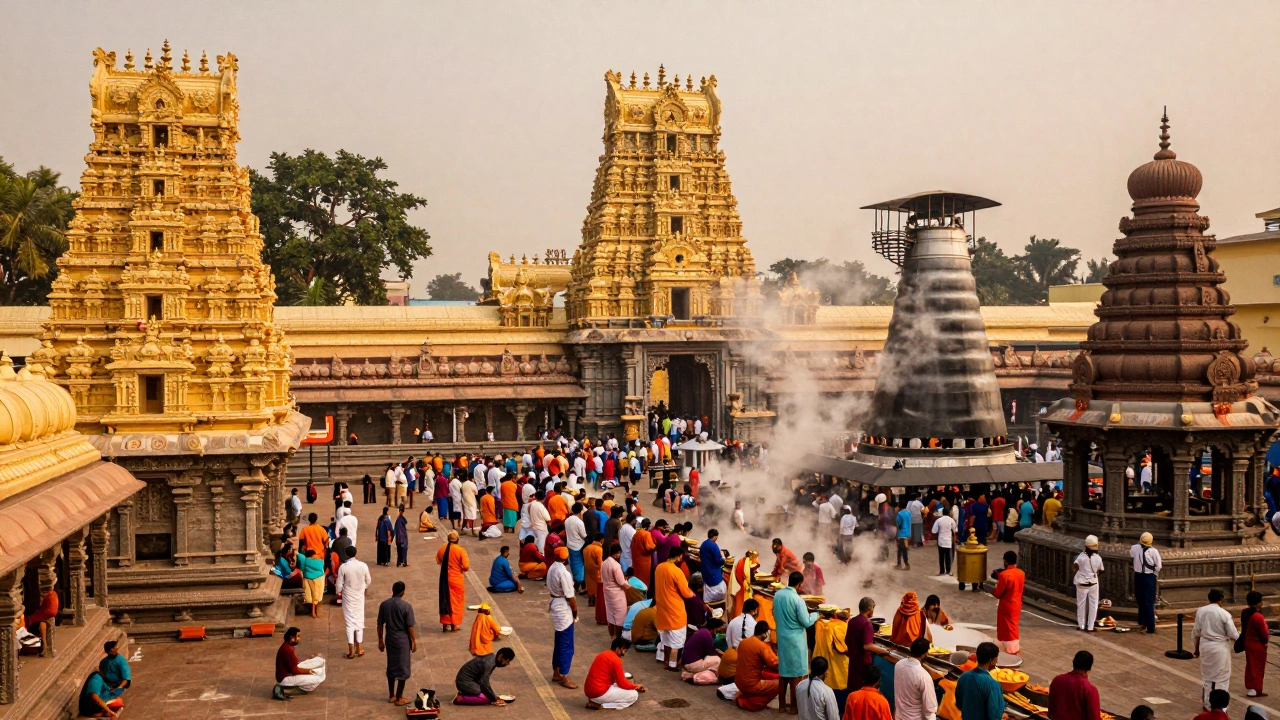
Temple etiquette matters more than you think. Most temples require you to remove shoes before entering. Some don’t allow non-Hindus past the inner courtyard. Women are often asked to cover their shoulders. Carry a scarf or shawl. Wear modest clothing-no shorts, tank tops, or revealing outfits.
Bring cash. Many temples don’t accept cards. Small donations (donations, not fees) are common. Carry a water bottle-some places have drinking water, but not all. A small towel can help if you’re asked to wash your feet before entering.
Don’t rush. Temples aren’t museums. They’re alive. Wait for the aarti (prayer ceremony) to finish before taking photos. Don’t point your feet at idols. Don’t touch sacred objects. Ask before photographing priests or pilgrims.
Best Time to Visit
Winter (October to March) is ideal across India. Temperatures are cooler, especially in the north. In Varanasi and Bhubaneswar, mornings are quiet and perfect for walking. In Tirupati, avoid major festivals like Brahmotsavam unless you’re ready for 10-hour waits.
Monsoon (June to September) brings heavy rain, especially in South India. Some temples close during floods. Summer (April to June) is scorching-temperatures hit 45°C in places like Madurai and Tirupati. Not ideal for long walks.
Final Thoughts
There’s no single winner when it comes to the city with the most temples. Varanasi has the highest count. Bhubaneswar has the highest concentration. Tirupati has the highest footfall. Each city offers something different. If you’re on a temple tour of India, don’t just chase numbers. Chase the feeling-the smell of sandalwood, the echo of bells, the silence between chants. That’s what stays with you long after you’ve counted the last spire.
Which Indian city has the most temples?
Varanasi has the highest number of temples in India, with over 2,000 scattered across its streets, ghats, and neighborhoods. Many are small, family-run shrines, while others, like the Kashi Vishwanath Temple, draw millions of pilgrims annually.
Is Bhubaneswar really called the Temple City of India?
Yes, Bhubaneswar is widely known as the Temple City of India because it has over 700 temples packed into a compact area, most built between the 7th and 12th centuries. Unlike Varanasi, its temples are clustered in a planned layout, making it easy to visit multiple sites in one day.
Which temple in India has the most visitors?
The Tirumala Venkateswara Temple in Tirupati is the most visited temple in the world, welcoming over 50 million pilgrims each year. The surrounding town has more than 150 other active temples, making it a major hub for temple tourism.
Can non-Hindus visit all Indian temples?
No, not all temples allow non-Hindus inside the inner sanctum. Major temples like Tirupati and Varanasi’s Kashi Vishwanath permit entry to all visitors, but some smaller or more traditional temples restrict access to Hindus only. Always check rules before entering.
What’s the best way to plan a temple tour in India?
Start by choosing a city based on your interest-history (Bhubaneswar), devotion (Tirupati), or atmosphere (Varanasi). Plan visits early in the morning to avoid crowds. Carry cash, wear modest clothing, and respect local customs. Consider hiring a local guide to understand rituals and avoid missteps.