Regional Cuisine Explorer
Indian culture food isn’t just about spices and curries. It’s a living history written in rice, lentils, bread, and chutneys - each bite tied to a season, a festival, a family ritual, or a village’s ancient trade route. If you’ve ever eaten a butter chicken in Delhi or a dosa in Chennai, you’ve tasted just one thread in a tapestry that spans 5,000 years and 29 states. This isn’t a menu. It’s a map.
The Land of a Thousand Kitchens
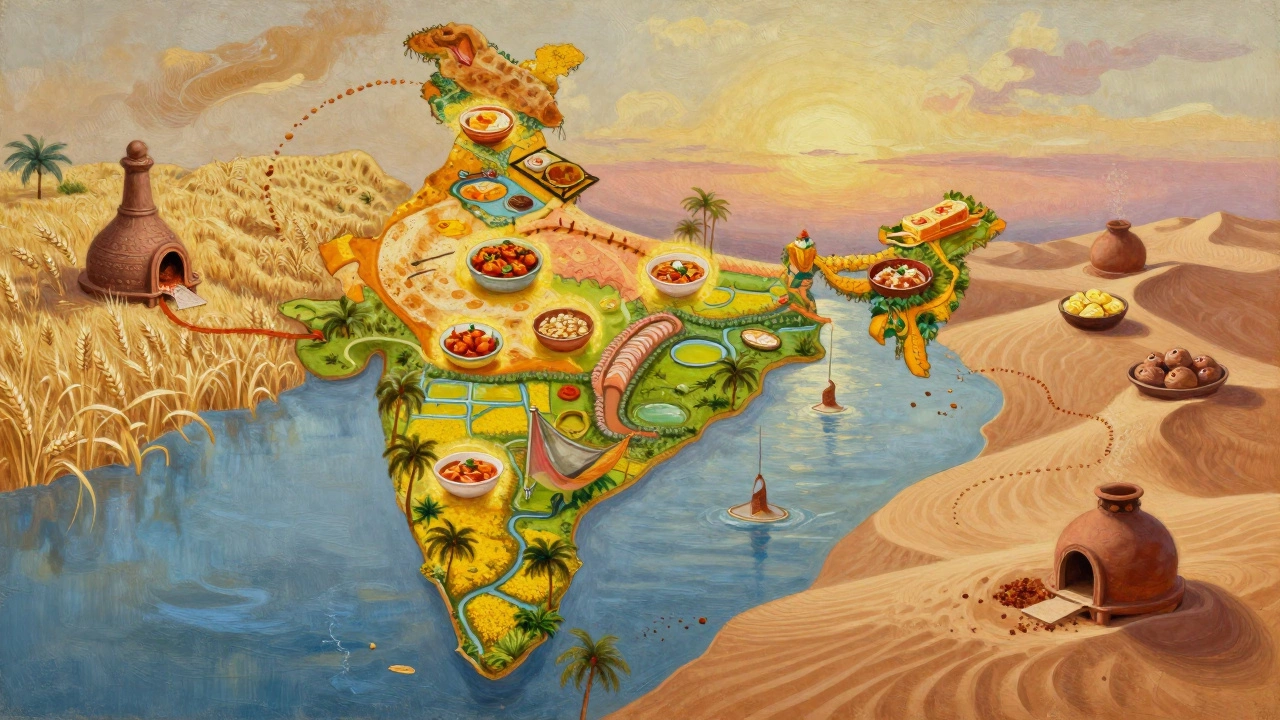
There’s no single Indian cuisine. The idea that India has one kind of food is like saying Europe has one kind of food. North India’s wheat-based meals - roti, paratha, naan - sit beside South India’s rice-heavy plates like idli and appam. In the East, mustard oil and panch phoron (a five-spice blend) flavor fish curries in Bengal. In the West, Gujarat’s sweet-savory dals contrast with Maharashtra’s fiery vada pav. Even within states, villages have their own versions. In Rajasthan, dal baati churma is baked in clay ovens. In Kerala, coconut milk turns everything creamy. In Kashmir, wazwan feasts include 36 dishes, all cooked by hand over wood fires.
These differences aren’t accidental. They’re shaped by geography, climate, religion, and history. The Himalayas block cold winds, letting Punjab grow rich wheat fields. The Deccan Plateau’s dry soil favors millets and lentils. Coastal regions rely on fish and coconut. Mughal emperors brought saffron and nuts to the North. Portuguese traders introduced chili peppers from the Americas in the 1500s - now central to Goan vindaloo and Andhra pickles.
Food as Ritual
In India, food doesn’t just feed the body. It honors gods, marks life events, and binds communities. Diwali means sweets like laddoo and jalebi. Holi brings gujiya and thandai. During Ramadan, Muslims break fast with dates, samosas, and seviyan. In Tamil Nadu, families prepare pongal - a rice-and-milk dish - to thank the sun god. In Maharashtra, new brides cook for the entire neighborhood on their first day at their in-laws’ home.
Vegetarianism isn’t just a diet choice. It’s tied to Jainism, Hinduism, and Ayurveda. Many Hindus avoid beef out of reverence for cows. Jains don’t eat root vegetables because harvesting them kills the plant. In some parts of India, people fast on specific days - eating only fruits, milk, or one simple meal. Even non-vegetarians often avoid meat on religious days. Food rules aren’t restrictions. They’re rhythm - a way of living in sync with the land and the calendar.
Street Food: The Soul of the City
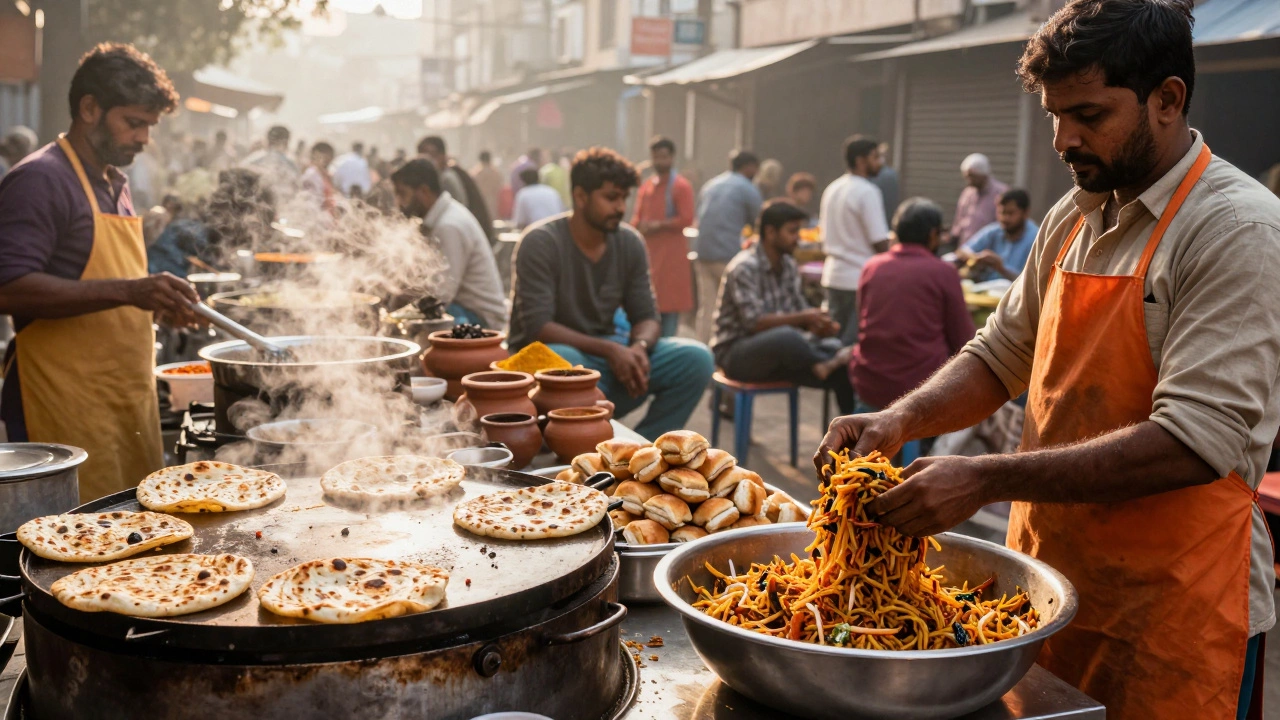
If you want to understand Indian culture food, walk the streets. Delhi’s Chandni Chowk at dawn: steaming parathas stuffed with potato, onions, and spices, dipped in tamarind chutney. Mumbai’s pavement stalls: vada pav - a spicy potato fritter in a bun - sold by the thousands every morning. Kolkata’s jhal muri: puffed rice tossed with mustard oil, chili, peanuts, and lime. Hyderabad’s haleem: slow-cooked wheat, meat, and lentils, stirred for hours until it melts into a thick porridge.
Street food isn’t cheap eats. It’s expertise passed down through generations. The same vendor in Jaipur has been making pyaaz kachori for 40 years. The family in Varanasi who sells kheer in clay cups uses the same recipe their grandmother learned from temple cooks. You don’t need a restaurant. You need a stool, a hand, and the courage to try something unfamiliar.
Spices: Not Just Heat
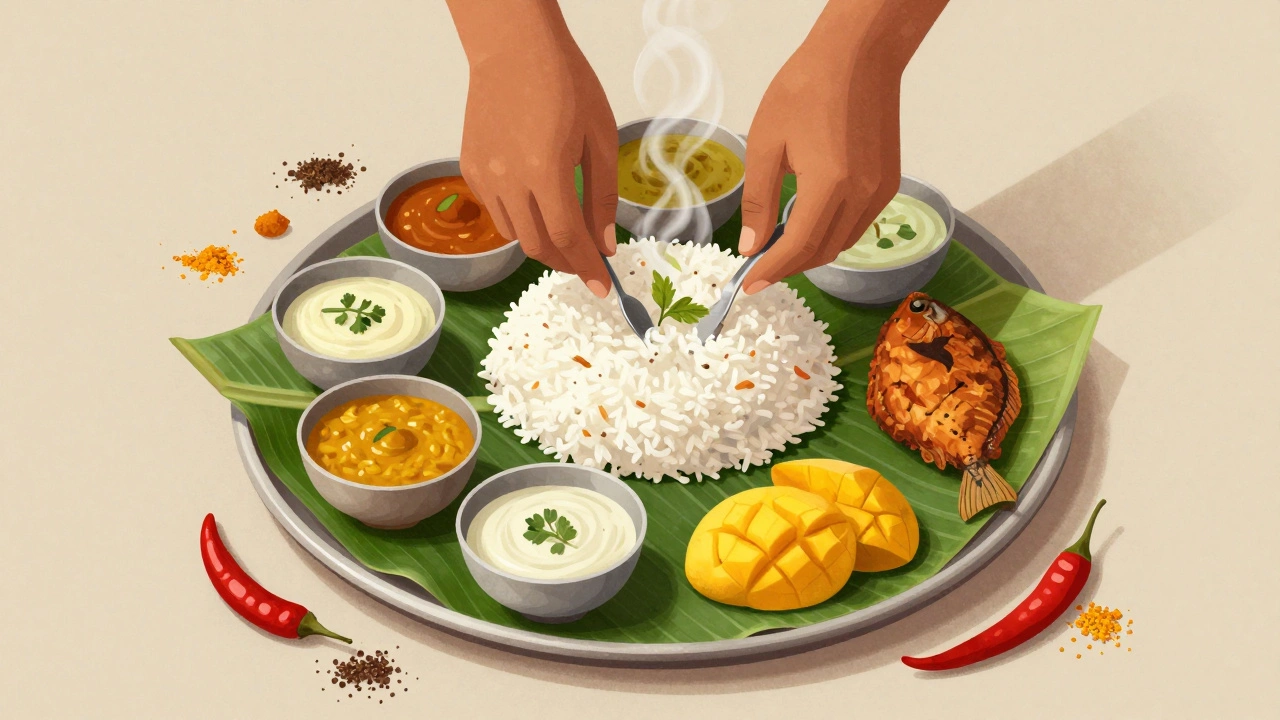
People think Indian food is all about spice. It’s not. It’s about balance. Turmeric isn’t just yellow - it’s anti-inflammatory, used in Ayurveda for healing. Cumin cools the stomach. Coriander seeds cut through fat. Cardamom sweetens tea and rice. Cloves warm the body in winter. Black pepper, once worth its weight in gold, still anchors many spice blends.
Indian kitchens don’t use spices randomly. They follow the principle of rasa - the six tastes: sweet, sour, salty, bitter, pungent, and astringent. A perfect meal includes all six. A simple dal might have lentils (sweet), tamarind (sour), salt (salty), asafoetida (pungent), fenugreek (bitter), and ginger (astringent). That’s not cooking. That’s medicine, art, and science in one bowl.
Regional Staples You Won’t Find Elsewhere
- Assam: Khar - a traditional dish made from banana ash water, giving it a unique alkaline taste, paired with smoked fish.
- Punjab: Makki di roti and sarson ka saag - corn flatbread with mustard greens, eaten in winter.
- Odisha: Pakhala - fermented rice soaked in water, eaten with curd and fried fish, perfect for hot summers.
- Manipur: Eromba - mashed boiled vegetables with fermented fish and chili, served with rice.
- Nagaland: Smoked pork with bamboo shoots and local herbs, cooked in banana leaves.
These aren’t tourist gimmicks. They’re daily meals. People in Assam eat khar because it aids digestion in humid weather. In Manipur, fermented fish lasts months without refrigeration. These foods exist because they solve real problems - hunger, heat, preservation - with what’s available.
What Indian Food Isn’t
It’s not the greasy, over-sauced dishes served in some Western Indian restaurants. It’s not just “curry.” It’s not all vegetarian. It’s not all spicy. It’s not just for vegetarians. It’s not just for Hindus. It’s not just for the poor. It’s for everyone - from palace kitchens to roadside carts.
Indian food doesn’t fit into boxes. It changes with the season, the mood, the religion, the harvest. A meal in a Kerala temple is different from one in a Delhi office canteen. A wedding feast in Rajasthan uses ghee and dry fruits. A daily lunch in a Tamil Nadu home uses leftover rice and pickled mango. Both are Indian. Both are true.
How to Taste It Right
If you’re traveling through India, don’t just eat. Observe. Ask. Follow locals. In rural areas, meals are served on banana leaves. In cities, you’ll find plastic plates. In both, the food is made with care. Don’t ask for less spice - that’s like asking for less salt in Italian food. Instead, try a little, then ask for more. Eat with your hands - it’s not messy, it’s intimate. The warmth of your fingers helps release the flavors.
Try this: In a small town, find a place where the same person serves you dal, rice, and chutney on the same plate. Don’t mix them. Taste each one alone. Then together. That’s how it’s meant to be eaten. That’s Indian culture food - layered, intentional, alive.
Is Indian food always spicy?
No. While many dishes use chilies, heat is just one flavor among many. Regions like Bengal, Odisha, and parts of South India focus on subtlety - sweet, sour, and earthy notes. Many meals, especially in temples or homes, are mild by design. Spice level is always adjustable - but asking for "no spice" misses the point. Try tasting first, then ask for more if you want it.
What’s the difference between North and South Indian food?
North Indian food leans on wheat (roti, naan), dairy (ghee, paneer), and rich gravies with tomatoes and cream. South Indian food is rice-based, uses tamarind and coconut, and favors steamed or fermented dishes like idli and dosa. Spices differ too: North uses garam masala; South uses curry leaves, mustard seeds, and dried red chilies. Both are equally ancient - just shaped by different crops and climates.
Are all Indian dishes vegetarian?
No. While many Indians are vegetarian for religious or cultural reasons, meat and fish are central to diets in coastal states like Kerala, Goa, West Bengal, and Odisha. Lamb, goat, chicken, and seafood appear in daily meals. Even in vegetarian households, eggs are often eaten. The idea that all Indian food is vegetarian is a myth shaped by Western stereotypes.
Why is Indian food so diverse?
India’s diversity comes from its size, history, and geography. Over 2,000 years, invaders, traders, and migrants brought new ingredients - from Central Asian nuts to Portuguese chilies. Each region adapted what grew locally: rice in the south, wheat in the north, millet in the dry interior. Climate, caste, religion, and language all shaped how food was cooked. The result? No two states cook the same way.
Can I find authentic Indian food outside India?
Yes, but it’s rare. Most international Indian restaurants simplify dishes to suit local tastes - less spice, more cream, more butter. Authentic versions require time, specific ingredients, and deep knowledge. Look for places owned by people from a specific region - like a Kerala family running a small eatery, or a Punjabi cook making tandoori roti daily. The best Indian food outside India is often found in homes, not restaurants.
Next Steps: Where to Taste It
If you’re planning a trip to India, don’t just visit temples and palaces. Eat where the locals eat. In Varanasi, try the banana leaf meals near Dashashwamedh Ghat. In Jaipur, hunt for the old haveli that serves laal maas - a fiery lamb curry cooked with red chilies and garlic. In Chennai, wake up early for a steaming plate of idli and sambar from a street cart that’s been there since 1962. In Sikkim, sip on thukpa - a noodle soup with fermented vegetables - while watching the Himalayas turn pink at sunrise.
Indian culture food isn’t something you watch. It’s something you join. Sit down. Say yes to the first bite. Let the flavors tell you their story.