India Route Planner
Plan Your India Trip
Calculate optimal routes between major Indian cities based on Agra's location in North India. See if your planned itinerary makes sense.
People often ask if Agra is in North or South India-and the answer isn’t just a line on a map. It shapes how you plan your trip, what you pack, how you get there, and even what kind of food you’ll eat. Agra is unambiguously in North India. But knowing that alone doesn’t help much if you’re trying to figure out whether to combine it with Jaipur and Delhi, or if it makes sense to tack it onto a trip to Goa or Kerala. Let’s cut through the confusion.
Where Exactly Is Agra?
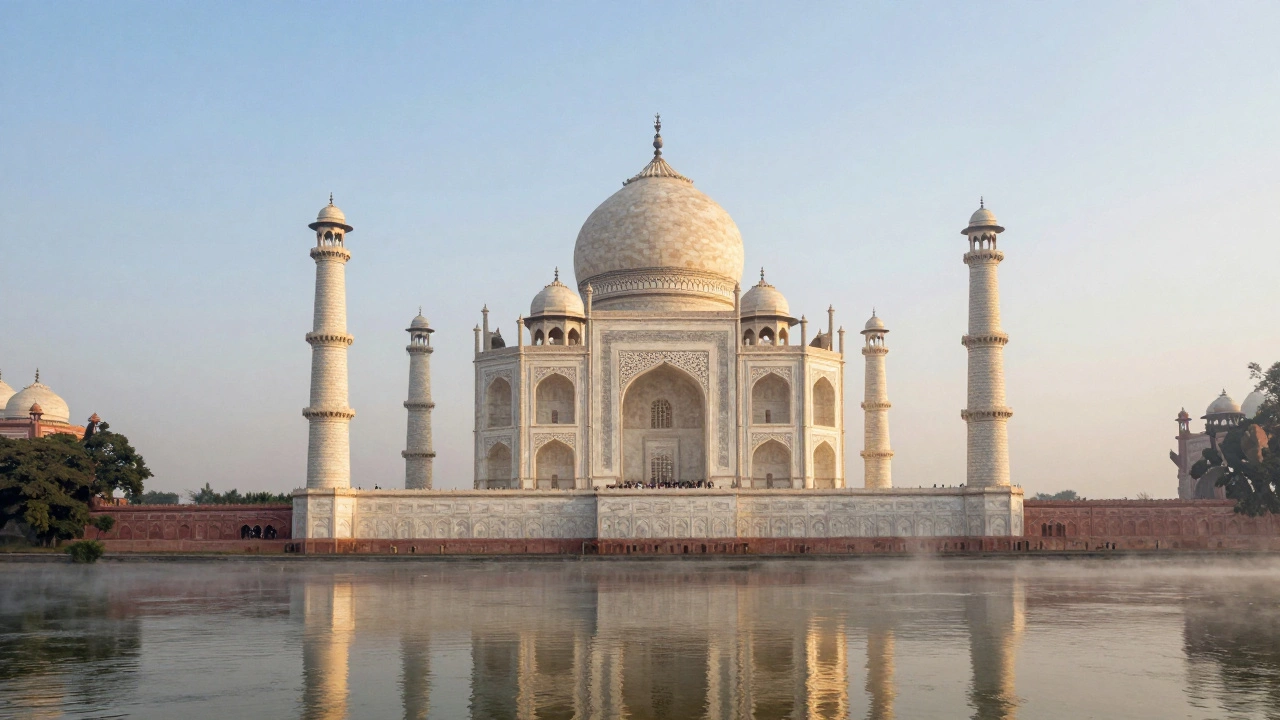
Agra sits on the banks of the Yamuna River, about 200 kilometers southwest of Delhi. If you’ve ever flown into Indira Gandhi International Airport and taken the train or drive to the Taj Mahal, you’ve been in North India. The city is part of Uttar Pradesh, one of the largest and most populous states in northern India. Its coordinates are roughly 27.1767° N latitude and 78.0081° E longitude. That puts it firmly above the Tropic of Cancer, which cuts through central India near the border of Gujarat and Madhya Pradesh. Agra is well north of that line.
Geographically, North India includes the plains of the Ganges and Yamuna rivers, the Himalayan foothills, and the arid regions of Rajasthan. South India, by contrast, starts roughly where the Deccan Plateau begins-south of the Vindhya and Satpura mountain ranges. That’s hundreds of kilometers south of Agra. So if you’re standing at the Taj Mahal, you’re not just in North India-you’re in the heart of its most iconic cultural corridor.
Why Does This Matter for Your Trip?
It matters because North India and South India are like two different countries with the same flag. The languages, food, climate, architecture, and even the rhythm of daily life change dramatically as you cross from one to the other.
In Agra, you’ll find:
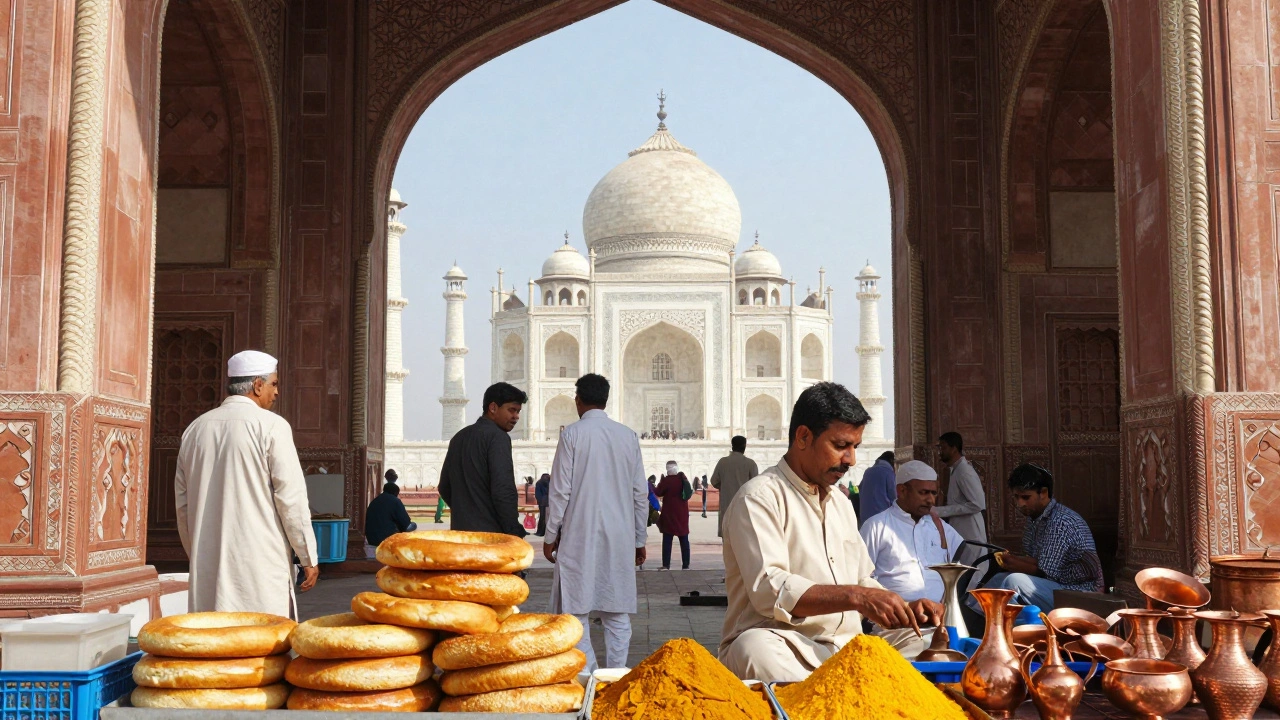
- Wheat-based breads like roti and paratha instead of rice-heavy meals
- Spices like garam masala and dried mango powder dominating flavors
- Hot, dry winters and scorching summers-no monsoon humidity like in Chennai or Kochi
- Mughal-era architecture: domes, minarets, and marble inlays
- Travel routes that connect easily to Delhi, Jaipur, and Varanasi
Compare that to South India:
- Rice is the staple, not wheat
- Coconut, tamarind, and curry leaves are everywhere
- Monsoons arrive earlier and last longer
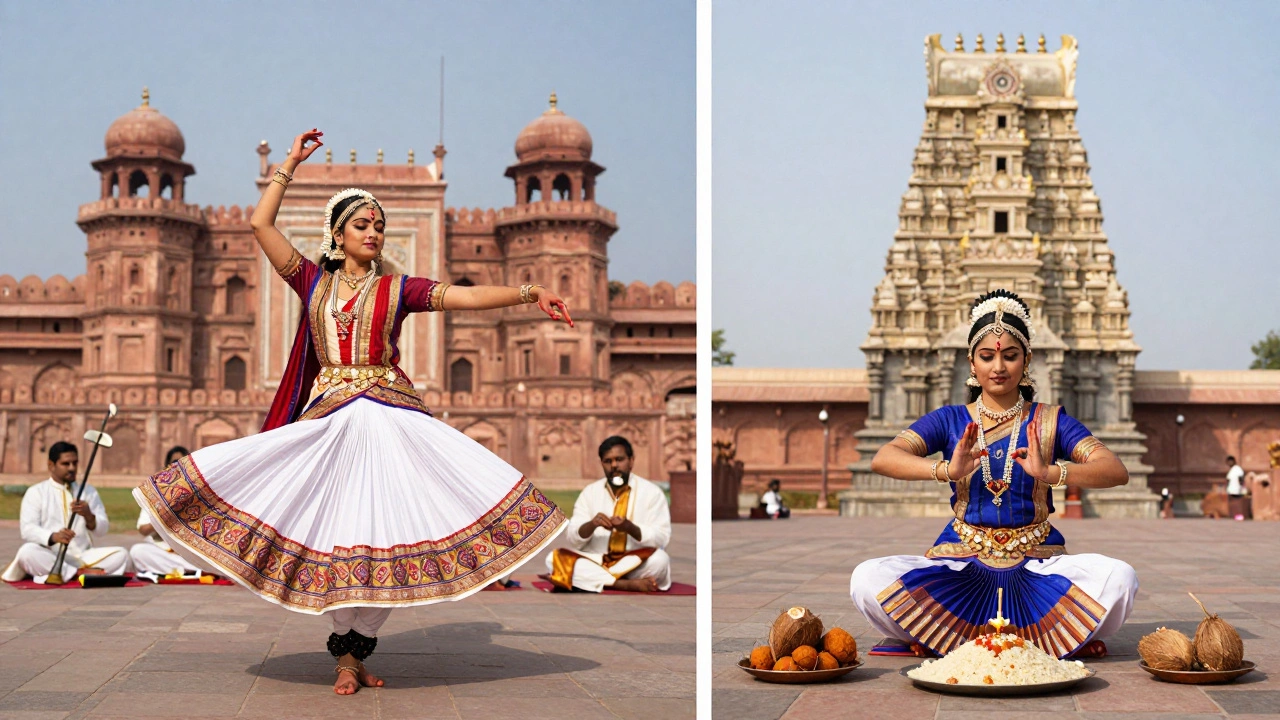
- Temples with towering gopurams and intricate stone carvings
- Major cities like Bangalore, Hyderabad, and Mysore have very different energy
If you’re planning a 10-day India trip and you start in Agra, it’s logical to head north to Delhi and then west to Jaipur. That’s the Golden Triangle. Trying to squeeze Agra into a South India itinerary-say, after visiting Hampi or Munnar-means backtracking across the entire country. It’s doable, but not efficient. You’ll spend more time on trains or planes than you will at monuments.
Historical Context: Why Agra Belongs to North India
Agra wasn’t just a random city picked on a map. It was the capital of the Mughal Empire for over 50 years, starting in 1526 after Babur’s victory at the First Battle of Panipat. The Mughals came from Central Asia and settled firmly in the north. They built their grandest monuments here-the Taj Mahal, Agra Fort, and Fatehpur Sikri-because this was their political and cultural center. The same ruling class that built the Red Fort in Delhi also built the Taj. They didn’t move south. They stayed in the north, where the land was fertile, the rivers were navigable, and the trade routes ran through the Punjab and the Gangetic Plain.
Even today, the cultural DNA of Agra is North Indian. The dialect spoken is Braj Bhasha, a dialect of Hindi. The music you hear near the Taj is Qawwali, not Carnatic. The festivals celebrated-Eid, Diwali, Holi-are the same ones you’ll find in Lucknow, Varanasi, and Mathura. You won’t find the classical dance forms of Bharatanatyam or Kuchipudi here. You’ll find Kathak, the dance of the Mughal courts.
Common Misconceptions
Some travelers think Agra might be "south" because it’s not near the Himalayas. But North India isn’t just about mountains. It’s about the plains. Think of it this way: New York City isn’t in the South just because it’s not near the Rockies. It’s still the Northeast.
Others assume that because the Taj Mahal is a monument to love and beauty, it must be "different" from the rest of India. But that’s like saying Paris is not in Europe because it has Eiffel Tower. The Taj is unique, yes-but it’s still rooted in the land, culture, and history of North India.
And then there’s the confusion with Rajasthan. Some people think Agra is part of Rajasthan because it’s close to the border. But Agra has always been in Uttar Pradesh. The border with Rajasthan is about 150 kilometers away. Jaipur is a separate state with its own culture, language, and cuisine. Agra and Jaipur are neighbors, but they’re not the same.
What Should You Do If You’re Planning a Trip?
If you’re visiting Agra, here’s what makes sense:
- Start in Delhi-fly in, spend a day or two, then take the 2- to 3-hour train to Agra.
- Stay overnight in Agra. The Taj looks completely different at sunrise.
- Next, head to Jaipur (about 5 hours by car or train). That’s the classic Golden Triangle route.
- From Jaipur, you can go to Udaipur or back to Delhi. Skip trying to go south unless you’re planning a separate trip.
If you’re coming from South India-say, from Bangalore or Hyderabad-it’s still worth visiting Agra. But know this: you’re traveling across half the country. The flight will take about 2.5 hours. The train? At least 24 hours. You’ll need to budget extra time and money. It’s not impossible, but it’s not a casual detour.
Climate and Packing Tips
Agra’s weather follows North Indian patterns:
- November to February: Cool, dry, and perfect for sightseeing. Daytime temps around 20-25°C.
- March to June: Hot. Can hit 45°C. Sunscreen, hat, and water are non-negotiable.
- July to September: Monsoon season, but Agra gets less rain than southern cities. Still, humidity spikes.
Pack light cotton clothes, sunglasses, and a scarf for temple visits. No need for heavy wool or rain gear unless you’re heading to the Himalayas next.
Final Verdict
Agra is in North India. Not "kind of," not "sort of." It’s solidly, unmistakably, historically North India. The Taj Mahal isn’t just a building-it’s a landmark of a region that shaped India’s imperial past. If you want to understand Mughal history, the spice trade, or the evolution of North Indian architecture, Agra is ground zero.
Don’t let its fame make you think it’s somehow outside the region it belongs to. It’s not an outlier. It’s the heart.
Is Agra closer to Delhi or Mumbai?
Agra is much closer to Delhi-about 200 kilometers away-than it is to Mumbai, which is over 1,200 kilometers southwest. The train ride from Delhi to Agra takes 2 to 3 hours. From Mumbai, it’s closer to 15 hours. That’s why most travelers include Agra as part of a North India loop, not a West India one.
Can I visit Agra and then go straight to Kerala?
Yes, you can, but it’s not practical for a short trip. The distance is over 2,000 kilometers. You’d need to fly from Delhi or Agra to Kochi or Thiruvananthapuram. If you’re doing a long trip-say, three weeks or more-it’s doable. But if you’re on a 7-day itinerary, you’ll waste more time traveling than sightseeing. Stick to North India first, then plan a separate trip to South India.
Is the food in Agra the same as in South India?
No. Agra’s food is rich, creamy, and wheat-based. You’ll find kebabs, biryanis with dried fruit and nuts, paneer dishes, and naan. In South India, meals are rice-centered, with coconut milk, tamarind, and lentils. The spices are different too-Agra uses garam masala; South India leans on mustard seeds, curry leaves, and dried red chilies. If you’re used to dosas, Agra’s food might feel heavy. If you love butter chicken, you’re in the right place.
Does Agra celebrate the same festivals as South India?
Agra celebrates Diwali, Holi, Eid, and Dussehra-festivals common across North India. You won’t see Onam, Pongal, or Vishu, which are unique to South Indian states like Kerala, Tamil Nadu, and Andhra Pradesh. The music, dance, and rituals around these festivals are also different. In Agra, you’ll hear Qawwali during Eid; in Kerala, you’ll hear traditional percussion during Onam.
Why do some maps show Agra near the "center" of India?
Some maps use geographic center points for simplicity, but that doesn’t reflect cultural or regional divisions. Agra’s geographic center point is about 27°N, which is close to the Tropic of Cancer. But culturally and historically, India’s division is based on language, history, and climate-not math. The Tropic of Cancer cuts through Madhya Pradesh, not Uttar Pradesh. Agra is still in the North Indian cultural zone, even if it’s a bit south of Delhi.