Luxury Train Toilet Capacity Planner
Calculate how long a standard luxury train carriage can operate before its waste tanks need servicing. Adjust the variables below to simulate different journey scenarios.
Journey Parameters
Live Simulation
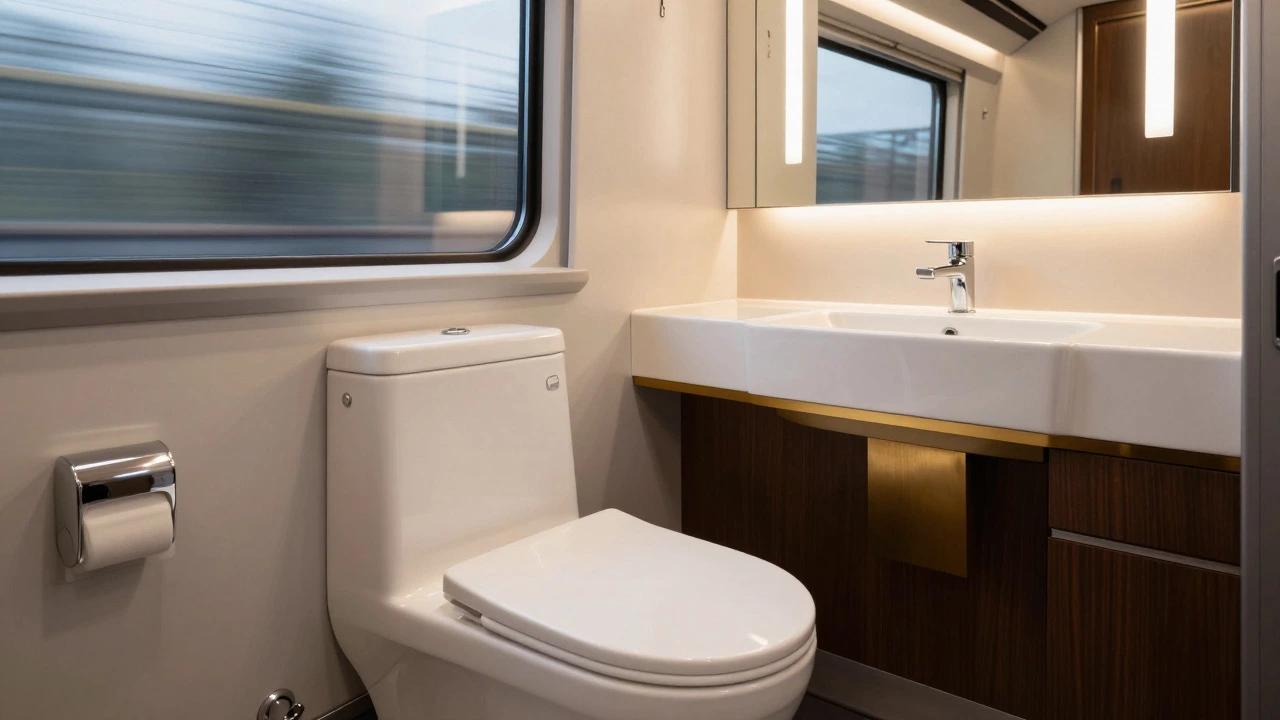
Ever wondered where your waste goes when you’re cruising at 100 km/h in a luxury sleeper? It’s not just a hole in the floor. On high-end rail journeys, the restroom is one of the most engineered spaces in the entire vehicle. Unlike standard commuter trains that often rely on simple gravity or open troughs, luxury train toilets use advanced vacuum and water-seal systems to keep things clean, odor-free, and hygienic for passengers who expect hotel-like standards while moving.
The core challenge here is physics. You have a sealed container moving through tunnels, over bridges, and across vast distances without a direct connection to municipal sewer lines. So, how do operators solve this? They don’t. Instead, they manage it. The system relies on holding tanks, powerful suction, and strict maintenance schedules to ensure that what happens in the bathroom stays contained until the next stop.
The Vacuum System: Suction Over Gravity
Most modern luxury trains, such as those operated by Indian Railways' premium services or European high-speed lines, utilize vacuum toilet technology. This works similarly to the toilets found in commercial aircraft. When you flush, a valve opens, creating a low-pressure zone inside the bowl. The atmospheric pressure outside pushes the waste into the tank with force, requiring only a tiny amount of water-often less than two liters per flush-to move everything efficiently.
This method offers three critical benefits for long-distance travel:
- Odor Control: Because the seal is maintained by air pressure rather than just a water plug, there’s less chance of smell escaping into the cabin.
- Water Conservation: Vital for remote stretches where resupply isn't possible every few hours.
- Efficiency: The strong suction prevents clogs caused by paper or solid waste, which is a common issue in gravity-fed systems.
Inside the car, you might notice the flush button feels different. It’s usually a push-button that triggers an electronic sensor. Once activated, the vacuum pump kicks in for about five to ten seconds. If you’ve ever heard a loud *whoosh* sound during a flight, that’s the same mechanism at work. It’s quiet enough for sleep but powerful enough to clear the bowl completely.
Holding Tanks and Capacity Limits
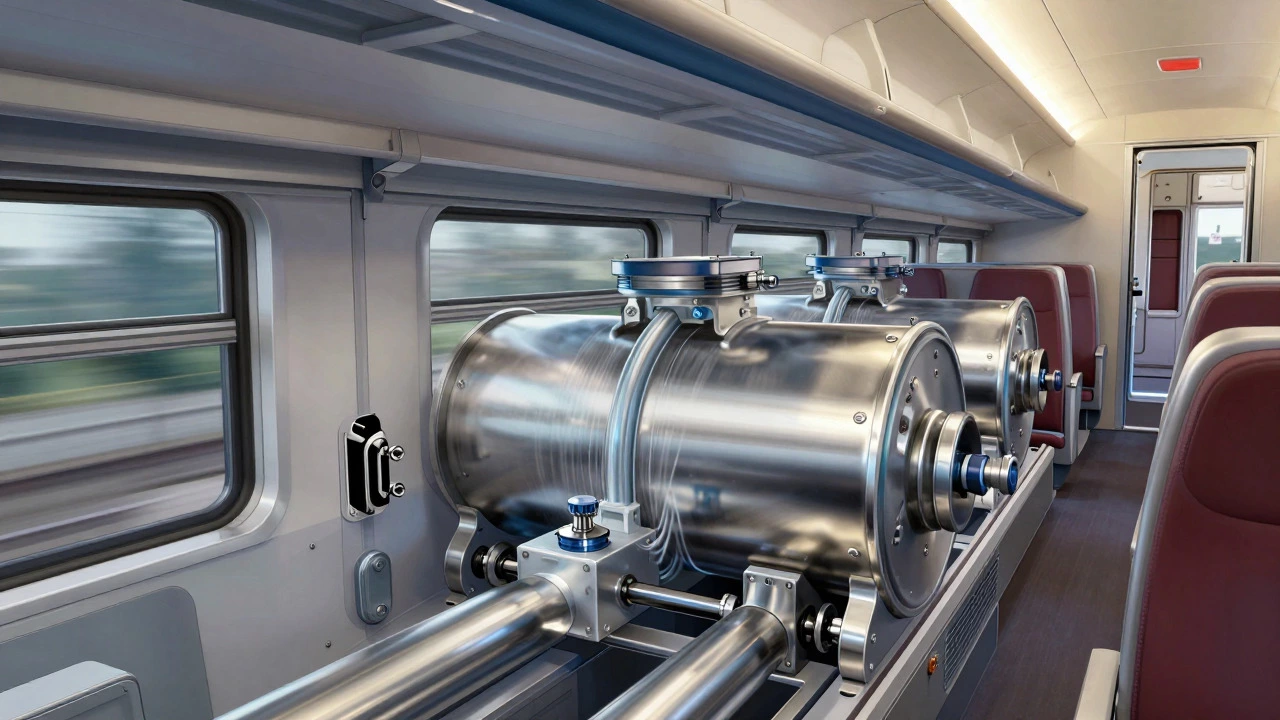
So, where does the waste actually go? Into stainless steel holding tanks located beneath the carriage floor. These tanks are insulated to prevent freezing in cold climates and heated slightly in extreme heat to avoid bacterial growth. A typical luxury train carriage can hold between 50 to 100 liters of liquid waste, depending on the model and number of restrooms per car.
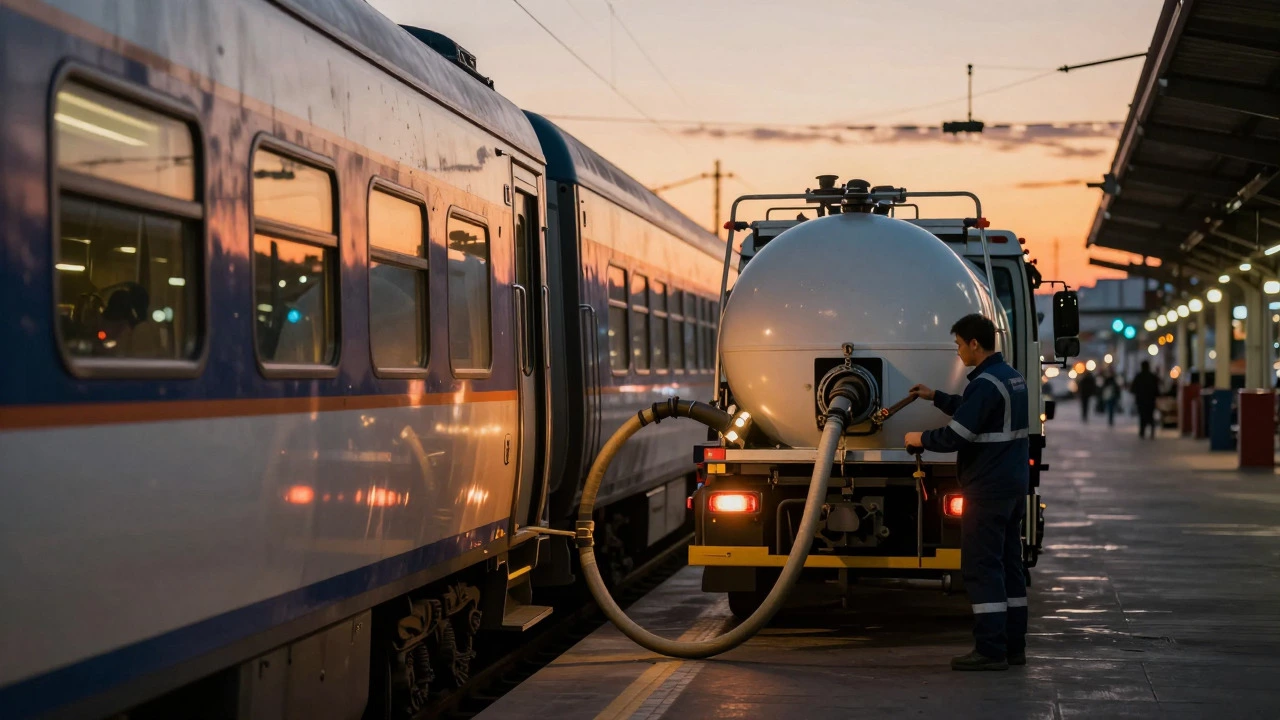
Let’s do the math. If a passenger uses the toilet once every four hours, and each flush uses 1.5 liters, a single person generates about 9 liters per day. In a fully occupied carriage with eight private cabins, that’s roughly 72 liters per day. This means the tank needs to be emptied every 24 to 48 hours. Operators plan their routes and stops specifically around these capacity limits. For example, overnight journeys often include a scheduled maintenance stop at a major hub city where tankers connect via specialized hoses to suck out the contents and refill the fresh water supply.
| Feature | Vacuum System (Luxury) | Gravity/Through System (Standard) |
|---|---|---|
| Water Usage Per Flush | 1-2 Liters | 6-10 Liters |
| Odor Management | High (Sealed Air Valve) | Moderate (Dependent on Ventilation) |
| Clog Resistance | High | Low |
| Emptying Frequency | Every 24-48 Hours | At Every Major Stop |
| User Experience | Silent, Powerful Suction | Louder, Water-Heavy |
Hygiene and Maintenance Protocols
You wouldn’t want to know exactly how often the tank is cleaned, but here’s the reality: it’s more frequent than you think. On premium routes, cleaning crews access the tanks from underneath the train using mobile platforms. They use enzymatic cleaners that break down organic matter and neutralize odors naturally. This process takes about 15 minutes per carriage.
Inside the cabin, the focus shifts to surface hygiene. Luxury operators often employ UV-C light sterilization during night stops. These lamps are mounted above the sink and mirror, activating automatically when the door closes. Since UV-C light kills 99.9% of bacteria and viruses without chemicals, it’s ideal for shared spaces like restrooms. Passengers rarely see this happening, but it’s a key reason why these facilities feel fresher than standard public washrooms.
Another detail often overlooked is the soap and paper supply. High-end trains use biodegradable, septic-safe toilet paper. Why? Because regular thick paper doesn’t dissolve quickly enough in vacuum systems and can cause blockages if too much is used at once. Signage in the restroom usually reminds guests to use moderate amounts-a small nudge that keeps the engineering running smoothly.
What Happens at the End of the Journey?
When the train reaches its final destination, the remaining waste in the tanks is pumped out via a dedicated port on the side of the carriage. This is done by municipal sanitation trucks or specialized rail service vehicles. The waste is treated as sewage and sent to local wastewater treatment plants, just like it would be from a house. There’s no special disposal method; it’s simply managed off-site.
For international luxury trains, such as those crossing borders in Europe or Africa, regulations get stricter. Some countries require proof that tanks were emptied and sanitized before entry. Border officials may inspect the seals on the tank ports to ensure no leakage occurred during transit. This adds a layer of bureaucracy but ensures environmental compliance across different jurisdictions.
Common Myths vs. Reality
There’s a persistent myth that train toilets dump waste directly onto the tracks. This was true for very old steam-era trains, but modern diesel and electric locomotives have been using closed-loop systems for decades. Dumping waste on tracks causes corrosion, attracts wildlife, and creates safety hazards for track workers. Regulatory bodies worldwide have banned open-trough systems for passenger cars since the late 1990s in most developed regions.
Another misconception is that you shouldn’t flush while in a tunnel. While this advice existed for older gravity systems (to prevent backflow), vacuum systems handle pressure changes well. However, some operators still recommend waiting until after the tunnel for comfort, as the slight pressure drop can make the flush sound louder. It’s not a mechanical failure risk, just a sensory preference.
Pro Tips for Travelers
If you’re booking a luxury rail trip, here’s how to make the most of the restroom experience:
- Check the Amenity Kit: Most luxury cars provide bidet sprays or wet wipes. Use them instead of excessive paper to reduce clog risk.
- Time Your Stops: If you’re sensitive to smells, try to use the restroom just before a known maintenance stop. The air circulation is usually refreshed right after cleaning.
- Listen to the Flush: If the vacuum sound is weak, report it immediately. A partial vacuum can lead to overflow issues later in the journey.
- Respect the Tank Capacity: Don’t assume unlimited usage. If you’re traveling solo in a private cabin, you have more leeway, but in shared suites, coordinate with companions to spread out usage times.
Understanding the mechanics behind the door demystifies the experience. It’s not magic; it’s precise engineering designed to bring hotel-level comfort to a moving platform. The next time you hear that distinctive whoosh, you’ll know exactly what’s keeping your journey fresh.
Do luxury train toilets use electricity?
Yes, vacuum pumps and sensors require power. On electric trains, this comes from the grid. On diesel-hybrid luxury trains, onboard generators or battery banks power the restroom systems independently of the main propulsion unit.
Can you use the toilet while the train is stopped?
Absolutely. The vacuum system works regardless of motion. In fact, using the toilet while stationary is often recommended for easier access and reduced noise levels compared to high-speed travel.
What should I do if the toilet gets clogged?
Don’t keep flushing repeatedly, as this wastes water and strains the pump. Press the emergency reset button (usually located near the flush handle) to clear the error code, then notify cabin staff. They carry manual plunger tools specific to vacuum bowls.
Are luxury train toilets accessible for people with disabilities?
Most modern luxury trains feature at least one wheelchair-accessible restroom per carriage. These include wider doors, grab bars, and lower sinks. The vacuum system remains the same, ensuring consistent performance for all users.
How often are the tanks inspected for leaks?
Tanks are visually inspected at every major depot stop, typically every 200-300 kilometers. Pressure tests are conducted monthly to ensure the seals remain intact and no micro-cracks have formed in the stainless steel lining.