Indian State Tourist Comparison Tool
Compare State Tourism Numbers
Select a state to see how its foreign tourist numbers compare to Uttar Pradesh, India's top tourist destination.
Every year, over 10 million foreign visitors step off planes and trains into India’s chaotic, colorful, and deeply spiritual landscape. But not all states welcome the same number of travelers. If you’re wondering where most foreigners go, the answer isn’t a surprise - it’s Uttar Pradesh. This northern state doesn’t just lead in tourist numbers; it dominates them. In 2024, Uttar Pradesh welcomed nearly 3.2 million foreign tourists, accounting for nearly 30% of all international arrivals in India. That’s more than the next three states combined.
Why Uttar Pradesh Draws So Many Foreigners
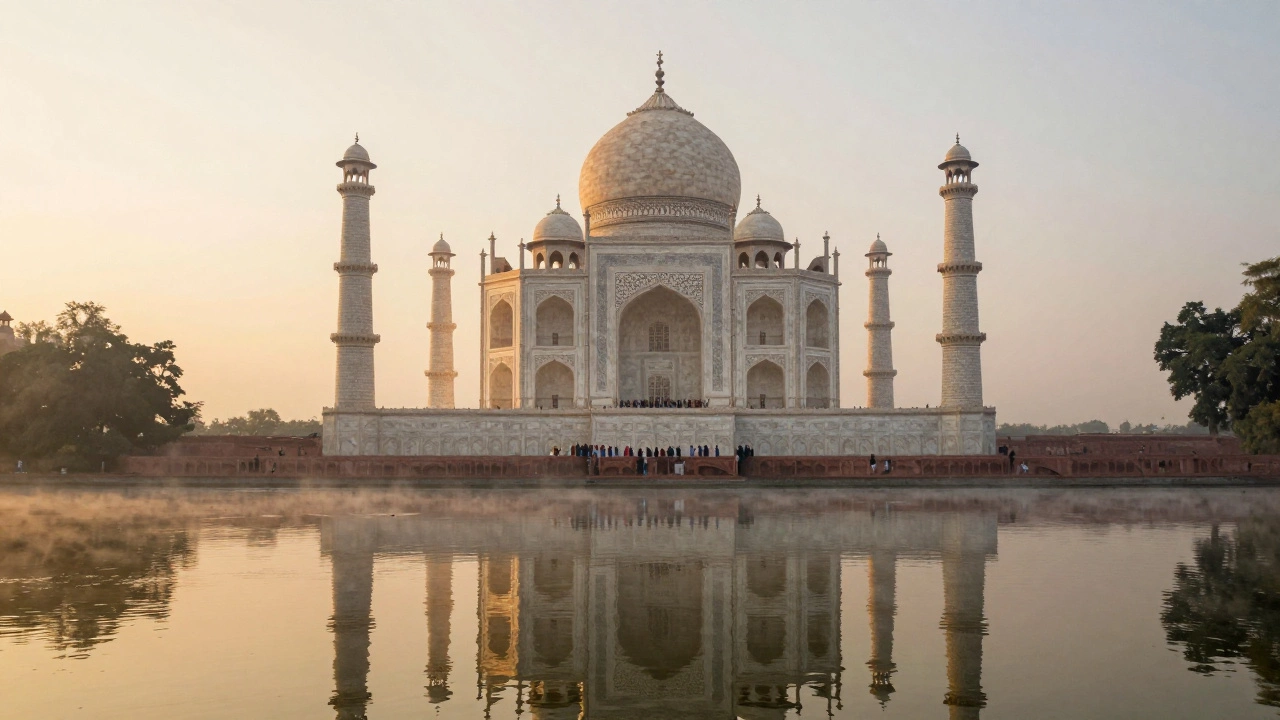
Uttar Pradesh isn’t just big - it’s packed with places that top global bucket lists. The Taj Mahal alone brings in over 1.5 million foreign visitors every year. That’s more than the entire population of many small countries. Tourists from the U.S., the U.K., Russia, Germany, and Japan line up before sunrise to see the white marble monument glow in the morning light. Many come just for that one site. Others stay longer because Uttar Pradesh offers more than just the Taj.
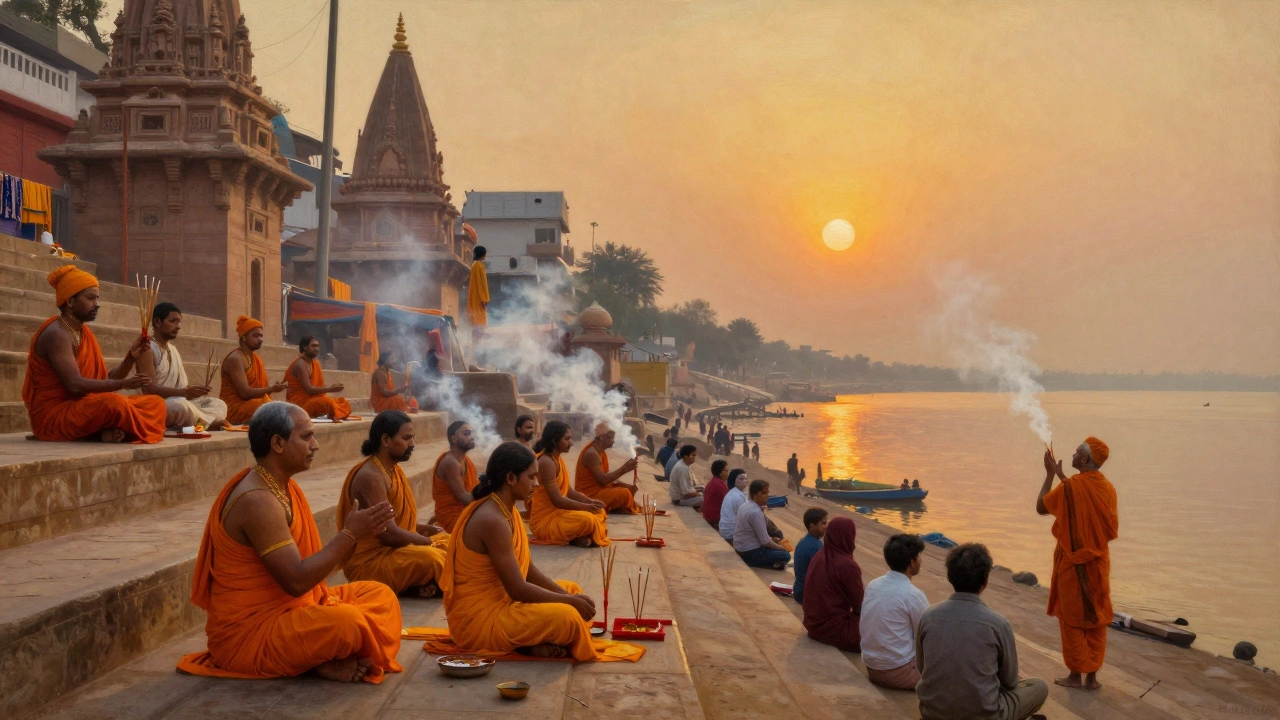
Agra, where the Taj sits, is part of the Golden Triangle - the classic India loop that also includes Delhi and Jaipur. But Uttar Pradesh goes beyond that. Varanasi, one of the oldest continuously inhabited cities on Earth, draws spiritual seekers from all over. Foreigners sit on the ghats at dawn, watching fire rituals and listening to chants that have echoed for over 2,500 years. Many say it’s the most intense cultural experience they’ve ever had.
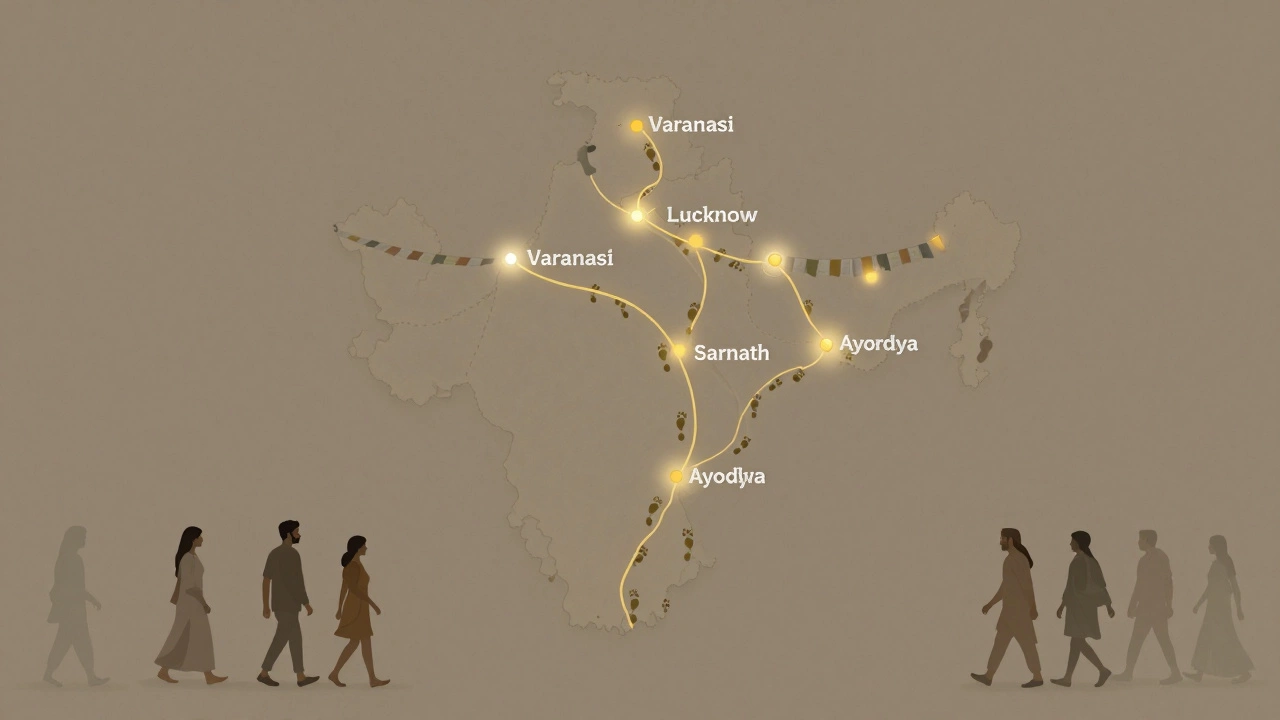
Then there’s Lucknow, with its Mughal-era palaces and slow-cooked kebabs. Sarnath, where Buddha gave his first sermon, attracts Buddhist pilgrims from Thailand, Sri Lanka, and Japan. Ayodhya, recently revived as a major pilgrimage site, saw a 400% jump in foreign visitors in 2024 after the temple opening. These aren’t niche attractions - they’re global landmarks.
How It Compares to Other States
People often assume South India or Rajasthan would win. After all, Kerala’s backwaters and Rajasthan’s desert forts are stunning. But numbers don’t lie. In 2024, Rajasthan came in second with just over 1.8 million foreign tourists. Kerala followed with 1.1 million. Tamil Nadu, home to the grand Meenakshi Temple, pulled in 950,000. Maharashtra, with Mumbai and Ajanta-Ellora, got 870,000.
What’s the difference? It’s not just beauty - it’s concentration. Uttar Pradesh has five UNESCO World Heritage Sites in one state: the Taj Mahal, Agra Fort, Fatehpur Sikri, the Buddhist monuments at Sarnath, and the Awadh architecture in Lucknow. No other state has that density. Tour operators design entire India itineraries around Uttar Pradesh because it’s efficient. You can see the Taj, meditate in Varanasi, and explore Mughal ruins in one state without hopping between five different regions.
Who’s Coming and Why
Foreign tourists to Uttar Pradesh aren’t just sightseers. They’re pilgrims, history lovers, photographers, and seekers. A 2024 survey by the Indian Tourism Ministry found that 62% of foreign visitors to Uttar Pradesh said they came for religious or spiritual reasons. Another 28% cited historical interest. Only 10% came just for shopping or nightlife.
Western tourists often come with tour groups focused on yoga and meditation. Many book stays in ashrams near Rishikesh (which technically borders Uttar Pradesh) and then travel south to Varanasi. Japanese and Korean visitors are drawn to Buddhist sites - Sarnath is one of the four main pilgrimage spots in Buddhism. Russians and Germans, known for deep cultural travel, often spend weeks in the state, learning Hindustani and staying in heritage havelis.
There’s also a growing trend: families from the Middle East. With direct flights from Dubai and Doha to Lucknow and Agra, more Emirati and Saudi families are choosing India for multi-generational trips. They’re not just visiting temples - they’re eating at local dhabas, taking rickshaw rides, and staying in restored forts.
The Hidden Impact
It’s not just about numbers. Foreign tourism in Uttar Pradesh supports over 400,000 jobs - from boatmen on the Ganges to artisans selling marble inlay work in Agra. In small towns like Sarnath, nearly half the population depends on tourism. A single foreign visitor spending $50 a day can support a family for a week.
But there’s strain too. The Taj Mahal sees over 10,000 visitors on peak days. Crowds have damaged the marble floors, and pollution from nearby factories still clouds its reflection. The government has started limiting daily entries and banning plastic near the site. But the demand keeps rising. In 2025, projections show Uttar Pradesh could hit 3.7 million foreign visitors - a 15% increase from last year.
What This Means for Travelers
If you’re planning a trip to India and want to see where most foreigners go, Uttar Pradesh is your starting point. But don’t just rush to the Taj. Stay a few extra days. Take a boat ride on the Ganges at sunrise in Varanasi. Walk the silent corridors of Fatehpur Sikri. Eat a plate of galouti kebab in Lucknow. These are the moments that make the crowds worth it.
Most foreign tourists come for the big names. But those who stay longer come back. And they bring friends. That’s why Uttar Pradesh doesn’t just lead in numbers - it leads in memory.
Best Time to Visit
October to March is peak season. Temperatures are mild, skies are clear, and festivals like Diwali and the Taj Mahal Light Show draw extra crowds. Avoid July to September - monsoon season makes travel messy, especially in rural areas. If you want fewer people and lower prices, aim for late March or early October. You’ll still get great weather, and the Taj will feel less like a theme park.
How to Get There
Most international flights land in Delhi. From there, high-speed trains and domestic flights connect to Agra (2.5 hours), Lucknow (5 hours), and Varanasi (3 hours). The Gatimaan Express train from Delhi to Agra runs twice daily and cuts travel time to under two hours. Many tour operators offer all-inclusive packages that include transport, stays, and guided tours - perfect for first-timers.
Is Uttar Pradesh safe for foreign tourists?
Yes, Uttar Pradesh is generally safe for foreign tourists, especially in major tourist zones like Agra, Varanasi, and Lucknow. Police have dedicated tourist units at key sites, and most hotels and tour operators provide security guidance. Petty theft can happen in crowded areas, so keep valuables secure. Avoid traveling alone at night in unfamiliar neighborhoods. Most visitors report feeling safe and welcomed.
Do I need a visa to visit Uttar Pradesh?
Yes, all foreign tourists need an Indian visa. Most travelers apply for an e-Tourist Visa online, which is valid for 180 days and allows multiple entries. You can apply up to 120 days before your trip. Make sure your passport has at least six months of validity. The visa process takes 3-5 business days, so plan ahead. There’s no separate visa for Uttar Pradesh - the Indian visa covers the whole country.
Can I visit the Taj Mahal at night?
Yes, but only on five nights each month - the full moon night and the two nights before and after. Night viewing is limited to 500 visitors per night and requires advance booking through the Archaeological Survey of India website. Tickets sell out fast, so book at least two weeks ahead. Night visits run from 8:30 PM to 12:30 AM and offer a rare, quiet view of the monument lit by soft lights.
What’s the best way to experience Varanasi as a foreigner?
Start with a sunrise boat ride on the Ganges - it’s the most powerful experience. Hire a local guide who speaks English and can explain the rituals you’re seeing. Visit the Kashi Vishwanath Temple, but be aware that non-Hindus can’t enter the inner sanctum. Instead, walk around the temple complex and watch the devotion from outside. Try a cooking class to learn how to make local sweets like peda. Stay in a heritage guesthouse near the ghats for an authentic feel.
Are there cultural rules I should know before visiting?
Yes. Dress modestly, especially near temples and religious sites - cover shoulders and knees. Remove shoes before entering temples. Don’t point your feet at people or religious objects - it’s considered disrespectful. Always use your right hand for eating or handing items. Ask before taking photos of people, especially sadhus or women. Avoid public displays of affection. These aren’t strict laws, but locals notice and appreciate the respect.
What Comes Next?
If Uttar Pradesh is your first stop in India, you’ll leave with a clear sense of why the country draws so many foreigners. But don’t stop there. After the Taj and the ghats, consider heading to Rajasthan for desert forts, Kerala for backwater calm, or Himachal for mountain silence. But remember - most people start here because this is where India’s soul feels most visible. And once you’ve seen it, you’ll understand why so many come back.